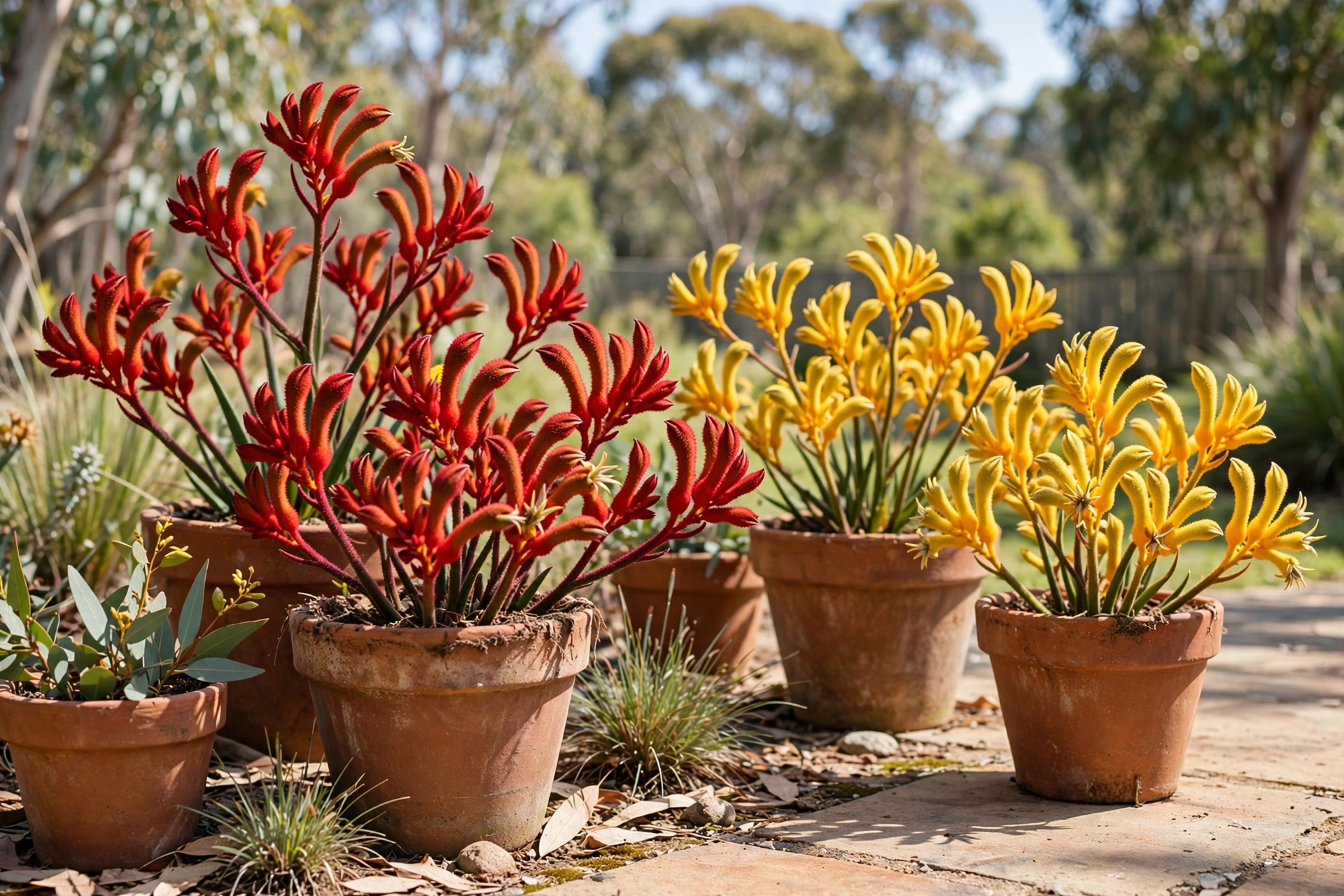
Few plants say "Australia" like the kangaroo paw. Those velvety, claw-shaped flowers in scarlet, lime green, gold and hot pink are showstoppers — and they grow beautifully in pots. Whether you have a sunny balcony in Melbourne, a courtyard in Brisbane or a patio in Perth, growing kangaroo paw in containers lets you enjoy these Western Australian beauties even without a garden bed.
Pots actually solve one of the kangaroo paw's biggest challenges: drainage. These plants despise wet feet, and a container with the right mix gives you complete control over soil conditions. This guide covers everything — choosing varieties, potting mix, watering, feeding, and how to deal with the dreaded ink spot disease.
Choosing the right kangaroo paw variety for pots
There are two main groups of kangaroo paw. Tall varieties, derived mostly from Anigozanthos flavidus, grow 1 to 2 metres high with long-lasting flowers — superb in large statement pots but too big for small containers. For pots, the dwarf and medium hybrid cultivars are the stars: compact plants 30 to 60 centimetres tall, bred for brilliant colour and better disease resistance.
Best compact cultivars for containers
Look for modern hybrid series bred specifically for pots and small gardens. Cultivars in red, yellow, orange, pink and green are widely available at nurseries across Australia. When buying, choose plants with healthy green foliage — avoid any with blackened leaf bases, which can signal ink spot disease already taking hold.
Colour choices
Kangaroo paws come in almost every warm colour: classic red, gold, yellow, orange, pink and the extraordinary green-flowered forms. Green and yellow varieties tend to be the hardiest, while some of the pinks and reds can be fussier. For a first attempt in pots, a gold or green-flowered dwarf hybrid is the most forgiving choice.
Pot size, type and potting mix
Getting the container right is half the battle. Kangaroo paws have fleshy, spreading root systems that appreciate room, but they must never sit in soggy mix.
Choosing the pot
- Size: start with a pot 30 to 40 centimetres in diameter for a single dwarf plant. Larger is fine — kangaroo paws resent being cramped — but avoid enormous pots for small plants, as excess mix stays wet.
- Material: terracotta is ideal because it breathes and wicks away excess moisture. Glazed ceramic and plastic also work but need more careful watering. Whatever you choose, it must have generous drainage holes.
- Depth: a standard-depth pot is fine; kangaroo paw roots spread sideways more than downwards.
- Feet or risers: raise pots slightly off the ground or saucer so water drains freely and air circulates underneath.
The perfect potting mix
Use a premium native potting mix, not standard potting mix and never garden soil. Native mixes are formulated to be free-draining and low in phosphorus, which kangaroo paws — like all good Australian natives — are sensitive to. To sharpen drainage further, blend in 20 to 30 per cent coarse washed sand, perlite or fine bark chips.
When potting up, position the plant so the crown sits slightly above the mix surface, never buried. Firm gently, water in well, and finish with a light layer of gravel or chunky bark mulch — keeping it away from the crown — to reduce humidity around the foliage.
Positioning your pots
Kangaroo paws are sun lovers. Give them at least six hours of direct sun a day — a north-facing aspect is ideal in the southern hemisphere. They also need good air movement around the foliage, which is another reason pots on an open patio or balcony outperform plants crammed into a sheltered corner.
In very hot inland areas — think western Sydney, Adelaide's northern suburbs or Perth's eastern fringe — afternoon shade during extreme heatwaves (days over 40°C) will prevent foliage scorch. In cooler southern states like Victoria and Tasmania, maximise sun and warmth; kangaroo paws are not fond of prolonged cold and wet.
Watering kangaroo paw in pots
Container plants dry out faster than garden beds, but kangaroo paws still prefer a cycle of thorough watering followed by slight drying. In spring and summer, water deeply when the top 3 to 4 centimetres of mix feel dry — typically every 2 to 3 days in warm weather, less in cool or humid conditions.
Always water at the base of the plant, never overhead. Wet foliage is the primary trigger for ink spot disease, the fungal scourge of kangaroo paws. Morning watering is best, giving any splashes time to dry. In winter, cut back significantly — the plants are semi-dormant and cold, wet mix invites root rot.
Water the mix, not the leaves. This single habit prevents more kangaroo paw problems than any spray or fertiliser ever will.
Feeding for flowers
Kangaroo paws are light feeders. Apply a slow-release native fertiliser (low phosphorus) in early spring as new growth emerges — one application usually carries them through the flowering season. A light supplementary feed in early summer can extend blooming, but never feed in late autumn or winter.
Signs of overfeeding include lush soft growth with few flowers and increased susceptibility to disease. If in doubt, feed less. These plants evolved in some of the world's most nutrient-poor soils in south-west Western Australia; they genuinely prefer it lean.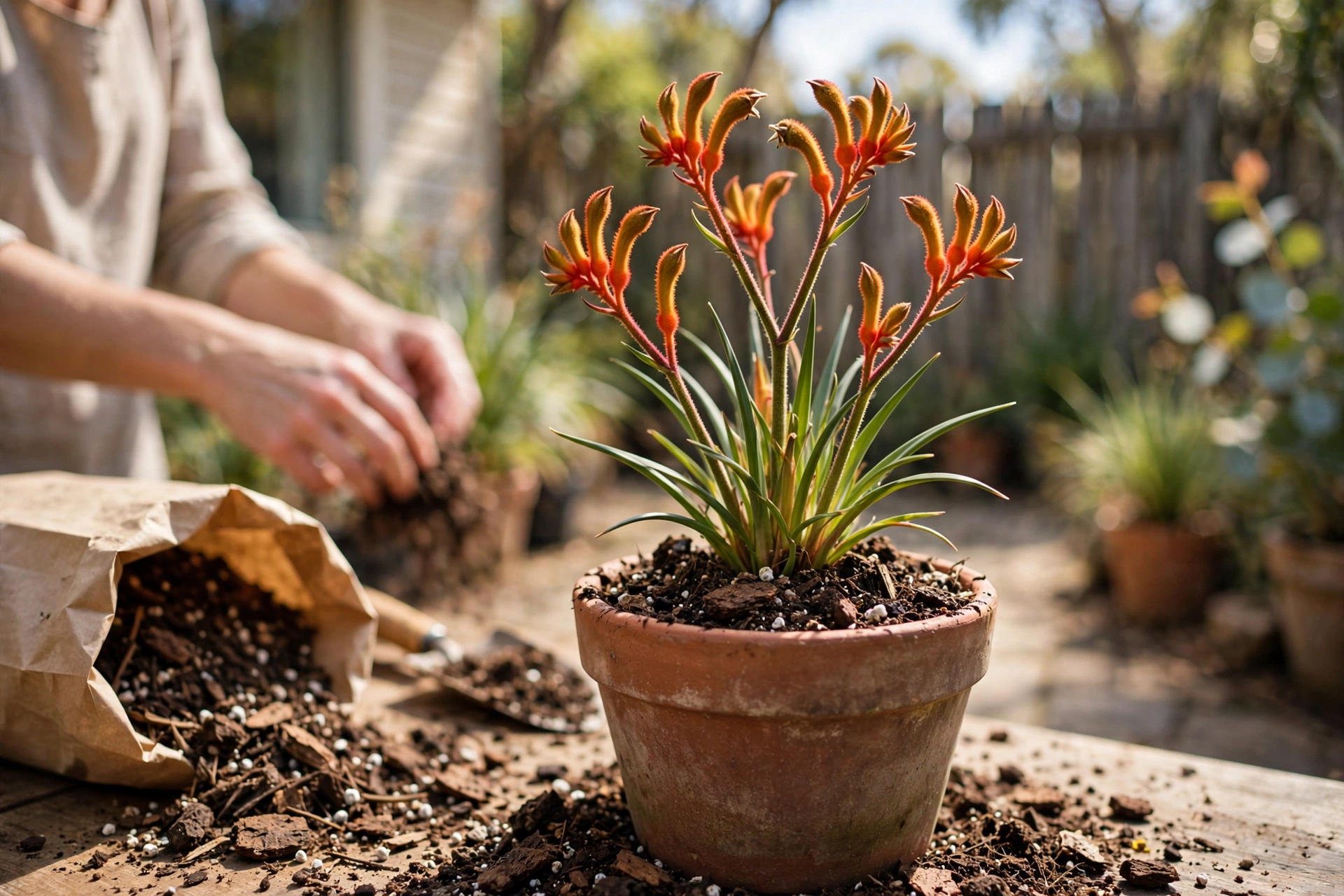
Dealing with ink spot disease
Ink spot is the number one problem for potted kangaroo paws. This fungal disease shows as black spots and streaks on the leaves, starting at the base and working upward. In humid coastal areas — Sydney, Brisbane, the NSW north coast — it is almost a rite of passage.
Prevention
- Choose disease-resistant hybrid cultivars bred for humid climates.
- Water only at soil level, in the morning.
- Ensure excellent air circulation — do not crowd pots together.
- Remove spent flower stems and any blackened leaves promptly, cutting right to the base.
- Avoid overhead watering and wetting foliage during humid weather.
Treatment
If ink spot appears, cut all affected foliage to the base and dispose of it in the bin — never compost it. In severe cases, cut the entire plant back hard in late winter; kangaroo paws reshoot vigorously from the rhizome in spring. Fungicide sprays registered for ornamental plants can help protect new growth, but cultural practices matter far more than chemicals.
Overwintering and year-round care calendar
Kangaroo paws are perennial and, in most of Australia, stay outdoors year-round in pots. Their main winter enemies are cold combined with wet — soggy, cold mix rots the fleshy roots.
- Autumn (Mar–May): reduce watering as growth slows. Remove spent flower stems. This is a good time to divide congested clumps.
- Winter (Jun–Aug): water sparingly, only when the mix is quite dry. In frost-prone inland areas and Tasmania, move pots to a sheltered spot against a north-facing wall or under eaves.
- Spring (Sep–Nov): the main event. Apply slow-release native fertiliser, increase watering as new fan-like leaves emerge, and watch flower stems shoot up.
- Summer (Dec–Feb): peak flowering. Deadhead spent blooms to encourage more, keep up watering in heat, and ensure pots do not bake on hot concrete — group them or use pot feet for airflow.
Dividing and repotting
Every 2 to 3 years, kangaroo paws benefit from division. In late winter or early spring, slide the plant from its pot and tease or cut the clump into sections, each with healthy roots and a fan of leaves. Replant divisions into fresh native mix — never reuse old mix, which may harbour disease. This rejuvenation often produces the most vigorous flowering of all.
Frequently Asked Questions
Why are the leaves on my potted kangaroo paw turning black?
Blackening leaves almost always mean ink spot, a fungal disease encouraged by wet foliage and poor air circulation. Cut affected leaves to the base, improve airflow, water only at soil level in the morning, and consider cutting the plant back hard in late winter for a fresh spring start. Choosing disease-resistant cultivars at purchase time is the best long-term fix.
How often should I water kangaroo paw in pots?
In warm weather, deeply water when the top few centimetres of mix dry out — usually every 2 to 3 days. In winter, water sparingly. Always check the mix rather than watering on a schedule, and ensure the pot drains freely. Overwatering kills more potted kangaroo paws than underwatering.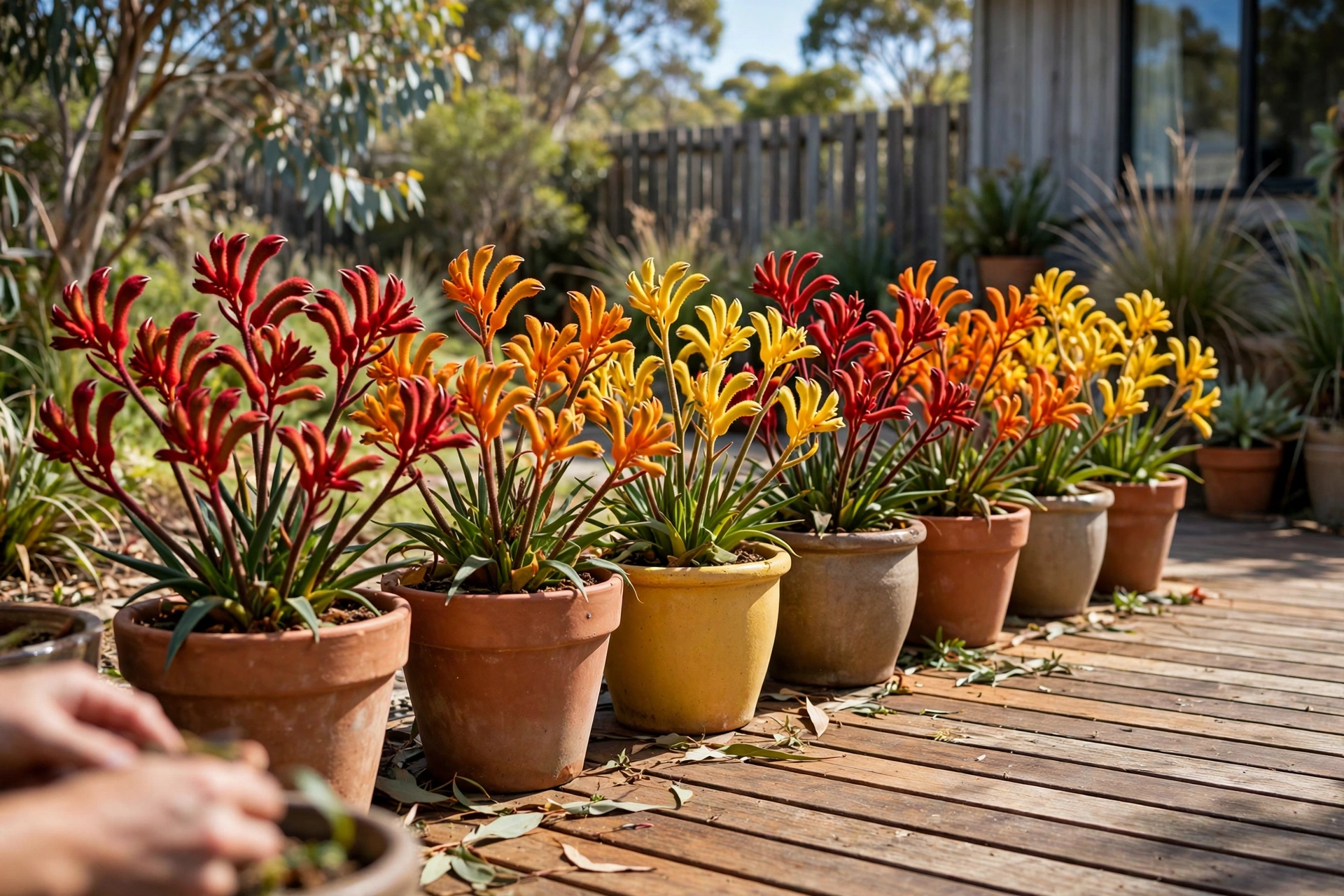
Can kangaroo paw survive frost in pots?
Light frosts are tolerated, but pots expose roots to more cold than garden soil does. In frost-prone areas — inland Victoria, the Southern Tablelands, Tasmania — move pots to a sheltered north-facing position in winter and keep the mix on the dry side. Tall Anigozanthos flavidus types are the hardiest; tender dwarf hybrids appreciate the most protection.
How long do potted kangaroo paws live?
With good care and division every few years, a kangaroo paw can thrive in a pot for many years. Individual fans flower for a season or two then decline, but the clump continually produces new growth from its rhizome. Regular division in late winter keeps plants vigorous indefinitely.
Do kangaroo paws need full sun in pots?
Yes — at least six hours of direct sun daily for the best flowering. In pots on shaded balconies they will survive but flower poorly and become more disease-prone. If you only have part shade, choose the toughest tall flavidus types and accept fewer blooms, or consider shade-tolerant natives like dianella instead.