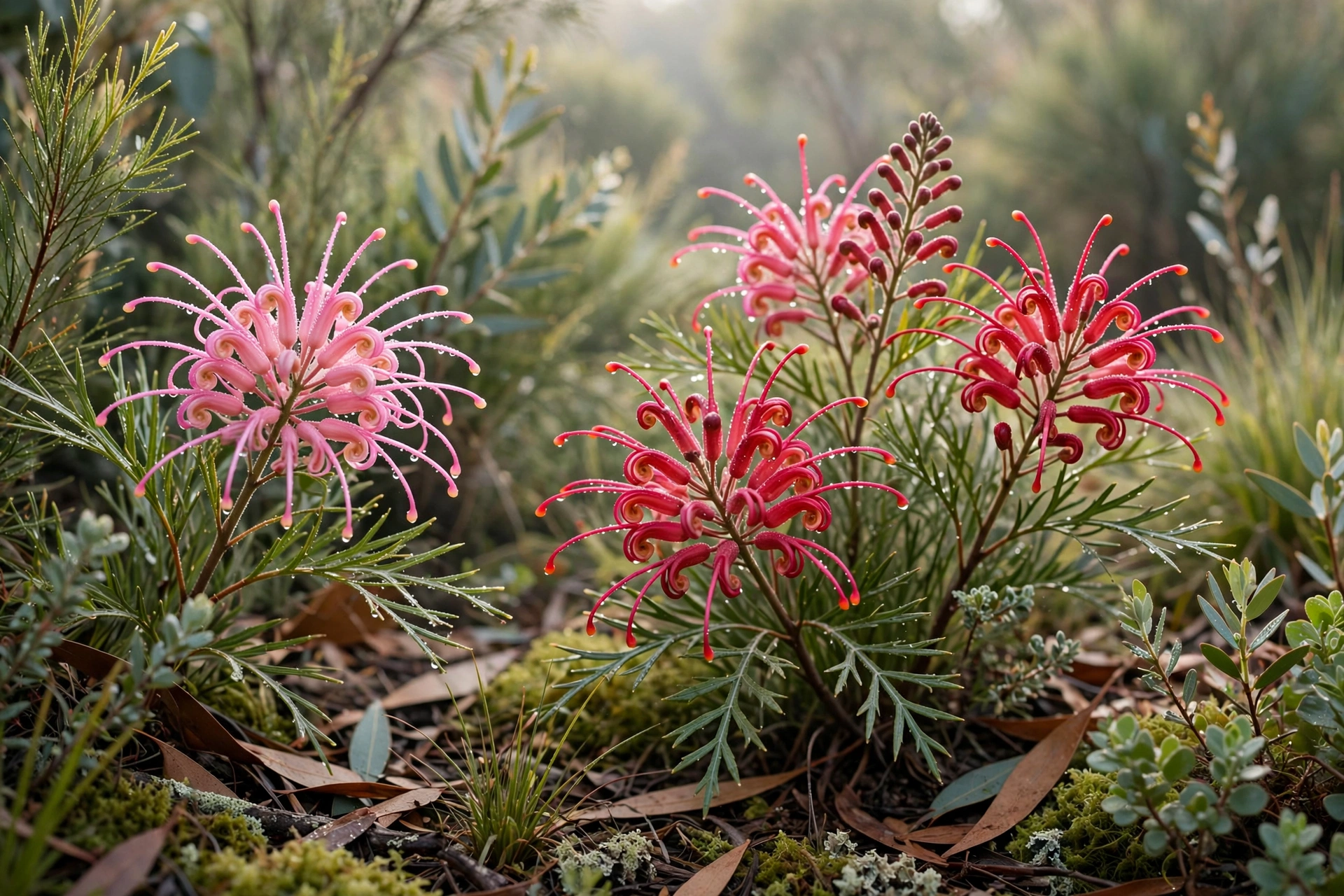
With more than 360 species — the vast majority found nowhere else on earth — grevilleas are one of Australia's great garden plants. From ground-hugging groundcovers to towering trees, there is a grevillea for every garden, and their nectar-rich spider flowers bloom for months on end, painting the garden in reds, pinks, oranges, yellows and creams.
Best of all, grevilleas are genuinely easy once you understand a few golden rules: sharp drainage, full sun, light pruning and — critically — no phosphorus. Get those right and a grevillea will reward you with years of flowers and a constant parade of honeyeaters, lorikeets and native bees.
Choosing the right grevillea for your garden
The sheer number of grevillea cultivars can be overwhelming. Start with size: match the plant's mature dimensions to your space, because a shrub bred to reach 4 metres will never be happy squeezed into a 1-metre gap.
Groundcovers (under 50 centimetres)
Grevillea 'Bronze Rambler' and Grevillea lanigera forms spread 2 to 3 metres wide while staying low — perfect for cascading over retaining walls, covering banks or softening the edge of paths. They flower heavily in winter and spring, right when the garden needs colour most.
Small shrubs (50 centimetres to 1.5 metres)
This is the sweet spot for most suburban gardens. Grevillea 'Robyn Gordon' — arguably Australia's most planted grevillea — flowers almost year-round with red brush blooms. Grevillea 'Superb' offers larger apricot-pink flowers on a dense 1 to 2 metre shrub. Grevillea rosmarinifolia cultivars suit narrow spots with their fine, rosemary-like foliage.
Medium to large shrubs (1.5 to 4 metres)
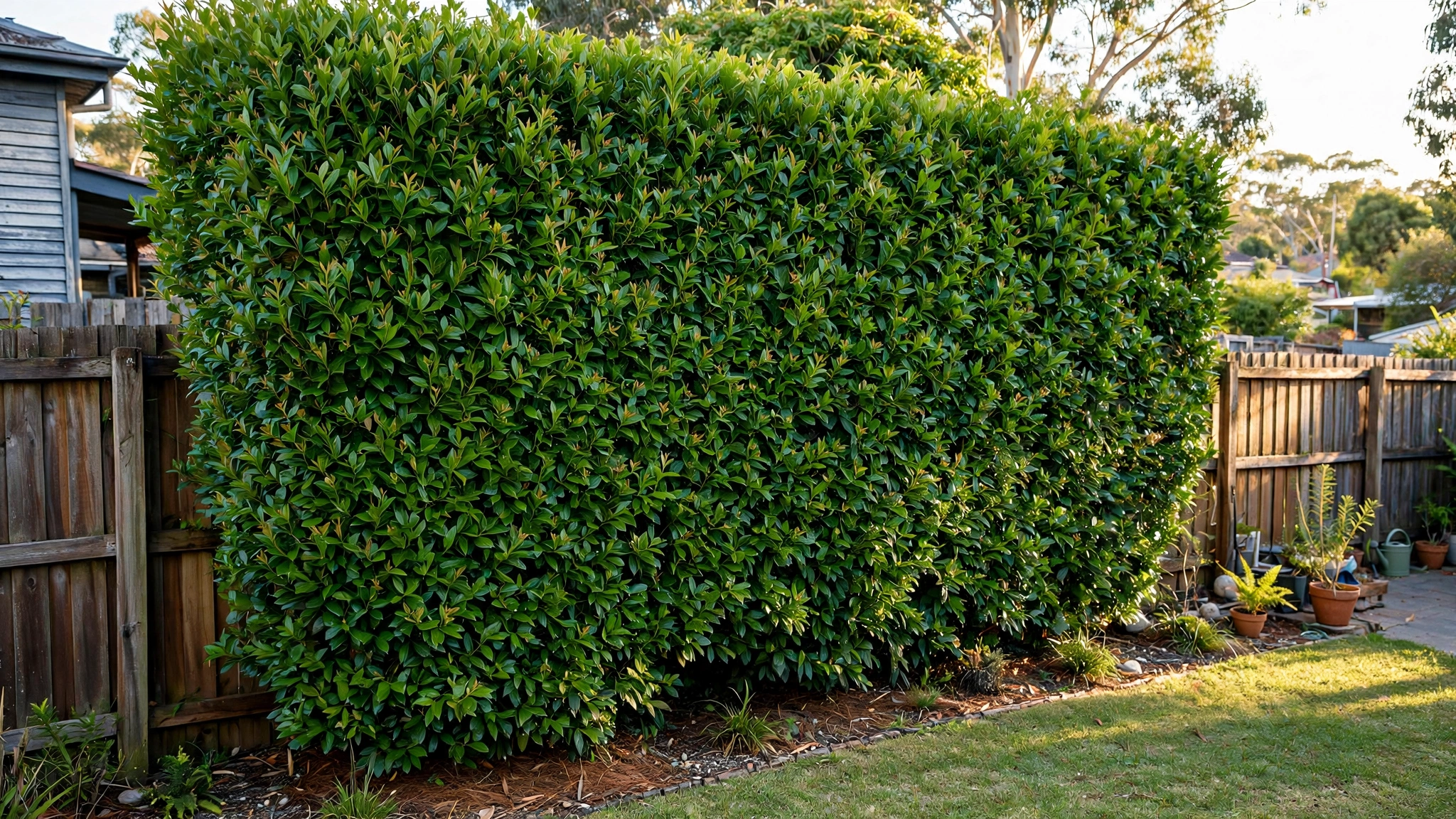
Grevillea 'Moonlight' is a standout: creamy-yellow flowers on a vigorous 3 to 4 metre shrub that blooms nearly all year. Grevillea 'Sandra Gordon' and Grevillea 'Honey Gem' make superb screening plants and bird attractors. Allow room for their mature spread — these are not plants to cram against a fence.
Trees (4 metres plus)
Grevillea robusta (silky oak) grows into a magnificent 15 to 20 metre tree with golden-orange spring flowers, suited only to large blocks. Smaller tree options like Grevillea 'Ned Kelly' can be trained as a small feature tree in medium gardens.
Planting grevilleas: getting it right first time
Most grevillea failures trace back to planting day. Follow these steps and your plant will establish quickly.
- Timing: plant in autumn (March to May) or early spring (September to October). Autumn is ideal — warm soil drives root growth while mild air reduces stress.
- Position: full sun is best for flowering, though most tolerate light shade. Ensure excellent air circulation; grevilleas sulk in damp, still corners.
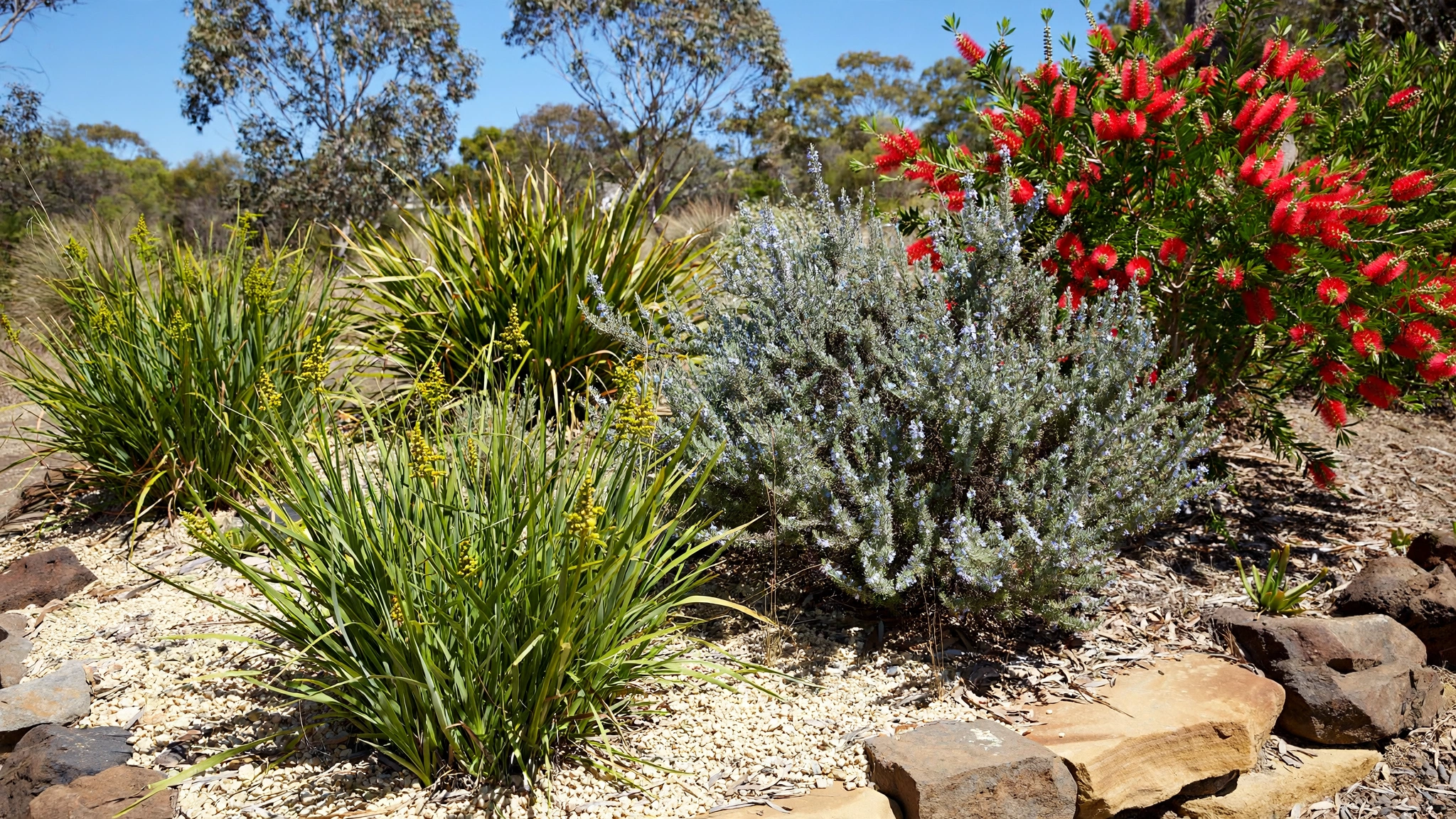
- Soil: they demand free drainage. In sandy soils, simply dig in composted organic matter. In clay soils, plant on a mound 20 to 30 centimetres above the surrounding grade, and consider a raised bed for fussier species.
- Planting depth: set the plant so the top of the root ball sits level with — or a fraction above — the soil surface. Planting too deep is a common killer.
- Watering in: soak thoroughly at planting, then water deeply twice a week for the first month, tapering as the plant establishes.
- Mulch: apply 75 millimetres of chunky bark mulch, keeping it clear of the stem. Avoid fine mulches that pack down and hold moisture against the crown.
The phosphorus rule: feeding grevilleas safely
This is the single most important thing to know about grevilleas. As members of the Proteaceae family, they evolved in ancient, phosphorus-deficient soils and developed specialised proteoid roots that are extraordinarily efficient at extracting phosphorus. Standard fertilisers — with phosphorus levels that other plants shrug off — can be toxic to grevilleas, causing yellowing, dieback and death.
What to use
Feed only with fertilisers labelled for Australian natives, which are formulated low in phosphorus (look for a phosphorus content below 3 per cent). A single application of slow-release native fertiliser in early spring is plenty for the year. Many gardeners find established grevilleas need no feeding at all.
What to avoid
Never use standard rose food, citrus food, poultry manure, mushroom compost or superphosphate near grevilleas. Even neighbouring plants' fertiliser can leach across — keep high-phosphorus feeding of adjacent exotics well away from grevillea root zones.
If your grevillea's leaves are yellowing and you have been feeding it like a rose, phosphorus toxicity is the prime suspect. Flush the soil with deep watering and stop all feeding.
Pruning for shape and flowers
Grevilleas respond brilliantly to pruning — in fact, regular light pruning is the secret to dense, floriferous plants rather than leggy, sparse ones.
When and how to prune
Tip-prune regularly during the growing season: simply pinch or snip the soft new growth tips. This encourages branching and multiplies flowering sites. After a major flush of flowers, cut flowered stems back by about one-third. For overgrown plants, a harder prune in late winter or early spring rejuvenates them — but never cut into old, leafless wood, as grevilleas rarely reshoot from bare stems.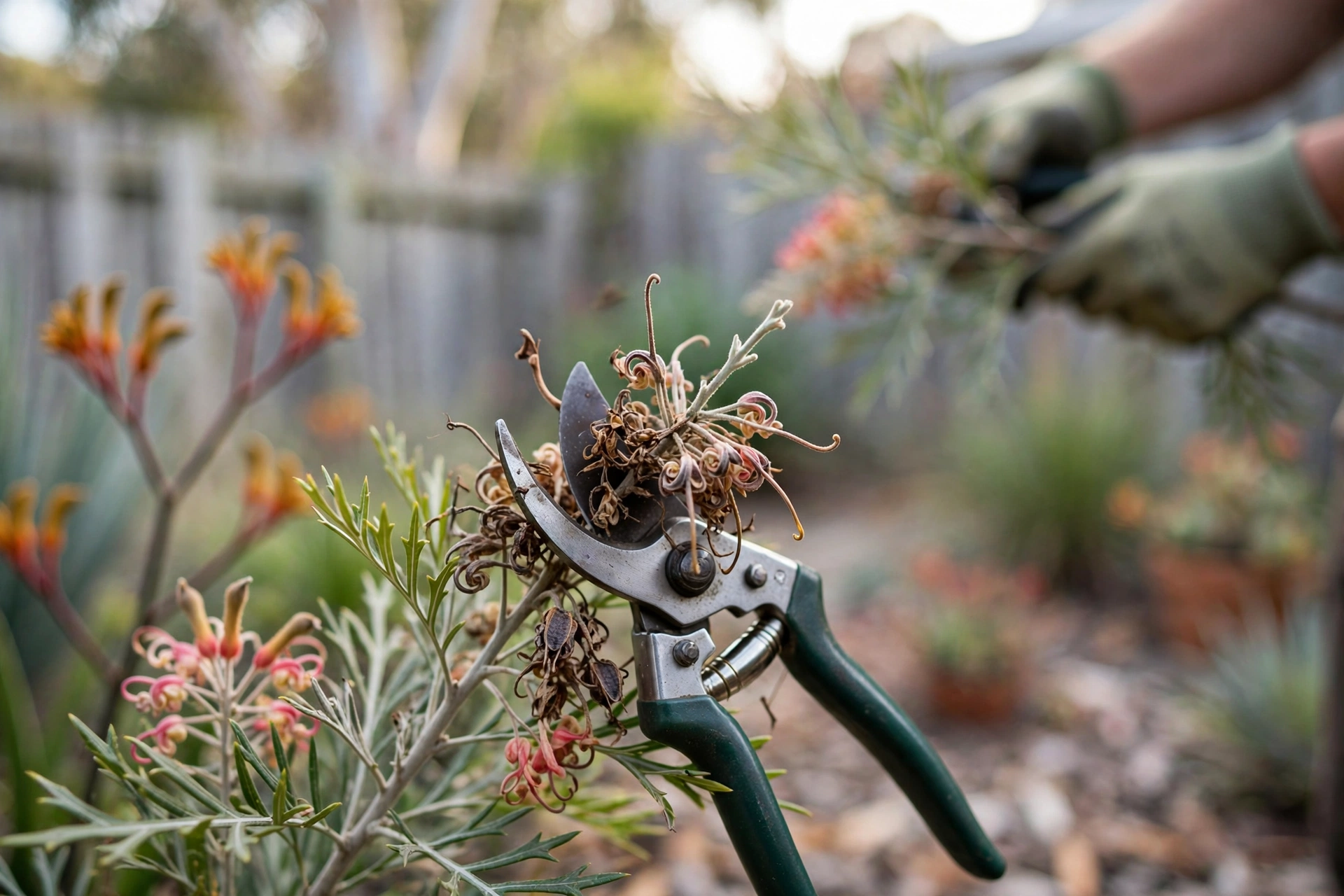
Pruning by type
- Groundcovers: shear lightly after flowering to keep them dense.
- Small shrubs: tip-prune monthly in the growing season for maximum flowers.
- Large shrubs: shape after flowering; remove crossing branches to open the centre for airflow.
Watering through Australian conditions
Established grevilleas are impressively drought tolerant, but establishment watering is non-negotiable: deep watering once or twice weekly through the first summer. After 12 to 18 months, most cultivars survive on rainfall alone in coastal and tableland areas, though they flower more generously with an occasional deep drink during extended dry spells.
In Mediterranean-climate regions — Perth, Adelaide and parts of regional Victoria — summer water is more important; a deep fortnightly soak through January and February keeps plants at their best. In humid subtropical areas like Brisbane and coastal Queensland, ensure drainage is impeccable and avoid wetting foliage to discourage fungal problems.
Attracting birds with grevilleas
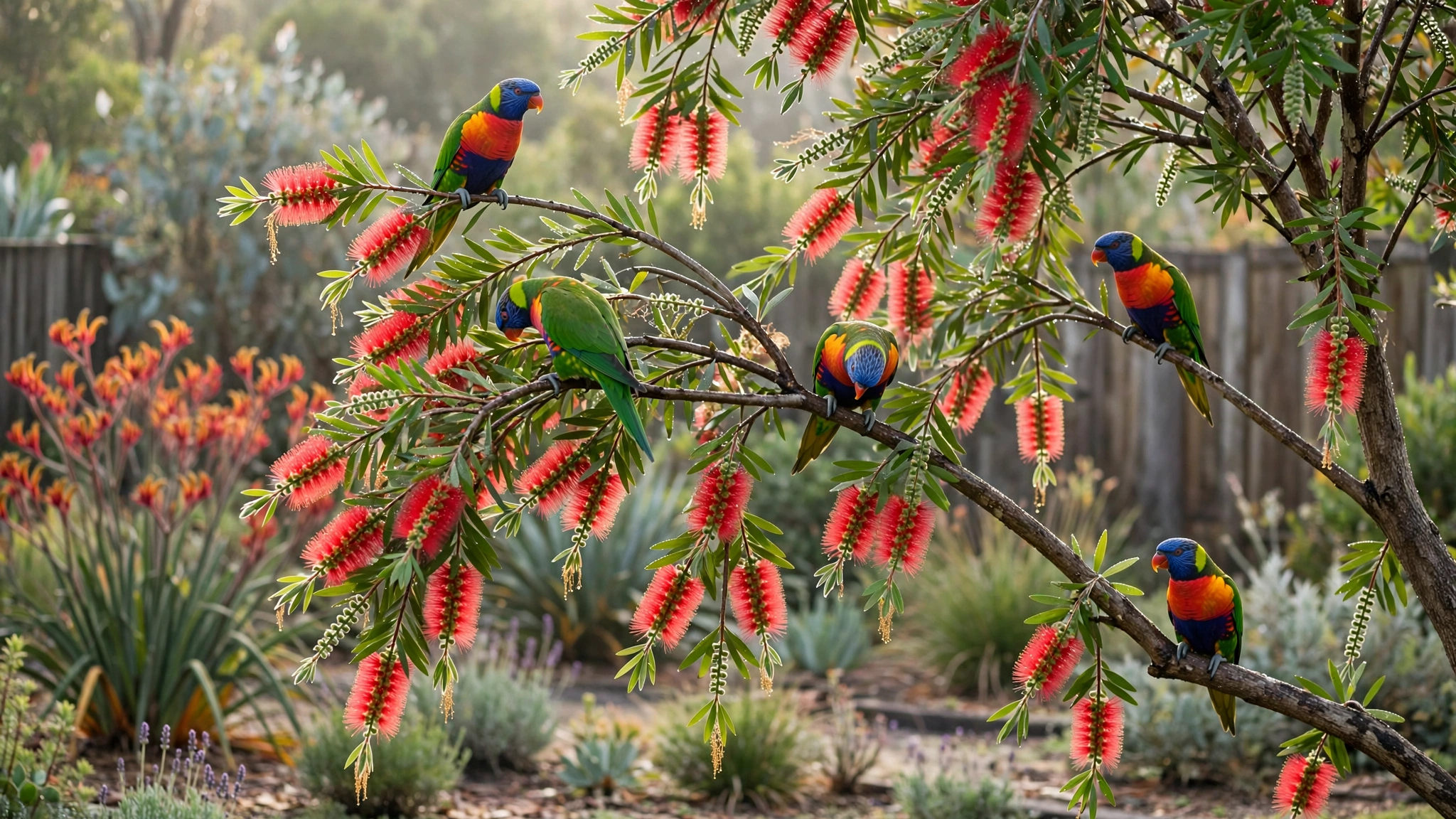
Plant grevilleas and the birds will come. Their nectar-rich flowers are among the finest bird attractors in the Australian garden, drawing eastern spinebills, New Holland honeyeaters, wattlebirds, rainbow lorikeets and silvereyes.
For year-round bird activity, plant a succession of varieties with staggered flowering times — for example, Grevillea 'Robyn Gordon' for near-constant bloom backed by winter-flowering Grevillea 'Moonlight'. Position shrubs where you can watch the action from a window or patio, and resist pesticides: the insects grevilleas harbour are vital protein for nesting birds.
Common problems and solutions
- Yellowing leaves: usually phosphorus toxicity or waterlogged soil. Check drainage, stop feeding, and flush with water.
- Leggy, sparse growth: insufficient pruning or too much shade. Tip-prune regularly and ensure at least six hours of sun.
- Sudden wilting: root rot from poor drainage — often fatal. Prevention (mound planting, free-draining soil) is the only real cure.
- Scale insects: occasionally cluster on stems. Prune affected growth or treat with horticultural oil, avoiding broad-spectrum insecticides that harm beneficial insects.
Frequently Asked Questions
How fast do grevilleas grow?
Most medium shrubs grow 30 to 60 centimetres per year once established, reaching mature size in 3 to 5 years. Vigorous cultivars like Grevillea 'Moonlight' and Grevillea 'Sandra Gordon' are among the fastest, while groundcovers spread outward rapidly in their first two years. Good sun, drainage and annual tip-pruning maximise growth rates.
Can I grow grevilleas in pots?
Absolutely. Compact cultivars like Grevillea 'Robyn Gordon', Grevillea 'Superb' and dwarf banksia-like forms thrive in large pots of at least 40 centimetres diameter filled with native potting mix. Ensure excellent drainage, water regularly in warm weather, and feed lightly with slow-release native fertiliser in spring.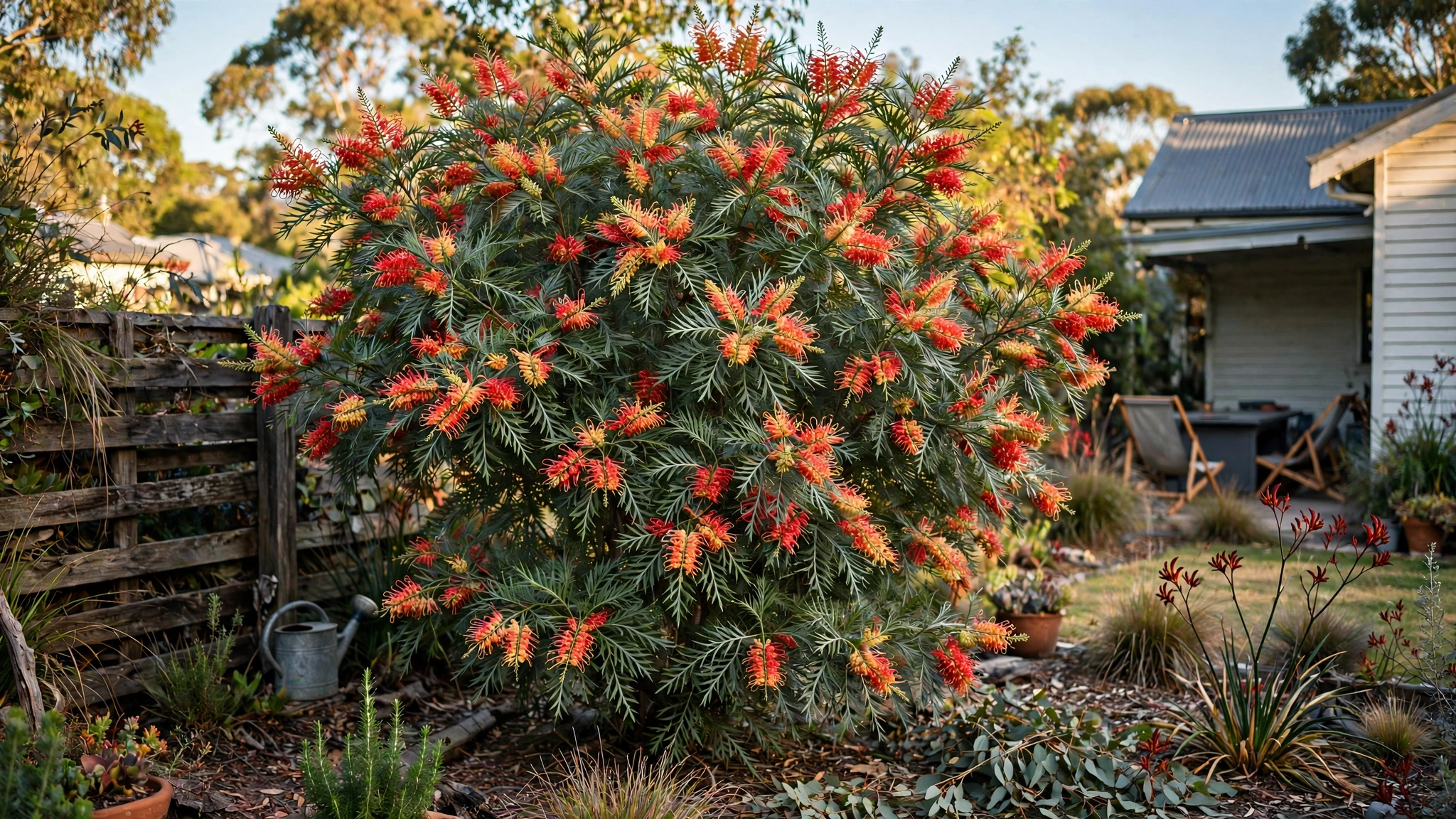
Why has my grevillea stopped flowering?
The most common causes are too much shade, lack of pruning, or overfeeding with high-nitrogen fertiliser producing leaf at the expense of blooms. Move (or accept) the light situation, resume regular tip-pruning, and stop feeding for a season. Most grevilleas bounce back into flower within months.
Are grevilleas frost tolerant?
It varies by species. Many popular cultivars handle light frosts to around -5°C once established, making them suitable for Canberra, inland Victoria and the Southern Tablelands. Tender species from warmer regions need protection. In frost-prone areas, plant against a north-facing wall and avoid low-lying frost pockets.
How long do grevilleas live?
Grafted and hybrid cultivars typically live 10 to 15 years — generous for such fast, floriferous shrubs. Species grevilleas can live several decades. When an old plant declines, replace it; grevilleas are inexpensive and establish quickly, so succession planting every decade keeps the display perpetual.