Overlooked by the neighbours? Staring at a colourbond fence or the back of someone's shed? A living green screen is the most attractive privacy solution available — softer than a fence, cooler than a wall, alive with birds — and with the right plants, you do not have to wait a decade for results.
Australia's climate is a gift to impatient gardeners: our long growing season means screening plants establish fast. Choose vigorous species, plant them properly, and a 2-metre hedge can be screening effectively within 2 to 3 years. This guide covers the best fast-growing screening plants for Australian conditions, realistic growth rates, spacing, and the council rules you need to know before planting.
What makes a great screening plant?
The ideal privacy plant ticks several boxes: dense foliage from ground level to the top (no bare legs), a growth rate of at least 50 centimetres a year, evergreen leaves for year-round cover, and a mature height that matches your goal — typically 2 to 4 metres for suburban privacy. Bonus points for low maintenance, drought tolerance once established, and flowers or foliage that look good up close.
The best fast-growing screening plants
Lilly pilly (Syzygium australe and cultivars)
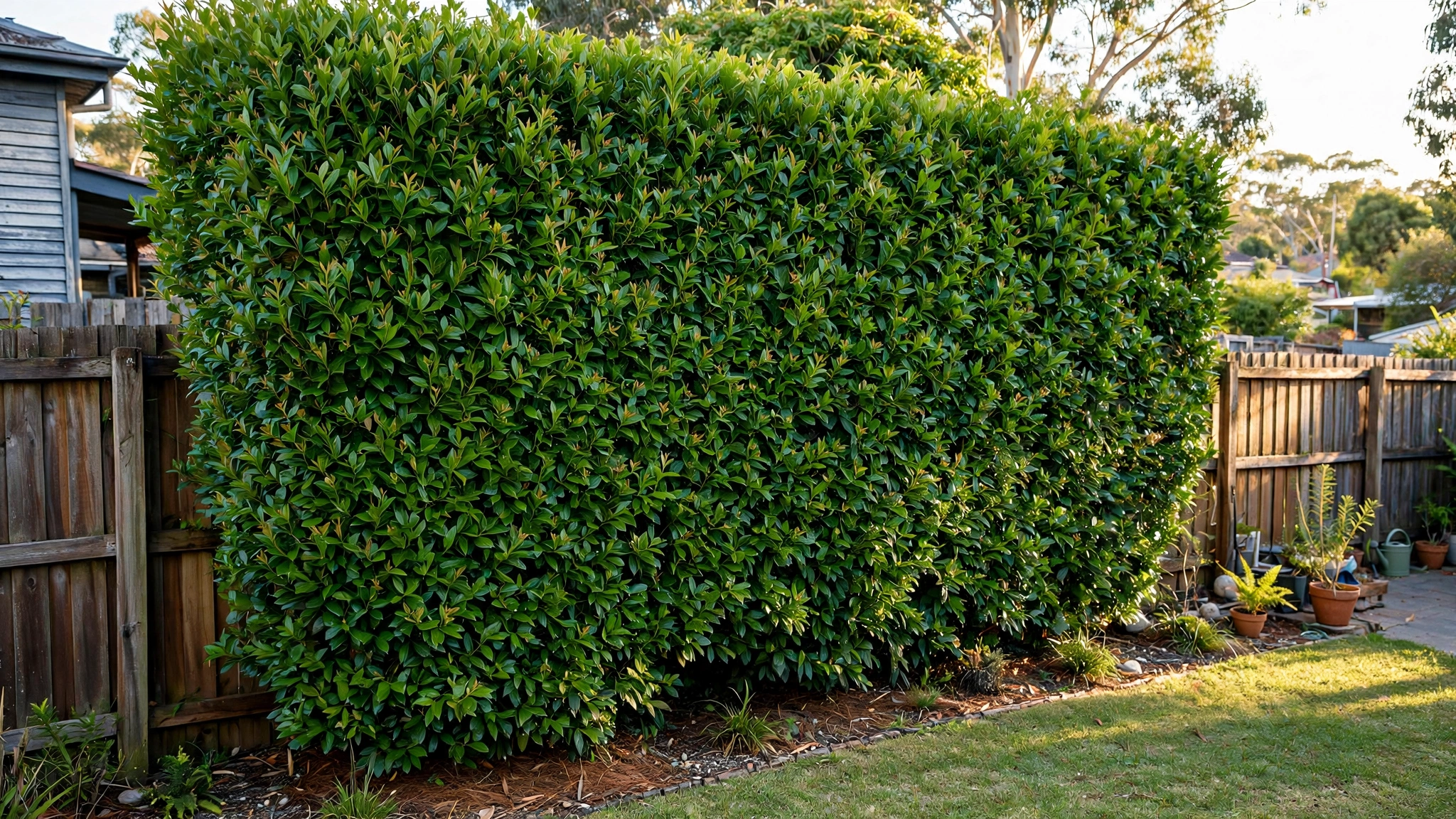
The classic Australian screen. Lilly pillies grow 50 centimetres to 1 metre a year once established, forming dense evergreen hedges 3 to 5 metres tall with glossy foliage, bronze-pink new growth, fluffy white summer flowers and edible berries that birds love.
Old varieties suffered from psyllid insects causing pimply leaves — choose modern psyllid-resistant cultivars like 'Resilience', 'Straight and Narrow' or 'Backyard Bliss'. Plant 1 to 1.5 metres apart for a hedge, in full sun to part shade, and trim 2 to 3 times a year for a crisp formal screen (or let them grow naturally for a softer look).
Murraya (Murraya paniculata)
Mock orange is a Queensland favourite that performs beautifully from Sydney northward. Dense, glossy dark-green foliage, intensely fragrant white flowers in spring and summer, and a growth rate of 50 to 75 centimetres a year to 3 to 4 metres. It clips into a superb formal hedge.
Murraya loves warmth and struggles in frost-prone inland areas and Melbourne's colder pockets — in cool climates, choose lilly pilly or viburnum instead. Plant 75 centimetres to 1 metre apart. Note: murraya is a host plant for citrus psyllid biosecurity concerns in some regions, so check current local advice.
Clumping bamboo (Bambusa species)
For the fastest screen of all, clumping bamboo is unbeatable — 1 to 2 metres of growth a year, reaching 4 to 8 metres depending on variety. 'Gracilis' (slender weaver's bamboo) is the screening superstar: upright, tight-clumping, and elegant. 'Alphonse Karr' offers golden canes with green stripes for a feature screen.
Critical warning: plant only clumping bamboos (Bambusa, Dendrocalamus). Running bamboos (Phyllostachys and similar) spread aggressively via underground rhizomes and become nightmares — some councils restrict them, and neighbours will not forgive you. Even clumping types appreciate a root barrier in small gardens. Space clumping bamboo 1 to 1.5 metres apart and water generously in the first year.
Viburnum (Viburnum odoratissimum and tinus)
A lush, large-leafed evergreen growing 50 to 75 centimetres a year to 3 to 4 metres. Viburnum odoratissimum has big glossy leaves and fragrant spring flowers; Viburnum tinus is slightly more compact and cold-hardy, suiting Melbourne, Adelaide and Canberra. Both clip well and tolerate a range of soils.
Plant 1 to 1.2 metres apart. Viburnums appreciate a little extra water in their first summer and respond well to annual feeding with a balanced slow-release fertiliser.
Photinias and pittosporum
Photinia 'Red Robin' brings brilliant red new growth to screens, growing 50 to 75 centimetres a year to 3 to 4 metres — a favourite for quick colour. Pittosporum tenuifolium 'Silver Sheen' offers shimmering fine foliage and a graceful habit to 4 metres, though it is a touch slower. Both handle most Australian conditions and clip neatly.
Native alternatives: callistemon and melaleuca
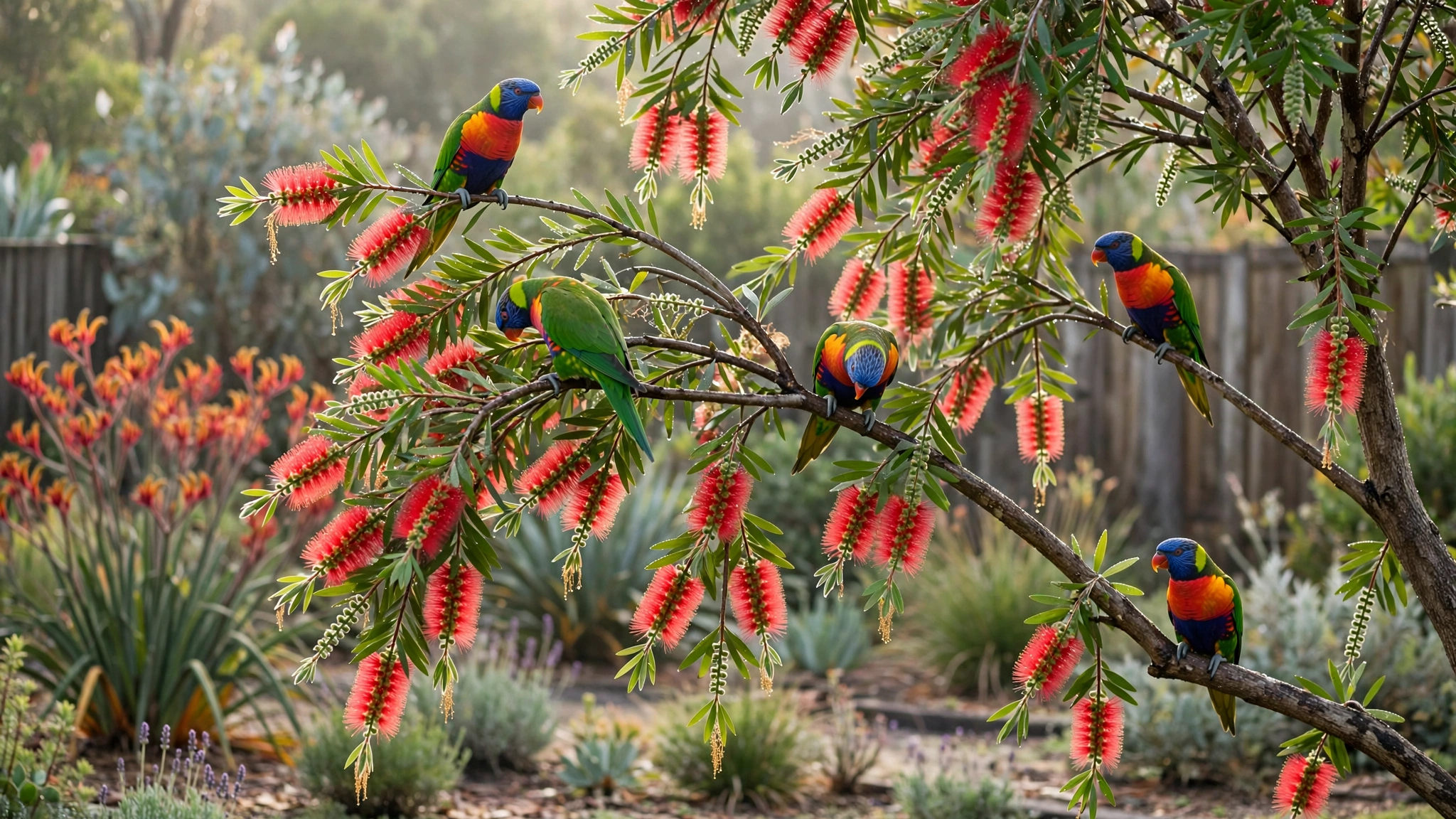
For a wildlife-friendly screen, bottlebrushes (Callistemon 'Kings Park Special', Callistemon viminalis) and paperbarks (Melaleuca linariifolia, Melaleuca styphelioides) grow quickly into bird-filled screens 3 to 5 metres tall. They need less water than exotic hedges once established and flower spectacularly. Allow slightly wider spacing — 1.5 to 2 metres — since they grow broader.
Planting for fast results
Speed comes from establishment, not just species choice. Follow these steps to get your screen racing:
- Prepare the whole row: dig or rip a trench at least 50 centimetres wide along the planting line, working composted organic matter through the soil. Never plant a screen into unprepared holes in compacted ground.
- Buy advanced stock: 200-millimetre pots or larger establish far faster than tiny tubes. The extra cost pays for itself in a year of growth.
- Space correctly: resist planting too close for "instant" cover — overcrowded plants compete, grow leggy and suffer disease. Follow the spacings above; the screen will fill in.
- Water deeply: screening hedges are thirsty in year one. Drip irrigation along the row, run twice weekly in warm weather, is the professional approach.
- Mulch thickly: 75 to 100 millimetres of mulch along the row conserves moisture and suppresses competing weeds.
- Feed in spring: a balanced slow-release fertiliser each September gives hedges the fuel for their spring growth surge. Use native fertiliser for native screens.
Realistic growth rates and timelines
Honest expectations prevent disappointment. In good conditions with proper watering and feeding:
- Year 1: establishment — roots grow more than tops. Expect modest above-ground growth.
- Year 2: the surge — most vigorous screeners add 50 centimetres to 1 metre.
- Year 3: effective screening — a 2 to 2.5 metre hedge from 200-millimetre stock is realistic for lilly pilly, murraya and viburnum; bamboo may be fully effective by year 2.
- Year 4–5: maturity — hedges reach full density and height; shift to maintenance trimming.
Gardens in warm, frost-free areas (Brisbane, coastal NSW, Perth) grow noticeably faster than cool-climate gardens (Melbourne, Canberra, Hobart), where the shorter growing season adds roughly a year to these timelines.
Buy the biggest plants you can afford, prepare the soil properly, and water like you mean it in year one. Those three things matter more than which species you choose.
Council rules and neighbour etiquette
Before planting a tall screen, check your local council's rules. Many councils limit fence and hedge heights — commonly around 1.8 metres for front fences, with more latitude at side and rear boundaries, but rules vary widely between councils. Some areas have specific vegetation protection orders or fire-safety setback requirements in bushfire-prone zones (check your BAL rating and the 10/30 and 10/50 clearing rules in NSW, or equivalent in your state).
Consider your neighbours: a screen that steals their winter sun or drops leaves into their pool breeds disputes. Plant screens inside your boundary with room for maintenance access, keep hedges trimmed to agreed heights, and choose species whose mature width suits the space. A quick friendly chat before planting a 5-metre bamboo screen is never wasted.
Maintaining your screen
Fast growers need regular trimming or they outgrow their welcome. Formal hedges need clipping 2 to 3 times a year — late spring, mid-summer and early autumn in most regions. Always taper hedges slightly (wider at the base than the top) so lower foliage receives light and stays dense.
Refresh mulch annually, feed each spring, and deep-water during extended dry spells even once established — hedges in full sun are the first to stress in heatwaves. Watch for scale and psyllids on lilly pilly and treat early with horticultural oil if needed.
Frequently Asked Questions
What is the absolute fastest screening plant for Australia?
Clumping bamboo (Bambusa 'Gracilis') is the speed champion — up to 2 metres a year, giving an effective screen in 18 to 24 months. Among traditional hedges, lilly pilly cultivars like 'Resilience' are fastest at up to 1 metre a year. Remember that speed demands water and feeding: the fastest plants are also the thirstiest in year one.
How far apart should I plant a screening hedge?
As a rule, space plants at half to two-thirds of their mature width: 1 to 1.5 metres for lilly pilly, 75 centimetres to 1 metre for murraya, 1 to 1.2 metres for viburnum, and 1 to 1.5 metres for clumping bamboo. Planting closer gives quicker cover but risks overcrowding, disease and leggy growth long-term.
Can I plant a screen right against a fence?
Allow at least 50 to 75 centimetres between the planting line and the fence. Plants need room for root and canopy growth, and you need access for trimming the back of the hedge. Planting hard against a fence also creates a damp, airless zone that encourages fungal disease.
Will screening plants damage my fence or pipes?
Vigorous hedges can push against fences as trunks thicken — the setback above prevents this. Bamboo (even clumping types) should be kept at least 2 metres from buildings, pools and pipes, ideally with a root barrier. As a general rule, do not plant large screening species within 3 metres of sewer or stormwater pipes; roots seek moisture.
What screening plant is best for a narrow side passage?
For passages under 1.5 metres wide, choose naturally narrow plants: Syzygium 'Straight and Narrow' (60 centimetres wide), slender clumping bamboo like Bambusa textilis 'Gracilis', or Pittosporum 'Silver Sheen' clipped as a narrow hedge. Avoid broad growers like murraya or viburnum in tight spaces — constant hard clipping stresses them.