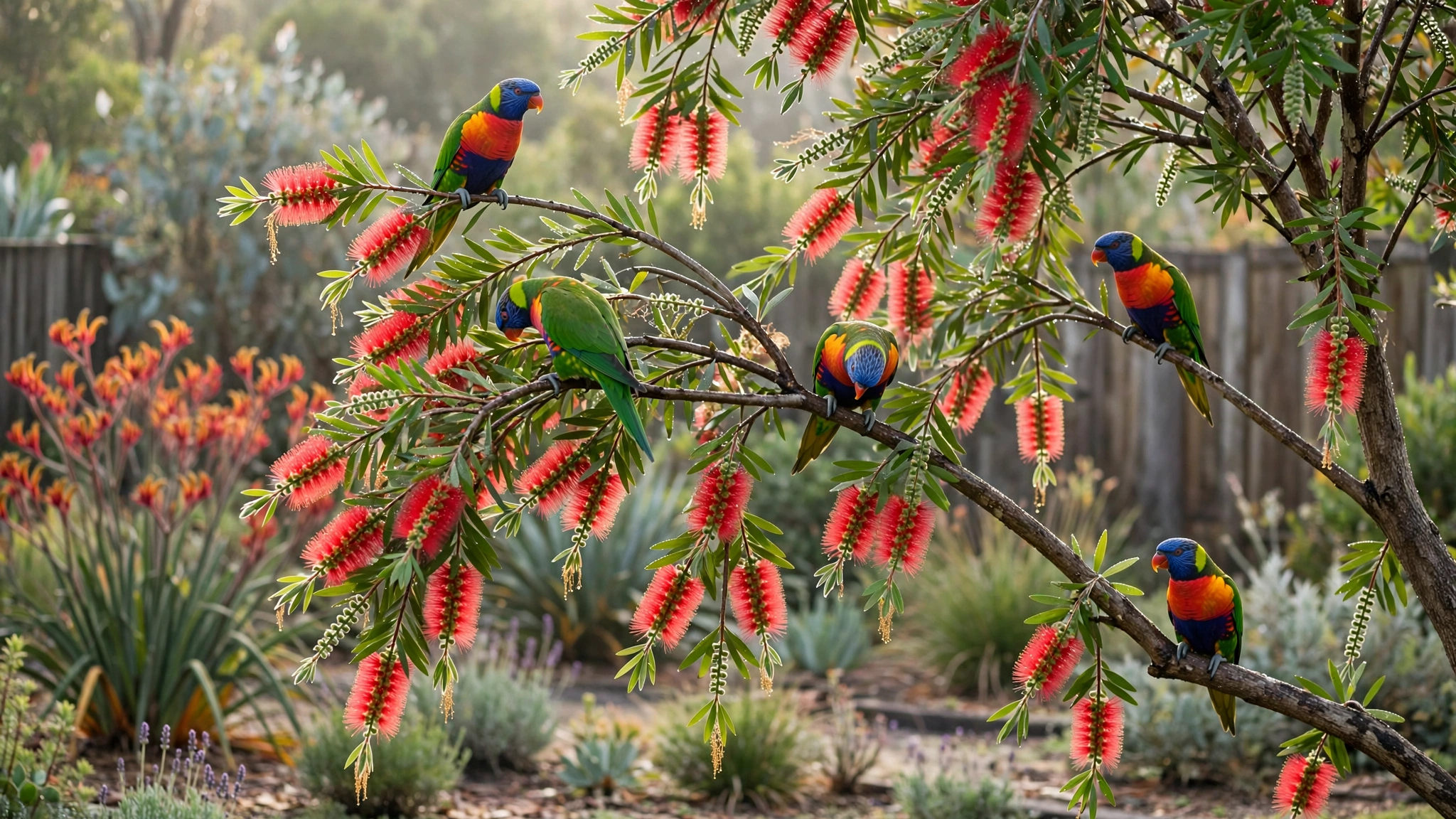
There is nothing quite like breakfast on the patio accompanied by rainbow lorikeets squabbling over bottlebrush flowers, or the delicate probing of an eastern spinebill working a grevillea. Australia's birds are among the world's most colourful and characterful — and with the right plants, your garden can become their favourite haunt.
Attracting birds is not about bird feeders or seed trays. It is about creating habitat: the food, water, shelter and nesting sites birds need, supplied the way nature intended — through Australian native plants. This guide shows you how to build a bird-friendly garden that works in any Australian city or town.
Why native plants are the key
Australian birds co-evolved with Australian plants over millions of years. Honeyeaters' curved beaks fit grevillea and banksia flowers precisely; lorikeets' brush-tipped tongues are made for harvesting nectar and pollen from eucalypts, melaleucas and callistemons. Insect-eating birds like wrens, thornbills and pardalotes depend on the insects that native foliage supports.
Exotic gardens, by contrast, are often bird deserts. A camellia or rose may look pretty, but it offers an Australian bird almost nothing to eat. Research consistently shows that gardens with a high proportion of native plants support far more bird species — and more of the small, delightful birds that aggressive species push out.
The best nectar plants for birds
Nectar is the high-energy fuel that powers honeyeaters, lorikeets and spinebills. Plant a succession of nectar producers so something is always in flower.
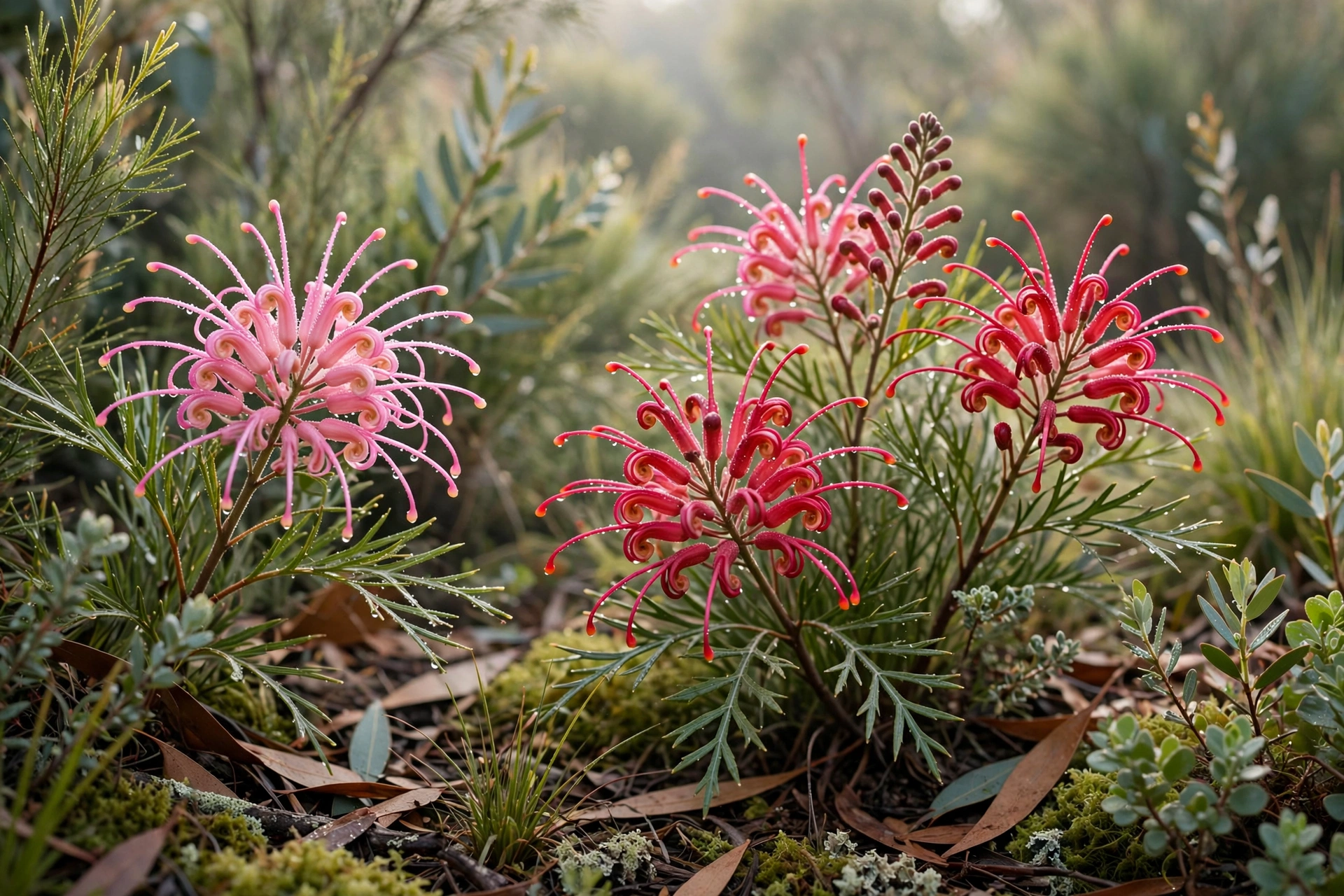
Grevillea
The number one bird plant. Varieties like Grevillea 'Robyn Gordon', Grevillea 'Superb' and Grevillea 'Moonlight' flower for months — some nearly year-round — producing the nectar-rich blooms honeyeaters adore. Plant several varieties for staggered flowering and different flower shapes that suit different beaks.
Banksia
Banksia spinulosa, Banksia ericifolia and their cultivars produce spectacular candle flowers rich in nectar through autumn and winter — a critical season when little else flowers. A single banksia in bloom can host dozens of birds at once.
Callistemon (bottlebrush)
Spring-flowering bottlebrushes are lorikeet magnets. The brush flowers suit the lorikeets' brush tongues perfectly, and a flowering Callistemon 'Kings Park Special' on a spring morning is one of the great suburban wildlife spectacles.
Eucalypts and melaleucas
Where space allows, a small eucalypt like Eucalyptus leucoxylon 'Euky Dwarf' or a melaleuca provides canopy feeding for lorikeets and honeyeaters, plus hollows and perches. Even one small gum transforms a garden's bird appeal.
Correa and epacris
For winter nectar at shrub level, correas (native fuchsia) and epacris flower through the cold months when eastern spinebills — those tiny, exquisite honeyeaters — need them most.
Do not forget the insect eaters
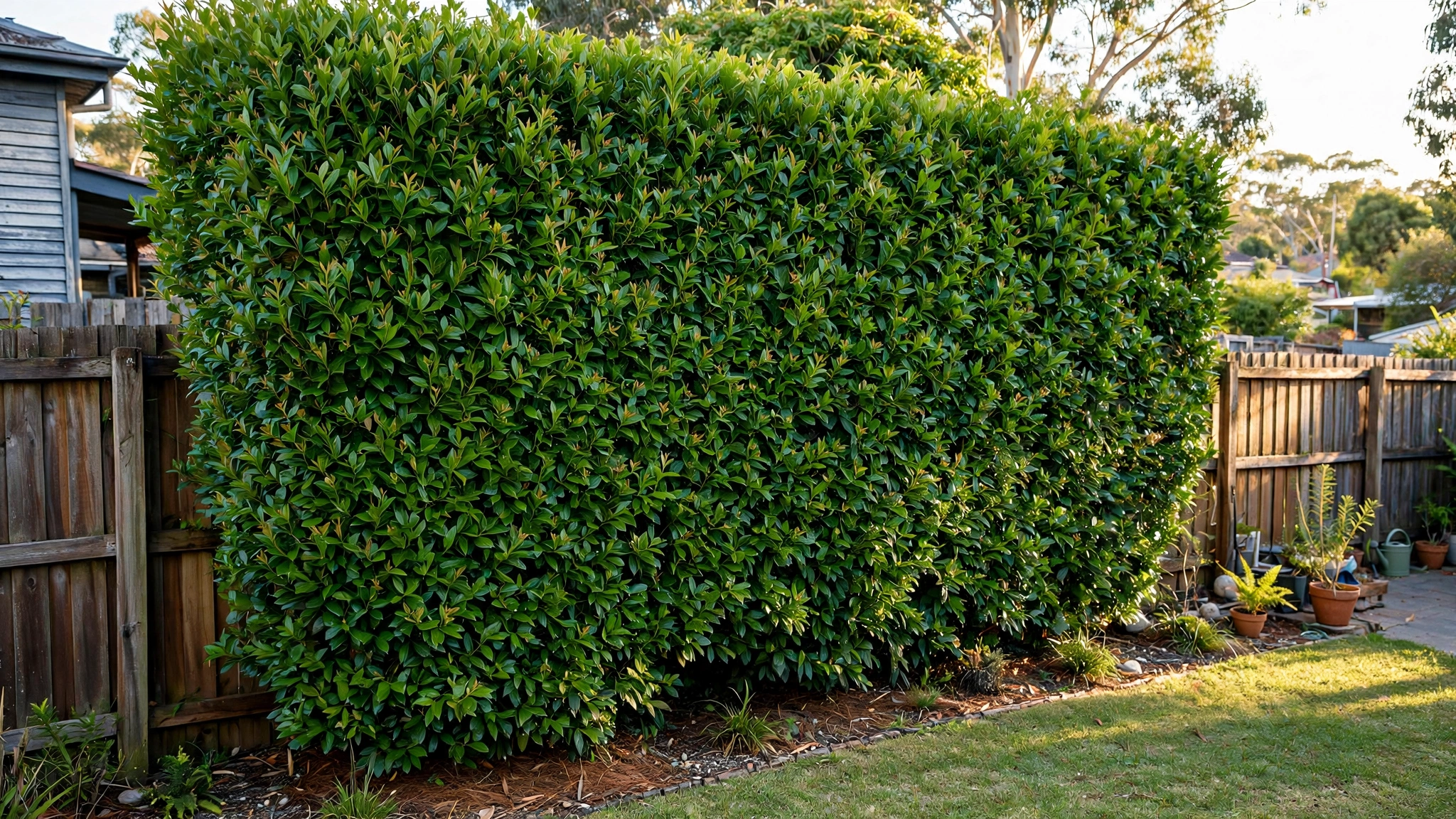
Some of Australia's most charming birds — superb fairy-wrens, thornbills, pardalotes, silvereyes — eat insects, not nectar. They need dense, prickly, layered native vegetation where insects thrive and where the birds can shelter.
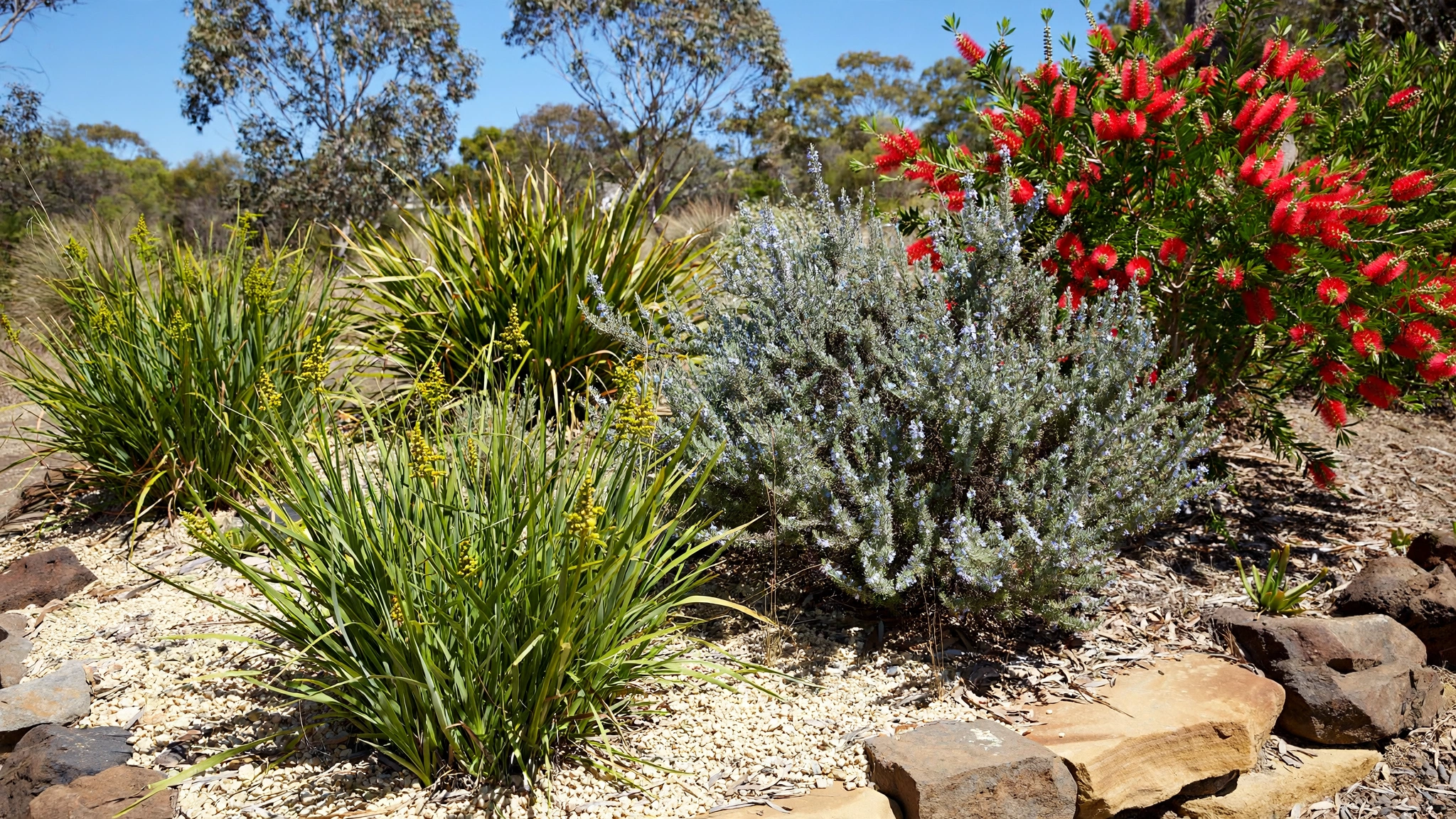
Dense shrubs like westringia, hakea, bursaria and prickly grevilleas provide this habitat. Leaf litter under shrubs harbours the insects wrens glean; resist the urge to tidy every fallen leaf. A garden that is slightly "messy" at ground level is a paradise for small insect-eating birds.
The secret to small birds is dense shrubs at knee to waist height. Open lawns with isolated trees favour aggressive noisy miners; layered native planting favours wrens.
Water: the bird magnet
Water attracts birds as reliably as flowers — sometimes more so. A birdbath is the classic, but design matters.
- Shallow and safe: water no deeper than 5 centimetres at the edges, with gently sloping sides so birds can wade.
- Elevated: place baths 1 to 1.5 metres high on a pedestal, away from dense cover where cats lurk — but with shrubs nearby for a quick escape.
- Moving water: a dripper or small solar pump keeps water fresh and the sound draws birds from afar.
- Clean regularly: scrub baths weekly and refresh water every few days to prevent mosquito breeding and disease.
- Ground-level dishes: a shallow dish at ground level in open view suits wrens and finches that avoid elevated baths.
Shelter and nesting habitat
Birds need places to hide, roost and raise young. Layer your planting: canopy trees above, dense mid-storey shrubs, and ground-level cover below. This structure mimics natural bush and suits the widest range of species.
Leave some areas undisturbed. Nesting birds need privacy — avoid pruning dense shrubs during the spring breeding season (September to November in southern Australia). Old trees with hollows are gold for parrots, kookaburras and owls; never remove a hollow-bearing tree lightly, and consider nest boxes where natural hollows are absent.
Avoid pesticides — full stop
This is non-negotiable in a bird garden. Insecticides kill the insects that wrens, thornbills and pardalotes feed their chicks; a single clutch of fairy-wren chicks needs thousands of insects. Snail pellets poison more than snails. Herbicides reduce the weedy seed heads finches eat.
Embrace biological control: the birds and predatory insects your native garden attracts will manage most pests themselves. Tolerate chewed leaves — they are evidence your garden is alive. If you must intervene, use targeted, low-toxicity options and never spray flowering plants where birds and bees feed.
Which birds can you expect?
Results vary by region, but these are common garden visitors across much of Australia once habitat is in place:
- Rainbow lorikeets: noisy, brilliant, and first to any flowering gum or bottlebrush. Common along the east coast from Queensland to South Australia.
- Honeyeaters: New Holland honeyeaters, eastern spinebills and wattlebirds work grevillea and banksia flowers methodically.
- Superb fairy-wrens: the jewel of the garden — tiny, electric-blue males bouncing through dense low shrubs.
- Eastern rosellas and crimson rosellas: drawn by seeds and fruits, spectacular in flight.
- Magpies and butcherbirds: insect patrol and the soundtrack of the suburbs — their carolling is pure Australia.
- Silvereyes and thornbills: tiny insect gleaners that arrive once dense shrubs mature.
Be patient: birds discover new habitat gradually. Nectar plants may draw lorikeets within weeks, but shy wrens can take a year or more to trust new dense plantings.
Dealing with bully birds
Noisy miners — the aggressive native honeyeater, not the introduced Indian myna — dominate many suburban gardens, harassing smaller birds relentlessly. They love open lawns with isolated trees. The antidote is exactly what this guide prescribes: reduce lawn, plant dense mid-storey shrubs, and create the layered habitat small birds need to evade them. Never feed birds artificially; feeding favours aggressive species and spreads disease.
Frequently Asked Questions
Should I put out bird feeders or seed?
No. Artificial feeding is discouraged by Australian wildlife organisations: it favours aggressive species, spreads disease at crowded feeders, and provides poor nutrition compared to natural foods. Plant nectar-rich natives and provide clean water instead — the birds will come, and they will be healthier for it.
How long before birds find my new native garden?
Bold species like lorikeets and honeyeaters often appear within weeks of the first flowers opening. Shyer birds — wrens, thornbills, pardalotes — need dense shrubs to mature, which takes 1 to 3 years. Think of it as a 3-year project: year one for flowers, years two and three for the full bird community.
Will attracting birds bring snakes?
Bird activity itself does not attract snakes. Snakes are drawn by shelter (dense ground cover, woodpiles, long grass) and food (rodents, frogs). Keep grass short near the house, store firewood off the ground, and enjoy the birds — a well-designed garden with clear sightlines is not a snake haven.
Can I attract birds with a small courtyard or balcony?
Yes. Pots of dwarf grevilleas, correas and kangaroo paws provide nectar on a balcony, and a small water dish draws birds even to upper-storey balconies. You will mostly attract honeyeaters, spinebills and silvereyes rather than ground-dwelling wrens, but the spectacle is still wonderful.
Do I need a big gum tree to attract birds?
It helps enormously — eucalypts are bird magnets — but it is not essential. Many superb bird gardens are built entirely from shrubs: grevilleas, banksias, callistemons and dense westringia. If space allows one small grafted gum like a dwarf lemon-scented gum, take it; if not, shrubs alone will still bring a rich cast of birds.