A worm farm is composting in miniature — quiet, odour-free when managed well, and astonishingly productive. A kilogram of composting worms can process roughly half their body weight in food scraps every day, turning your kitchen waste into two of the finest garden products on earth: worm castings, a gentle slow-release fertiliser, and worm tea, a potent liquid feed. For apartment dwellers, small courtyards and anyone who wants results faster than a compost bin, worms are hard to beat.
But worms are livestock, not machines. They have firm opinions about temperature, moisture and food, and Australian summers test those opinions severely. Set the farm up right — cool, shaded, well-bedded — and it will thrive for years. Get the basics wrong and you will have a smelly box and a mass escape attempt. This guide covers choosing a farm, setting it up, feeding, summer survival, harvesting, and fixing every common problem.
Choosing a Worm Farm
Stacked Tray Systems
The most popular choice in Australia is the stacked tray system: three or four shallow trays sitting over a collection sump, all under a ventilated lid. Worms start in the bottom tray and migrate upward as you add food to higher trays, which makes harvesting castings beautifully simple — just remove the finished bottom tray. They are compact, tidy, and widely available from hardware stores and nurseries. Many councils sell them at subsidised prices, so check before you buy.
DIY Options
A worm farm can be as simple as two nested polystyrene boxes or a bathtub with a tap. DIY farms cost almost nothing and work perfectly well, though harvesting is messier without the tray system. Whatever you build, it needs drainage holes, a lid that keeps light out but lets air in, and protection from rain — a waterlogged worm farm is a dead worm farm.
How Many Worms?
Start with 1,000–2,000 composting worms (roughly 250–500 grams). The standard species in Australia is the tiger worm or red wriggler — do not use common garden earthworms, which are soil dwellers and will not thrive in a farm. Buy from a reputable supplier; a healthy starter colony should be lively and accompanied by some of their original bedding.
Setting Up: Bedding First, Worms Second
Worms live in their bedding, not in your food scraps — the bedding is their home, and food is just the room service. Set up the farm at least a few days before the worms arrive:
- Soak and wring coir or shredded newspaper. Coconut coir blocks, soaked and fluffed up, make ideal bedding. Shredded newspaper, cardboard or aged compost also work. It should feel like a wrung-out sponge.
- Fill the working tray two-thirds full with damp bedding, fluffed loosely for airflow.
- Add a handful of soil or crushed eggshells. Worms need grit in their gizzards to process food, and eggshells buffer acidity.
- Cover with damp newspaper or a hessian sack to keep the bedding dark and moist.
- Let it settle for a few days, then gently introduce the worms on top. They will burrow down away from the light.
What Worms Eat (and What They Do Not)
Worms are not fussy, but they are slow. Feed little and often rather than dumping a week's scraps at once — uneaten food rots and sours the farm.
Worm favourites: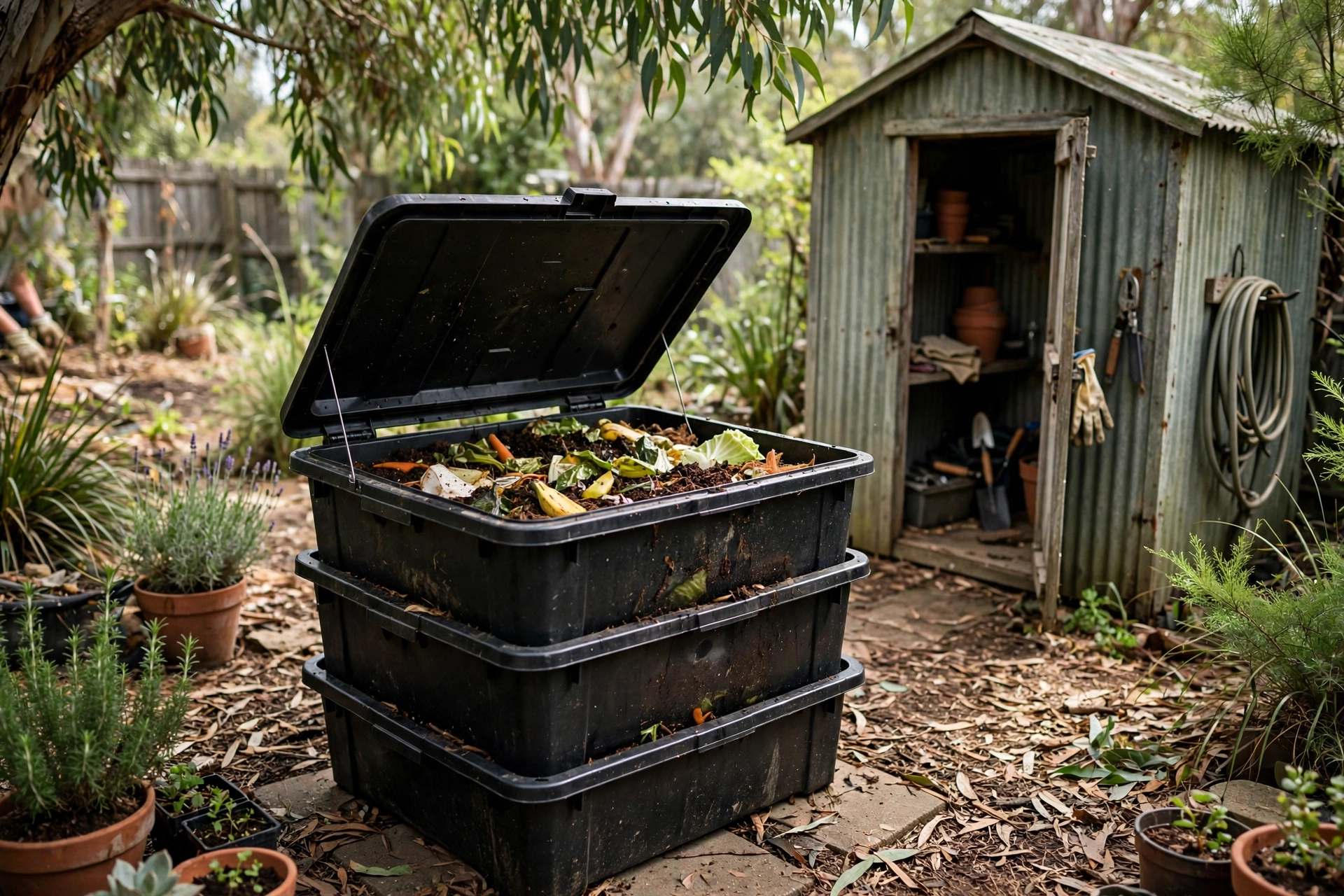
- Fruit and vegetable scraps, chopped small
- Coffee grounds and tea leaves
- Crushed eggshells
- Shredded newspaper, cardboard and paper towel
- Cooked plain rice and pasta in small amounts
- Aged animal manure (horse, cow — never fresh)
Keep out:
- Meat, dairy, fats and oils. They go rancid and attract vermin.
- Citrus and onions in quantity. Small amounts are tolerated, but large amounts make the farm acidic and worms hate it.
- Spicy food and garlic in bulk. Worms avoid them.
- Glossy paper and treated cardboard. Inks and chemicals do not belong in the farm.
- Fresh grass clippings in thick layers. They heat up as they decompose and can literally cook your worms.
Placement: Shade Is Everything
This is the section that matters most in Australia. Worms thrive between about 15°C and 28°C. Below 10°C they slow down; above 32°C they start dying. On a 40-degree day in western Sydney, Adelaide or Perth, a worm farm in full sun becomes an oven within hours.
Site your farm in permanent shade: under a pergola, on the southern side of the house, in a carport or shed with airflow. In extreme heat, freeze a plastic bottle of water and lay it in the bedding, drape a wet towel over the farm, and make sure the bedding is moist — evaporation cools the farm significantly. In cold southern winters (looking at you, Hobart and the Dandenong Ranges), move the farm to a sheltered spot against a north-facing wall and add extra bedding as insulation.
The Feeding Routine
For the first month, feed sparingly — a small handful of scraps every few days — while the colony settles and multiplies. Bury each feeding under the bedding or a layer of damp newspaper to deter fruit flies. Once the population builds (you will notice more worms and faster disappearance of food), increase gradually. A mature farm handles roughly its worms' weight in scraps every couple of days.
Always add a handful of shredded cardboard or newspaper with each feeding. This "brown" balances the wet food scraps, prevents sogginess, and gives worms the carbon-rich material they need. If the farm ever smells sour, stop feeding for a week, add dry bedding, and sprinkle crushed eggshells to sweeten it.
Harvesting Worm Castings and Worm Tea
Castings
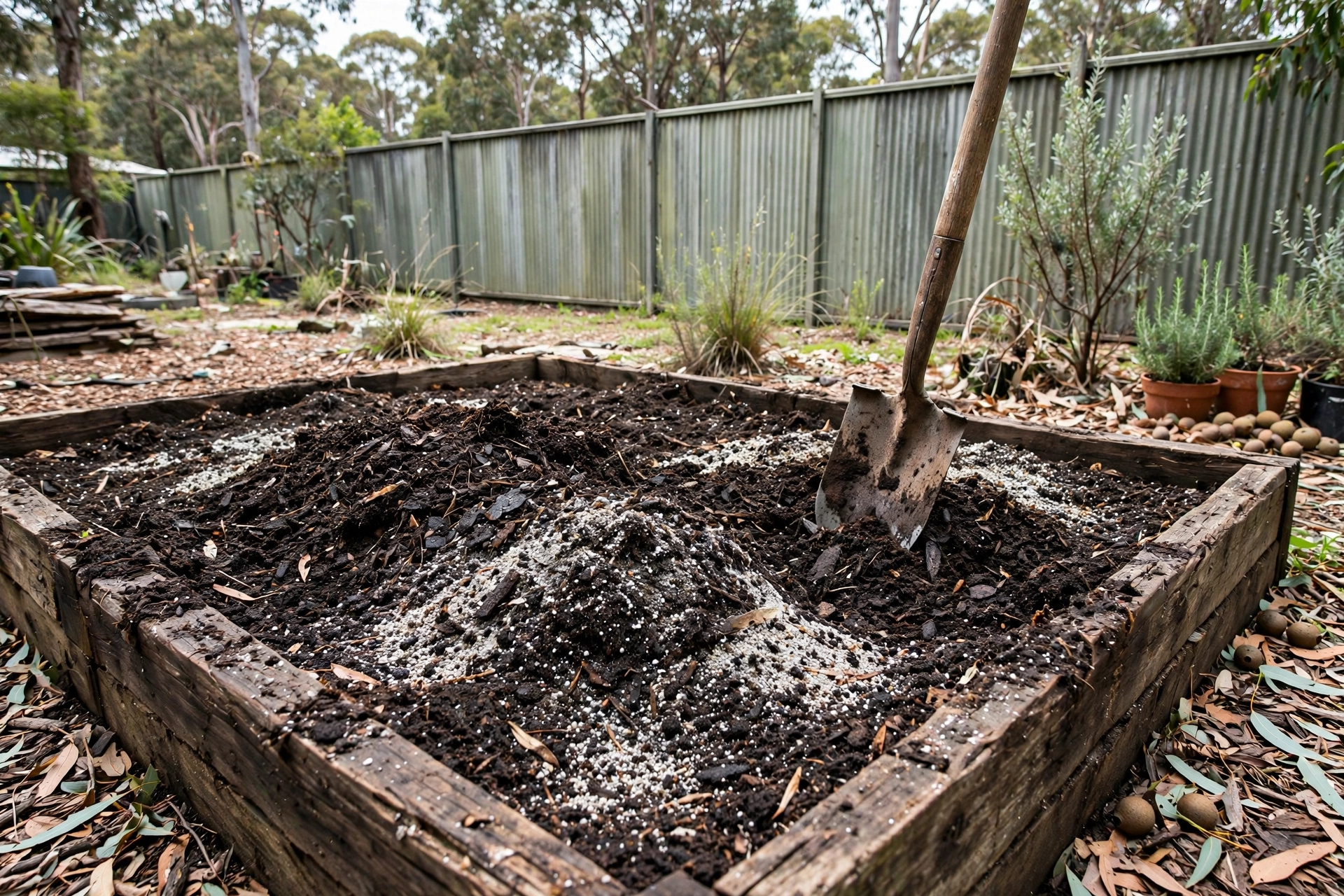
In a stacked system, when the bottom tray is full of dark, crumbly castings and the worms have migrated upward, simply remove it, harvest, and return the empty tray to the top. In a single-bin farm, push all contents to one side, add fresh bedding and food to the empty side, and wait two weeks — the worms migrate to the food, leaving finished castings behind. Use castings as a top-dressing around plants, mix into potting mix at about one part castings to three parts mix, or sprinkle into planting holes.
Worm Tea
The liquid that collects in the sump is concentrated worm leachate — dilute it to the colour of weak tea (roughly 1:10 with water) and use it as a liquid feed. Genuine aerated worm tea, brewed with an air pump, is even better, but simple diluted leachate still gives plants a noticeable boost. Use it within a day or two of collecting, and never apply it undiluted — it is strong stuff.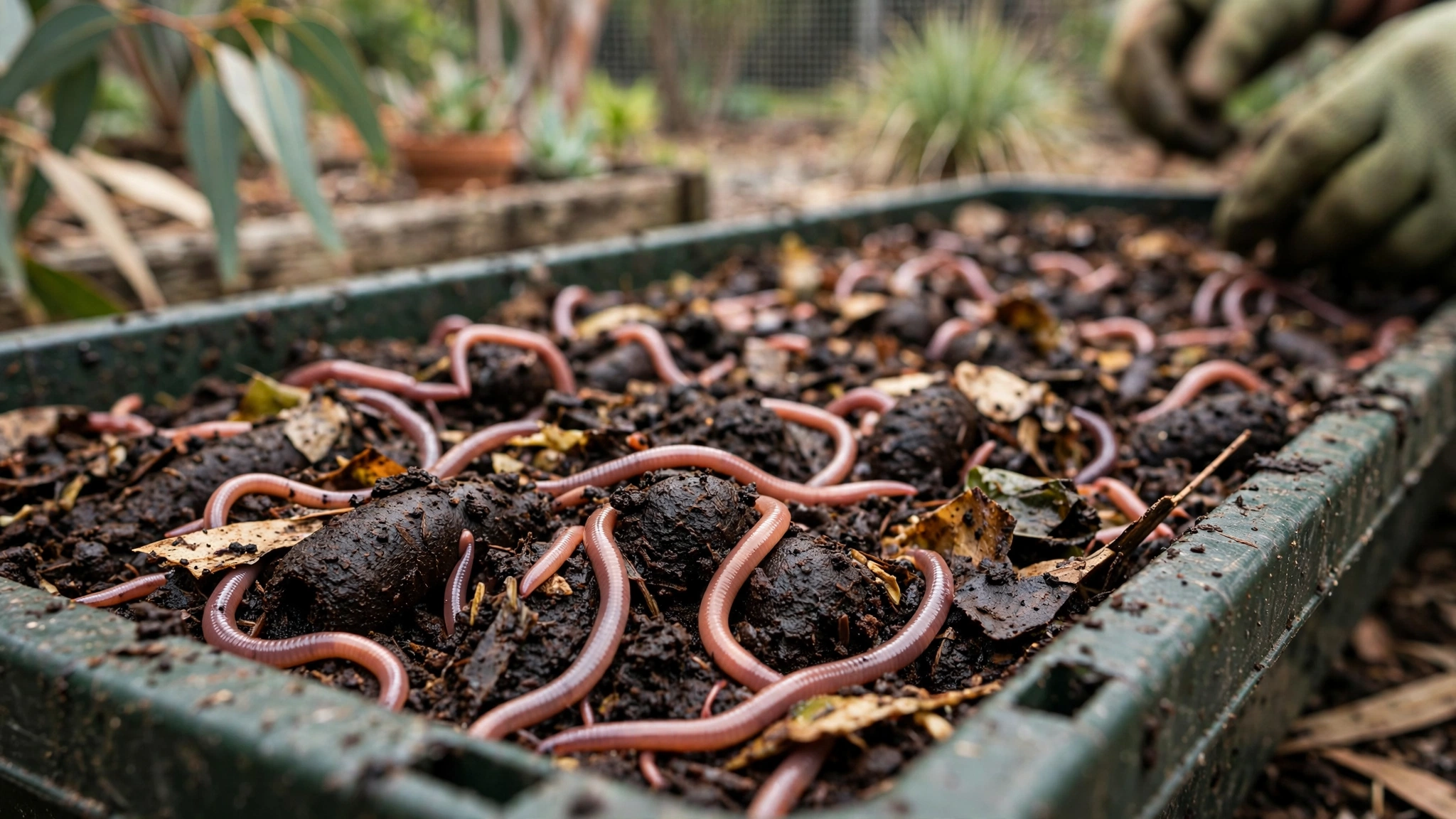
Troubleshooting
Worms are trying to escape
Mass escape attempts mean something is wrong: usually heat, waterlogging, acidity, or overfeeding. Check bedding moisture (wrung-sponge damp, not dripping), add dry bedding and eggshells, stop feeding for a few days, and ensure the farm is cool and shaded. A few explorers after rain is normal; a mass exodus is an emergency.
Fruit flies
Always bury food under bedding, keep a damp newspaper or hessian cover on the surface, and avoid overfeeding. A small dish of apple cider vinegar with a drop of detergent nearby traps the adults.
The farm smells bad
Anaerobic conditions from overfeeding or waterlogging. Stop feeding, add lots of dry shredded cardboard, fluff the bedding for air, and check drainage holes are not blocked.
Ants
Ants mean the farm is too dry. Water the bedding well and stand the farm's legs in tins of water to create a moat. Once moisture is right, the worms outcompete the ants.
Maggots or soldier fly larvae
Black soldier fly larvae often appear in summer and actually help break down scraps, but in large numbers they outcompete worms and make the farm wet. Reduce wet feed, add dry browns, and ensure the lid fits well to stop adult flies laying eggs.
A worm farm is the smallest livestock enterprise you will ever run — and pound for pound, the most productive. Treat the worms well and they will feed your garden for years.
Frequently Asked Questions
How many worms do I need to start?
Start with 1,000–2,000 worms (about 250–500 grams). The colony doubles every few months under good conditions, so you do not need a huge starter — patience and correct feeding do the rest.
Can I keep a worm farm on a balcony or indoors?
Yes — worm farms are ideal for small spaces because they are compact and odour-free when managed correctly. Keep it shaded, ventilated and protected from heavy rain. A laundry or shaded balcony corner works well.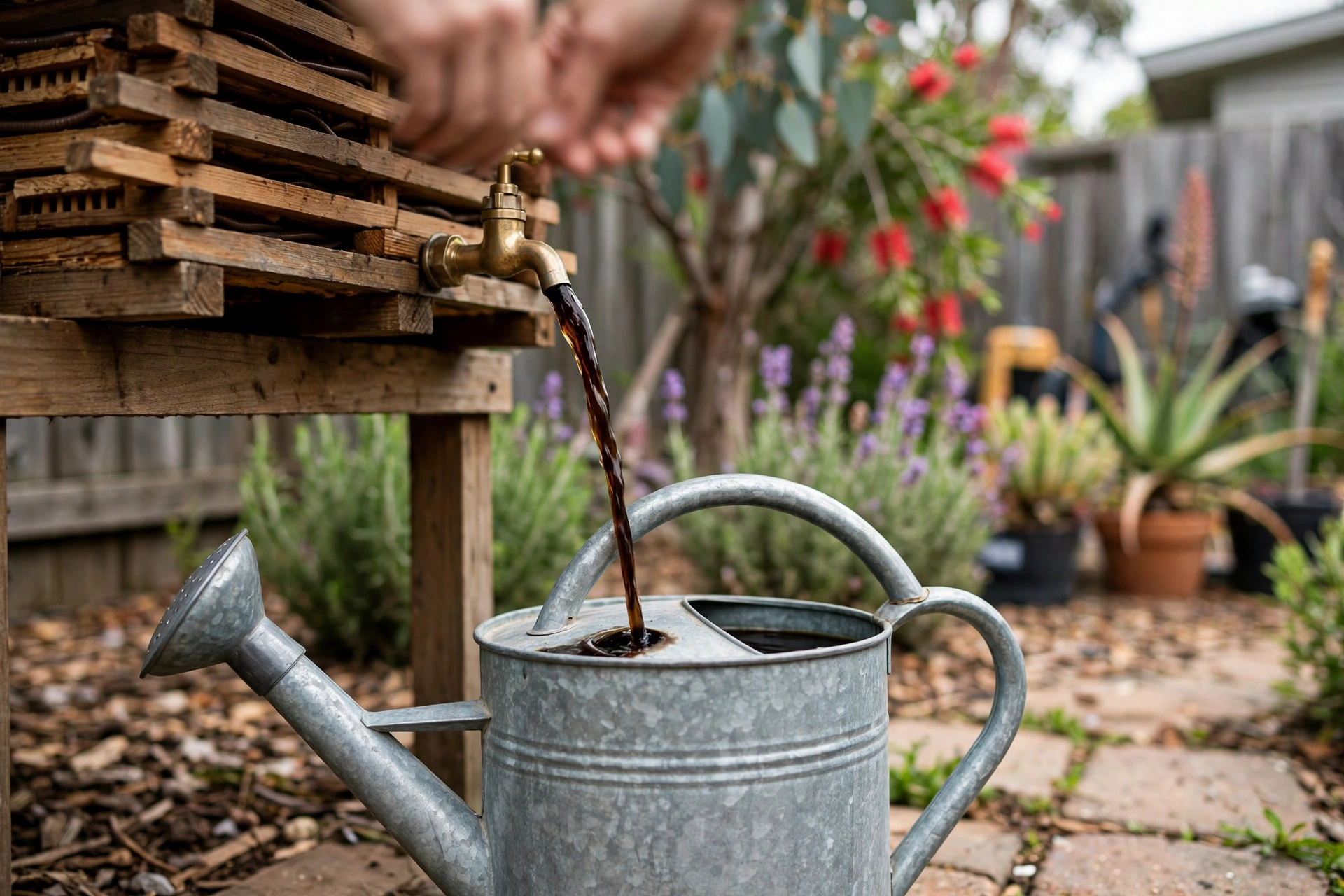
Will my worm farm survive an Australian summer?
Yes, with shade and moisture management. Permanent shade is non-negotiable. During heatwaves, add frozen water bottles, drape wet towels over the farm, and keep bedding moist. Worms can survive short hot spells if the bedding stays damp and shaded.
How often should I feed the worms?
Little and often — a small handful every two to three days for a new farm, increasing as the colony grows. If food from the last feeding is still visible, wait before adding more.
Is worm tea the same as the liquid from the sump?
Strictly speaking, the sump liquid is leachate rather than brewed worm tea, but gardeners use the terms interchangeably. Dilute it 1:10 with water and it makes an excellent liquid feed either way.