Mulch is the unsung hero of the Australian garden. In a climate where summer temperatures soar, rain can vanish for months, and evaporation steals moisture from the soil almost as fast as you apply it, a good layer of mulch is not a luxury — it is essential garden infrastructure. The right mulch keeps soil cool, holds moisture in the root zone, suppresses weeds, and slowly feeds the soil as it breaks down.
But walk into any nursery or landscape supply yard and you will face a wall of choices: sugar cane, pea straw, bark chips, eucalyptus mulch, lucerne, pine bark, tea tree mulch and more. Each behaves differently, suits different plants, and carries different trade-offs. Choose well and your garden thrives with less watering; choose poorly and you can stunt seedlings, invite termites too close to the house, or watch your mulch blow away in the first spring westerly.
Why Mulch Matters More in Australia
Australian conditions are uniquely demanding. Much of the country sits on poor, ancient soils that are low in organic matter. Summers bring intense heat and high evaporation rates — in Perth, Adelaide or western Sydney, a bare garden bed can lose several millimetres of water per day to evaporation alone. Winter can be surprisingly dry too, particularly in southern capitals.
A 75–100 mm layer of mulch changes this equation dramatically. Research and long gardener experience agree that mulch can cut evaporation by up to 70 percent, moderate soil temperature swings by several degrees, and prevent the soil surface from crusting over — a particular problem with the heavy clay soils common across Sydney, Melbourne and Brisbane. Over time, organic mulches decompose and build the soil's structure from the top down, encouraging earthworms and beneficial microbes.
Mulch Types Compared
Sugar Cane Mulch
Sugar cane mulch, made from the crushed residue of sugar cane stalks, is one of Australia's most popular mulches — and for good reason. It is inexpensive, widely available, spreads easily, and breaks down relatively quickly, feeding the soil as it goes. Its fine texture knits together into a mat that resists wind and stays put on slopes.
It suits vegetable gardens and flower beds beautifully. The main caveat is that because it is high in carbon, it can temporarily tie up nitrogen in the soil surface as it decomposes. Scatter a light feed of blood and bone or a nitrogen-rich fertiliser underneath before laying it, or top up plant feeding a little more often during the season. Also check the bale for cane toads' habitat hitchhikers if you are in Queensland — a quick shake-out before spreading is good practice.
Pea Straw
Pea straw is the premium soft mulch. It is rich in nitrogen compared with most other mulches, so it feeds the soil generously as it breaks down, and it looks attractive with its golden colour. Vegetable gardeners swear by it: lay it thickly around tomatoes, cucumbers and zucchini and you will get cleaner fruit, fewer soil-borne diseases splashing onto leaves, and noticeably happier plants.
The downsides are price and longevity. Pea straw costs more than sugar cane mulch and decomposes fast — expect to top it up at least twice a year in warm climates. It can also carry the occasional pea seed that sprouts, which is harmless but mildly annoying. Buy from a reputable supplier to minimise weed seed.
Bark Chips and Pine Bark
Coarse bark mulches are the workhorses of ornamental and native gardens. They last a long time — often 18 months to two years before needing a top-up — look tidy, and stay where you put them. Larger nuggets are excellent on slopes and in windy spots where lighter mulches migrate.
Be aware that chunky bark is best kept to paths and shrub beds rather than right up against the stems of small annuals and vegetables, where big pieces can be awkward. Like sugar cane mulch, bark draws nitrogen from the soil surface as it breaks down, so apply a balanced fertiliser first. In bushfire-prone areas, check your local council's guidance: some high-risk zones restrict or discourage flammable mulches near homes.
Eucalyptus Mulch
Eucalyptus mulch, often sold as eucy mulch, is made from chipped eucalyptus timber and bark. It has a distinctive aroma, a rich reddish-brown colour, and a reputation for lasting well. It is a natural fit aesthetically for Australian native gardens.
There is a persistent myth that eucalyptus mulch poisons the soil. In practice, the allelopathic compounds in fresh eucalyptus break down quickly once the mulch is spread and watered in, and established plants are unaffected. That said, use composted or aged eucalyptus mulch rather than fresh where possible, and keep it away from delicate seedlings. Its longevity makes it a solid, economical choice for large native beds.
Lucerne (Alfalfa) Mulch
Lucerne is the heavyweight feeder of the mulch world. It is exceptionally high in nitrogen, so it actively fertilises as it decomposes — almost like a slow-release feed. Roses, fruit trees and hungry vegetables respond brilliantly to it.
The trade-off is cost: lucerne is usually the most expensive common mulch, and it breaks down quickly, so it needs regular replenishing. It can also heat up in the bale if stored damp, so buy from a supplier with good turnover. A smart strategy is to use lucerne where plants are hungriest and a cheaper mulch elsewhere.
Matching Mulch to Your Plants
Australian Natives
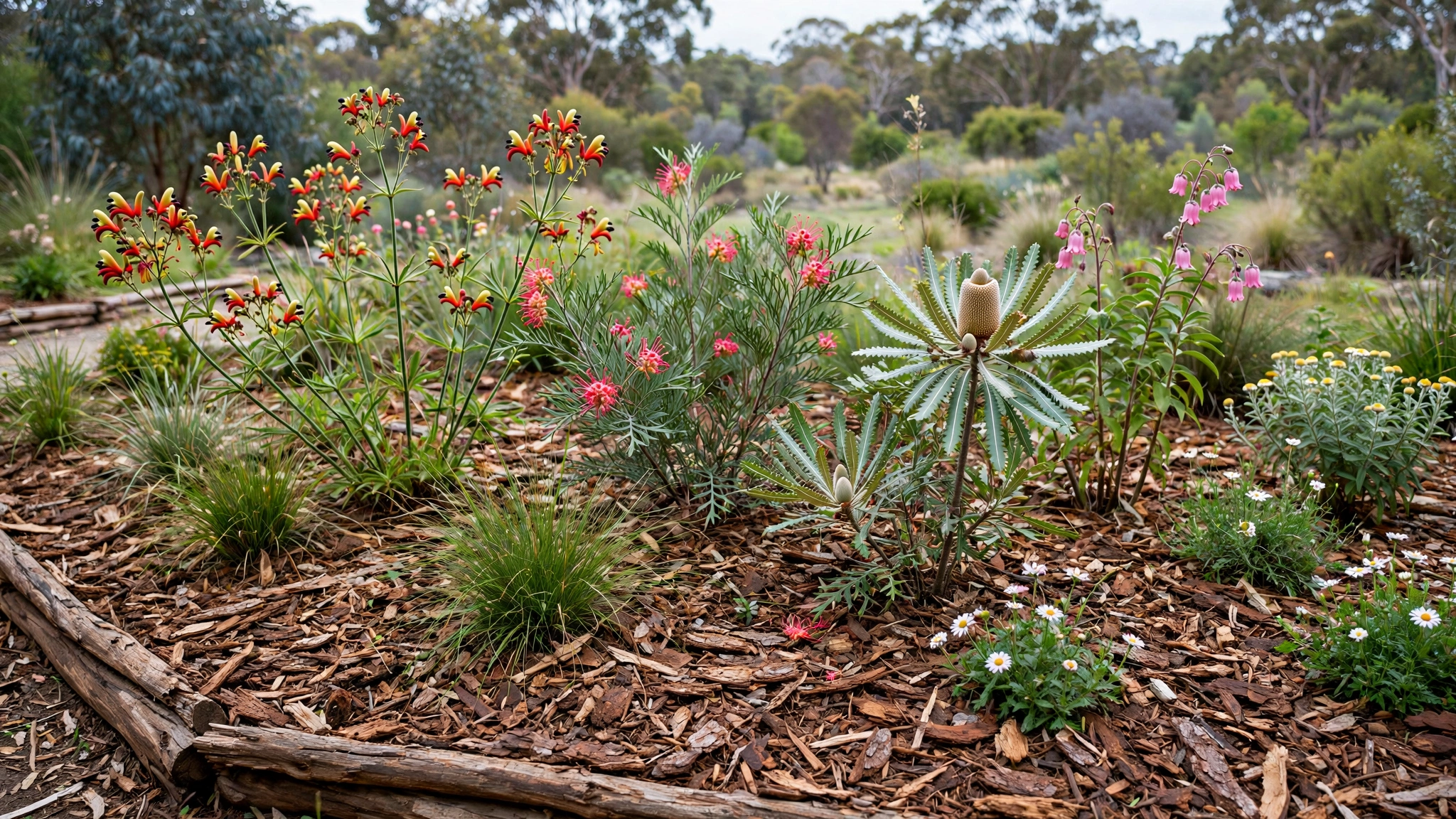
Native plants — grevilleas, banksias, callistemons, kangaroo paws — evolved in low-nutrient soils and many are sensitive to phosphorus. Pair them with a low-nutrient, long-lasting mulch such as aged eucalyptus mulch, pine bark or tea tree mulch. Avoid rich, high-nitrogen mulches like lucerne and pea straw directly around phosphorus-sensitive species, as the nutrient flush can do more harm than good. Keep mulch 5–10 cm away from stems and trunks to prevent collar rot, a common killer of natives in humid coastal gardens.
Veggie Gardens and Fruit Trees
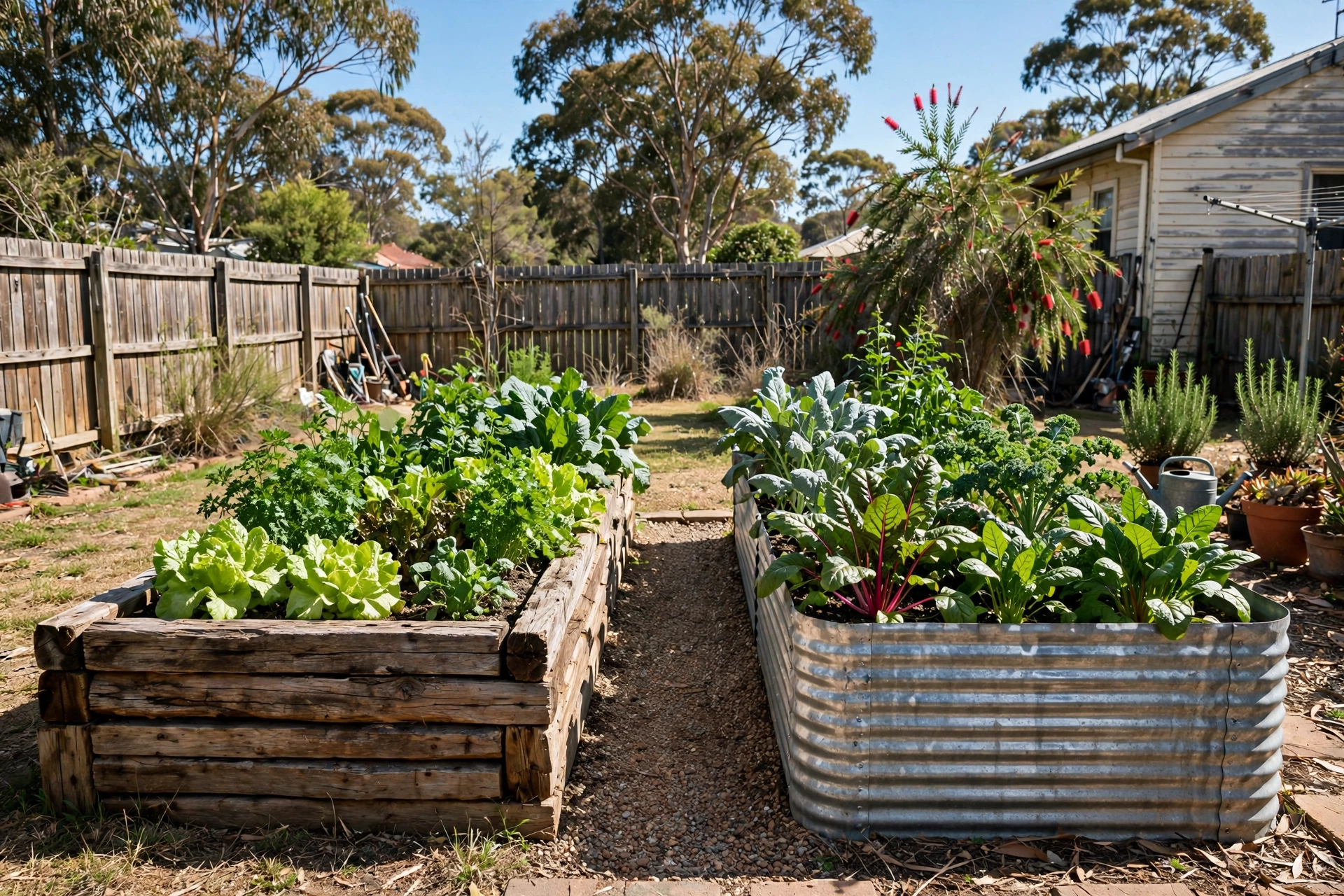
Vegetables are the opposite: hungry, fast-growing, and appreciative of every scrap of nutrition. Pea straw, lucerne and sugar cane mulch are the top picks here. Lay them 75–100 mm deep once seedlings are established (keep fine mulches a few centimetres from tiny stems), and top up through the growing season. Under fruit trees, a generous ring of mulch out to the drip line keeps roots cool and moisture consistent — just keep it clear of the trunk itself.
How to Apply Mulch Properly
- Weed first. Mulch suppresses new weeds brilliantly but will not kill established ones. Clear the bed thoroughly before you start.
- Water deeply. Soak the soil well before mulching so you are locking moisture in, not locking it out.
- Feed underneath. Scatter a general-purpose organic fertiliser or blood and bone over the bed, especially under high-carbon mulches like bark and sugar cane.
- Spread to the right depth. Aim for 75–100 mm for most mulches. Less than 50 mm will not suppress weeds or hold moisture effectively.
- Keep clear of stems. Leave a 5–10 cm gap around plant stems and tree trunks. Mulch piled against bark — the dreaded "mulch volcano" — causes rot and invites pests.
- Water it in. Give the fresh mulch a good soaking to settle it and kick-start decomposition.
When to Mulch
In most of Australia, the ideal time to apply or top up mulch is late winter to early spring (August to October). This locks in winter moisture before the heat arrives and gives the mulch time to settle before summer. A second top-up in late summer or early autumn helps beds recover from the hottest months. Avoid mulching bone-dry soil in the middle of a heatwave — water deeply first, or wait for rain.
Common Mulch Mistakes to Avoid
- Mulching too thinly. A token 20 mm scattering looks nice for a week and does almost nothing. Commit to the full 75–100 mm.
- Piling mulch against trunks and stems. This is the single most common cause of plant death by mulch. Always leave a gap.
- Using fresh, uncomposted wood chips on hungry plants. Fresh woody material robs nitrogen aggressively. Age it or compost it first, or reserve it for paths.
- Mulching over dry soil. Mulch is a lid, not a watering can. Soak first.
- Ignoring bushfire rules. If you live in a fire-prone area, choose your mulch type and placement with your local fire authority's guidelines in mind, and keep garden beds nearest the house clear of fine, flammable mulches.
Mulch is the cheapest insurance policy your garden can have. For the cost of a few bales, you buy cooler soil, half the watering, and far fewer weeds — there is no other single job that pays back so handsomely.
Frequently Asked Questions
How deep should mulch be in Australian gardens?
Aim for 75–100 mm for most organic mulches. This depth suppresses weeds, holds moisture and insulates roots. Anything under 50 mm is mostly decorative and will not deliver the real benefits.
Is sugar cane mulch or pea straw better for vegetables?
Both work well. Pea straw feeds the soil more thanks to its higher nitrogen content, but costs more and breaks down faster. Sugar cane mulch is cheaper and longer-lasting, but apply a nitrogen-rich fertiliser underneath to offset nitrogen drawdown. Many gardeners use sugar cane as the base layer and pea straw as the top-up.
Will eucalyptus mulch harm my plants?
No — this is largely a myth. Any allelopathic compounds in eucalyptus break down quickly once spread and watered. Use aged eucalyptus mulch, keep it away from delicate seedlings, and it is perfectly safe, particularly for native gardens.
Can I mulch in summer?
Yes, but only after watering the soil deeply first. Mulching dry soil in hot weather seals dryness in. Early morning is the best time, and a follow-up soak helps the mulch settle.
How often should I replace mulch?
Fast-decomposing mulches like pea straw and lucerne need topping up two to three times a year. Sugar cane mulch lasts around six to twelve months. Coarse bark and eucalyptus mulches can go 18 months to two years. Top up whenever the layer drops below 50 mm.