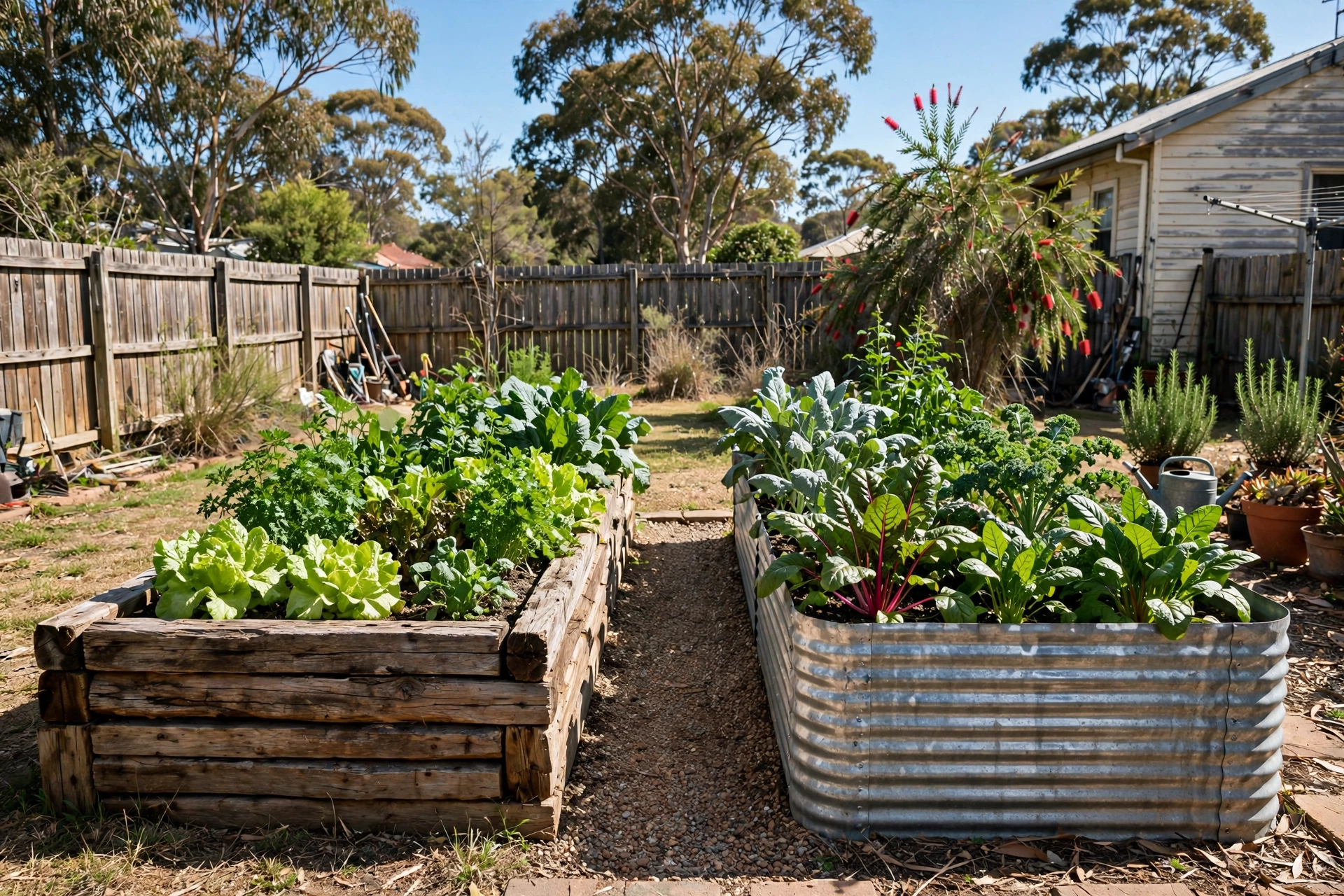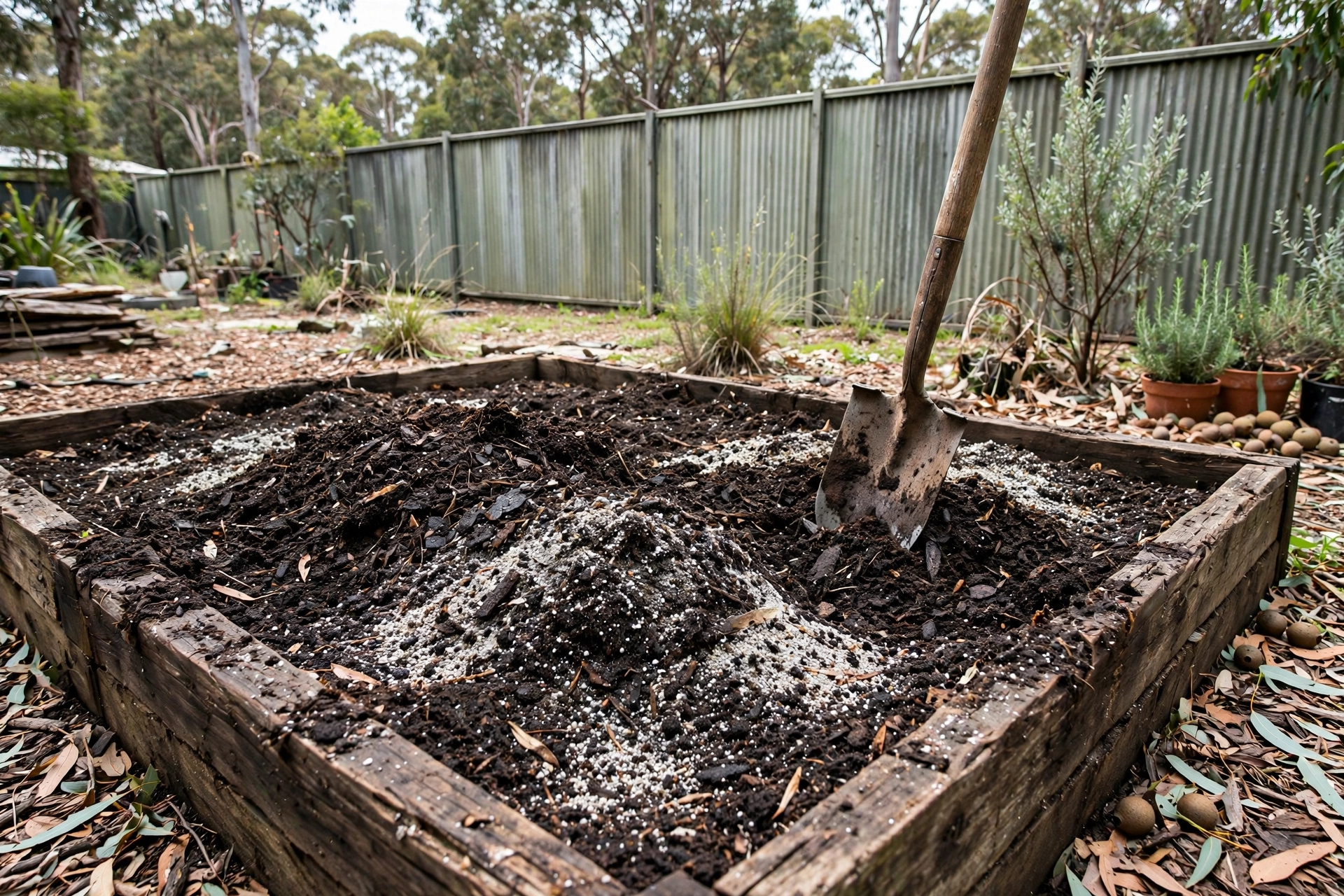
Every year, Australian households send millions of tonnes of food and garden waste to landfill, where it rots without oxygen and releases methane — a greenhouse gas far more potent than carbon dioxide. The irony is that this "waste" is garden gold. Composting turns kitchen scraps and garden clippings into rich, dark humus that transforms tired soil, feeds plants, and costs nothing to make.
Getting started is far simpler than most people imagine. You do not need special equipment, a big backyard, or any prior experience. Whether you have a sprawling suburban block or a modest courtyard, there is a composting method that fits. This guide walks you through everything a beginner needs: choosing a bin, what goes in and what stays out, hot versus cold composting, and how to fix the problems that make beginners give up.
Choosing Your Compost System
Stationary Compost Bins
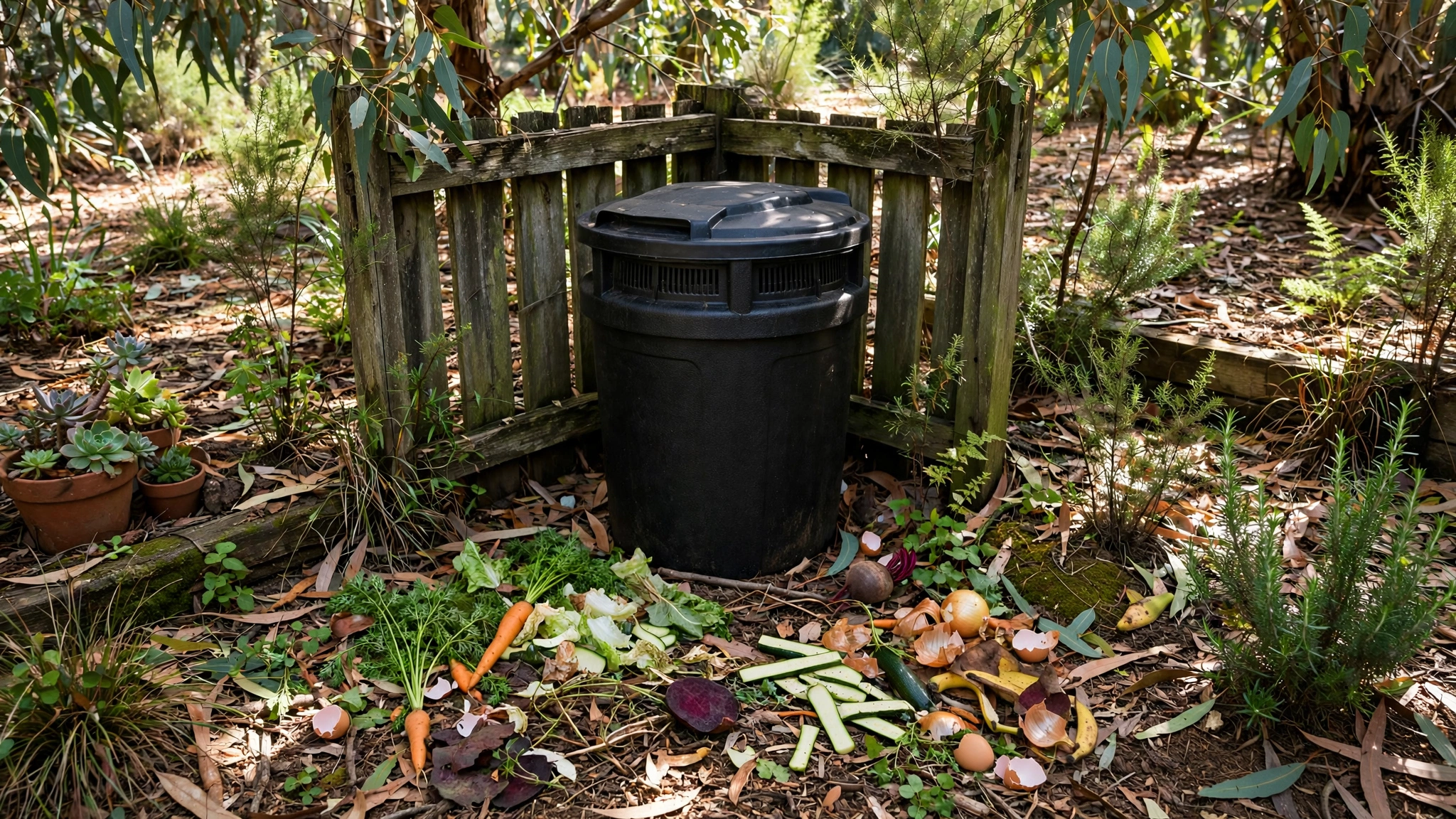
The classic black plastic bin with a lid and a hatch at the bottom is the most common starter system in Australia, and many councils offer them at subsidised prices — some even run rebate programmes, so check your council's website before buying. They are compact, tidy, keep vermin out, and work well in small yards. The downside is that turning the contents is awkward, so decomposition is slower.
Compost Tumblers
Tumblers are sealed drums on a frame that you spin to aerate the contents. They compost faster than static bins, keep rodents out completely, and are easy on the back. They cost more and hold less than a bay system, but for a household of two to four people they are an excellent set-and-forget option.
Open Bays
Three wooden bays made from pallets or sleepers are the traditional workhorse: one bay for fresh material, one actively composting, one maturing. They handle large volumes of garden waste, are easy to turn with a fork, and cost almost nothing to build. They need more space and are less tidy, so they suit larger blocks.
In-Ground and Trench Composting
The simplest method of all: dig a trench or hole in a garden bed, bury kitchen scraps, and cover with soil. Worms and microbes do the rest. It is invisible, free, and brilliant for renters or small gardens — just rotate the burial spots around the yard.
Greens and Browns: The Golden Ratio
Everything you compost falls into two categories. "Greens" are nitrogen-rich, moist materials: fruit and vegetable scraps, coffee grounds, tea leaves, fresh grass clippings, and manure. "Browns" are carbon-rich, dry materials: fallen leaves, straw, shredded newspaper and cardboard, wood chips, and dry prunings.
Aim for roughly two to three parts browns to one part greens by volume. Too many greens and the pile turns slimy, smelly and airless. Too many browns and decomposition crawls. Most beginner problems come down to this balance — and in practice, most beginners need to add more browns, not more greens. Keep a bag of shredded cardboard or a bale of straw next to the bin and toss in a handful every time you add kitchen scraps.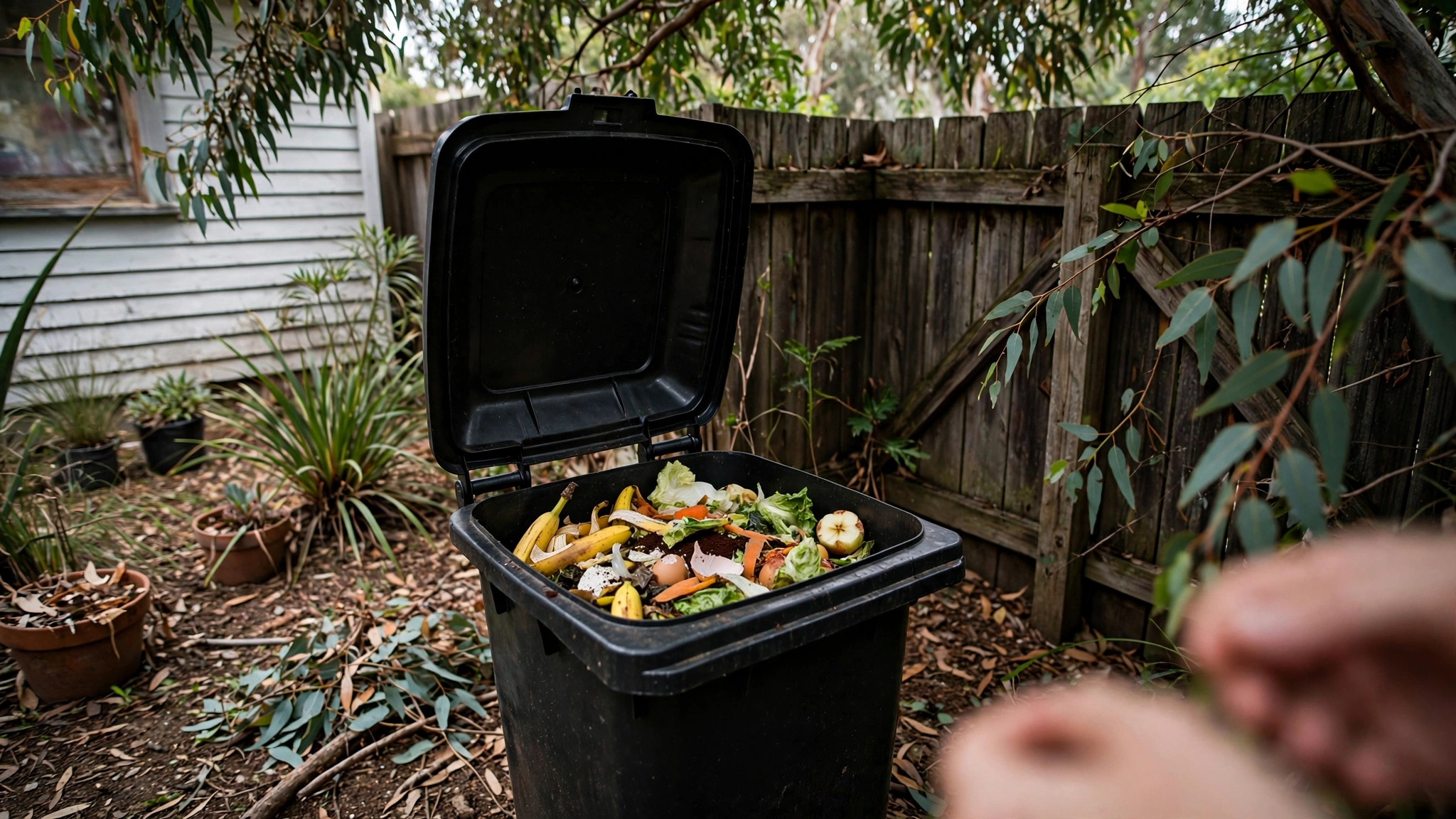
What to Compost — and What to Avoid
Safe to compost:
- Fruit and vegetable scraps, peelings and cores
- Coffee grounds, tea leaves and paper tea bags (remove staples)
- Eggshells (crushed)
- Grass clippings, leaves, small prunings and spent flowers
- Shredded newspaper, cardboard and paper towel (unbleached, no glossy print)
- Straw, hay and untreated sawdust in moderation
- Hair, lint from natural fibres, and vacuum dust
Keep out of the bin:
- Meat, fish, dairy and fats. They smell, attract rats and flies, and break down poorly in home systems. (Purpose-built bokashi or hot systems can handle them — standard bins cannot.)
- Bread and cooked food in quantity. Small amounts are fine, but large amounts go slimy and attract pests.
- Weeds with seeds and diseased plants. Cold home compost does not get hot enough to kill them; you will just spread the problem.
- Cat and dog droppings. Risk of pathogens — compost pet waste separately if at all.
- Treated timber, glossy magazines and synthetic materials. Chemicals and microplastics have no place in garden compost.
Hot vs Cold Composting
Cold composting is what most beginners do: pile materials up, leave them alone, and wait. It takes six to twelve months, requires almost no effort, and produces perfectly good compost. Hot composting is the fast lane: build a pile at least a cubic metre in one go with the right green-brown balance, keep it moist, turn it weekly, and the core temperature climbs to 55–65°C, killing weed seeds and pathogens while finishing compost in six to eight weeks.
Hot composting is satisfying but demanding — the pile needs critical mass and regular attention. For most households, a practical middle path works best: add materials continuously (cold style), but turn the bin every few weeks and keep the balance right to speed things along.
Getting Started in Five Steps
- Pick a spot. Choose a level, well-drained site with morning sun and afternoon shade if possible. Avoid placing bins hard against wooden fences in termite-prone areas — leave a small gap and keep the area clear.
- Start with browns. Lay a 15 cm base of coarse browns — twigs, straw or shredded cardboard — for drainage and airflow.
- Add greens and browns in layers. Every bucket of kitchen scraps gets a generous covering of browns. Bury fresh scraps under browns to deter fruit flies.
- Keep it moist. The pile should feel like a wrung-out sponge. In Australian summers this means watering the bin during dry spells — a neglected bin in January simply stalls.
- Turn occasionally. Every two to four weeks, fork the contents over to introduce air. This single habit dramatically speeds up composting.
Troubleshooting Common Problems
It smells bad
Bad smells mean too many greens, too much water, or not enough air. Add a big dose of dry browns, turn the pile to aerate it, and check drainage. A healthy compost pile smells earthy, never rotten.
Fruit flies and maggots
Always bury fresh food scraps under 10 cm of browns, and keep the lid on. A sheet of newspaper or cardboard laid on top of the pile works as a simple barrier. Avoid adding large amounts of fruit at once.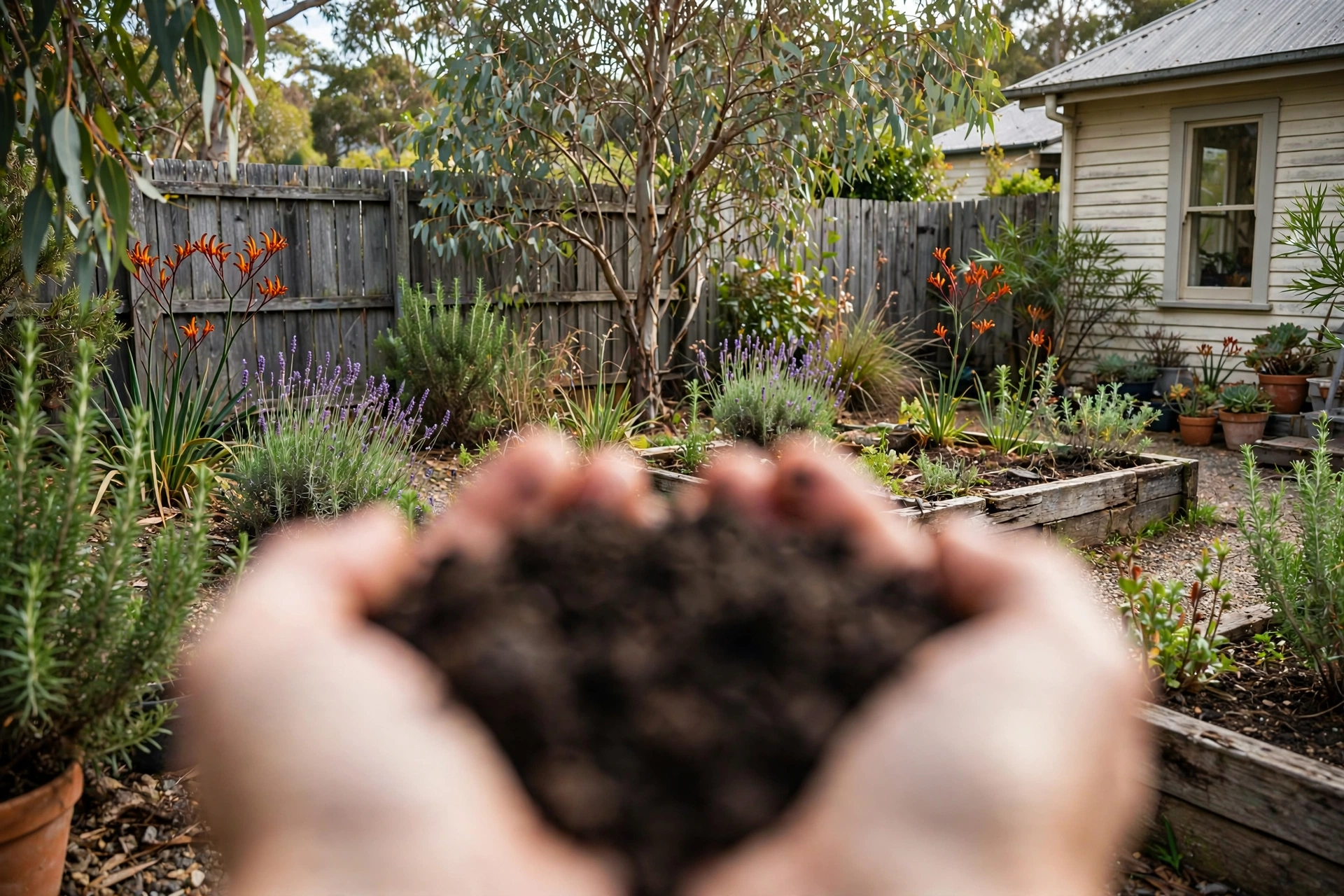
Rats or mice
Usually caused by meat, dairy or bread in the bin — remove the attractant. Use a bin with a secure lid and small ventilation holes, and sit it on wire mesh if rodents persist.
Nothing is happening
The pile is probably too dry or too brown-heavy. Water it thoroughly, add nitrogen-rich greens like grass clippings or manure, and turn it. In winter, decomposition naturally slows — be patient.
It is slimy
Too wet and too green. Add dry browns, turn to introduce air, and consider a handful of garden lime if it smells sour — though fixing the balance matters more than additives.
Harvesting and Using Finished Compost
Compost is ready when it is dark, crumbly and smells like forest floor — you should not be able to recognise the original ingredients. This takes three to twelve months depending on your method. Sift out any large uncomposted bits and toss them back into the new pile.
Use it generously: spread 5–10 cm over garden beds as a top-dressing, mix it into planting holes, or brew it into compost tea for a gentle liquid feed. A word of caution — homemade compost is wonderful but variable, so for seed raising, blend it with a commercial seed-raising mix rather than using it straight.
Compost is the closest thing gardening has to alchemy: yesterday's scraps become tomorrow's tomatoes. Start today, and your garden will thank you within the year.
Frequently Asked Questions
Can I compost in a small courtyard or on a balcony?
Yes. A compact tumbler or a worm farm fits on a balcony and handles a household's scraps. Bokashi buckets are another odour-free indoor option — they ferment scraps which are then buried or added to compost.
Does my council offer compost bins or rebates?
Many Australian councils sell subsidised compost bins, worm farms and bokashi kits, and some run free composting workshops. Check your council's waste or sustainability page before buying anything.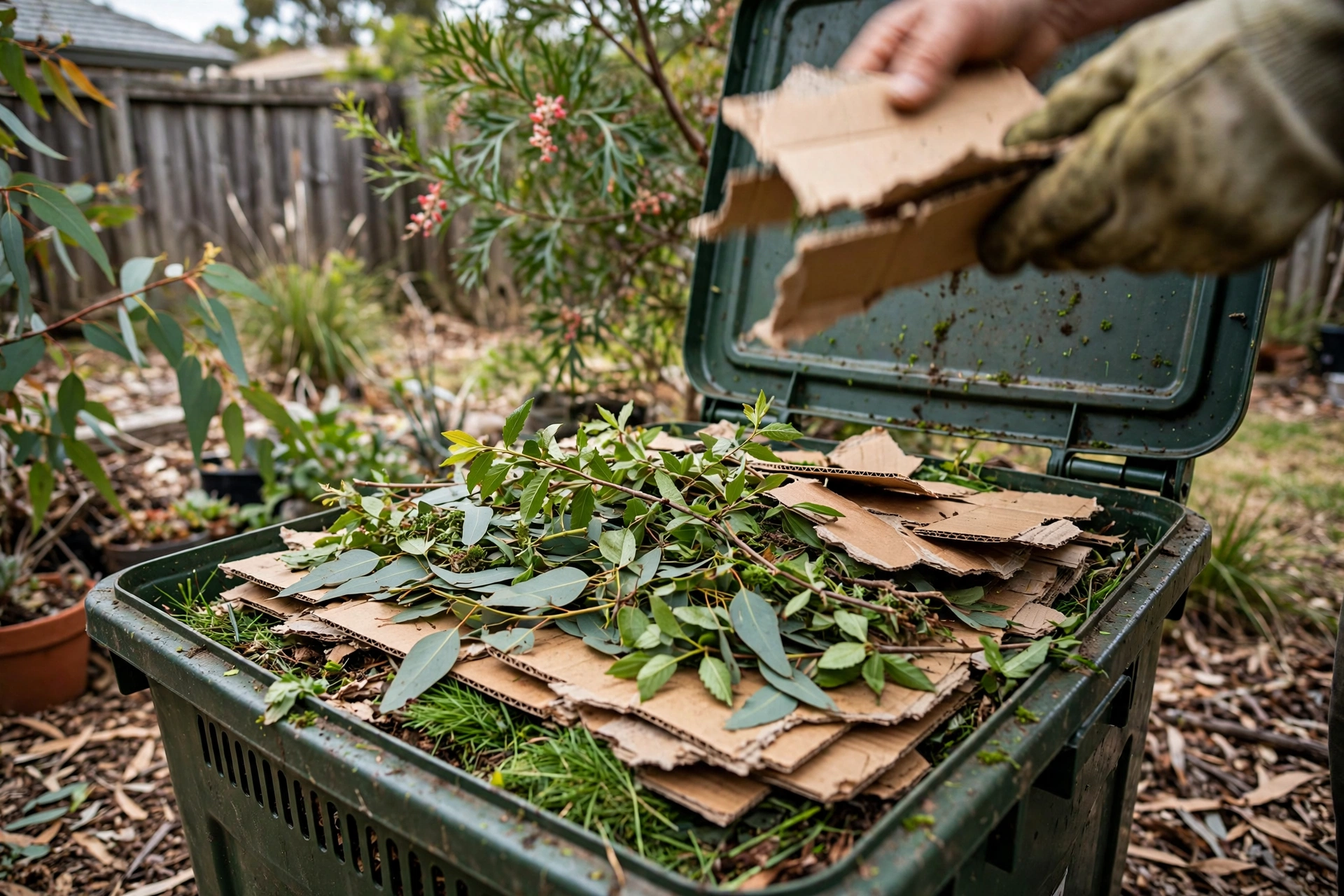
Can I put citrus and onions in compost?
Yes, in moderation. The old advice to avoid them is overstated — small amounts break down fine. Just do not dump bucketloads of citrus alone, and chop onions up to speed decomposition.
Why is my compost bin full of ants?
Ants signal a dry pile. Water the bin thoroughly and add moist greens. Ants themselves are harmless to compost, but they indicate conditions are too dry for efficient decomposition.
Is composting enough fertiliser for a vegetable garden?
Compost is a superb soil conditioner and provides a broad range of nutrients, but hungry crops like tomatoes and corn often need supplementary feeding during peak growth. Think of compost as the foundation and targeted fertiliser as the top-up.