If you garden in Sydney's west, across much of Melbourne, in Brisbane's suburbs or on the Adelaide plains, you already know the frustration: soil that sets like concrete in summer, turns to sticky glue after rain, and drowns plant roots in winter. Clay soil is one of the most common — and most complained about — growing conditions in Australian gardens.
The good news is that clay is not a death sentence for your garden. In fact, clay soils are naturally rich in minerals and hold nutrients far better than sand. The problem is structure, not fertility. With the right approach, you can transform heavy clay into dark, crumbly, productive soil. It takes patience, but the payoff is a garden that holds water when it is dry and drains when it is wet. Here is how to do it, step by step, the Australian way.
Know Your Clay: The Australian Picture
Clay soils dominate many of Australia's most populated regions. Sydney's Cumberland Plain, Melbourne's basalt plains to the north and west, and large parts of Brisbane sit on heavy clays. These soils are made of extremely fine particles that pack tightly together, leaving little room for air or water movement. When dry, they shrink and crack; when wet, they swell and become waterlogged.
A simple test tells you what you are dealing with. Take a small handful of moist soil and squeeze it into a ball, then press it with your thumb to form a ribbon. Sandy soil crumbles immediately. Loam forms a short ribbon that breaks easily. Clay forms a long, smooth ribbon — sometimes 5 cm or more — that feels slick and holds its shape. The longer the ribbon, the heavier your clay.
It is worth noting the contrast: Perth gardeners battle the opposite problem, with deep, fast-draining sand that will not hold water or nutrients. If you are on sand rather than clay, the fix is different — you need water-holding organic matter and clay minerals added, not drainage. Make sure you are solving the right problem.
What NOT to Do With Clay
Before the fixes, the warnings — because the wrong move can make clay worse for years.
- Never dig or walk on wet clay. This is the golden rule. Working saturated clay destroys its structure, smearing the fine particles into an airless mass that sets like pottery. If the soil sticks to your boots, stay off it. Wait until it is moist but crumbly.
- Do not add sand on its own. This is the classic mistake. Mixing sand into clay without generous organic matter can create something with the texture and drainage of concrete. Sand only helps when added in very large quantities along with compost — otherwise, leave it out.
- Do not expect overnight results. Clay improvement is a multi-season project. Anyone promising a one-weekend fix is selling you something.
- Do not rototill repeatedly. Over-cultivating clay pulverises its structure. Dig once to incorporate amendments, then disturb it as little as possible.
Gypsum: The Clay Breaker
Gypsum (calcium sulphate) is the traditional Australian remedy for clay, and it genuinely works — with caveats. Gypsum works by displacing sodium ions on clay particles with calcium, which encourages the tiny particles to clump together into larger aggregates. This opens up pore spaces, improving drainage and aeration without changing the soil's pH.
It is most effective on sodic clays — clays high in sodium — which are common across parts of Victoria, New South Wales and South Australia. On non-sodic clays the effect is milder, but rarely harmful. Apply powdered or granular gypsum at roughly 1 kg per square metre, water it in well, and repeat annually. Liquid gypsum products act faster but are more expensive for large areas.
Think of gypsum as the opening act, not the whole show. It improves structure chemically, but lasting transformation comes from organic matter — which is where the real magic happens.
Organic Matter: The Real Fix
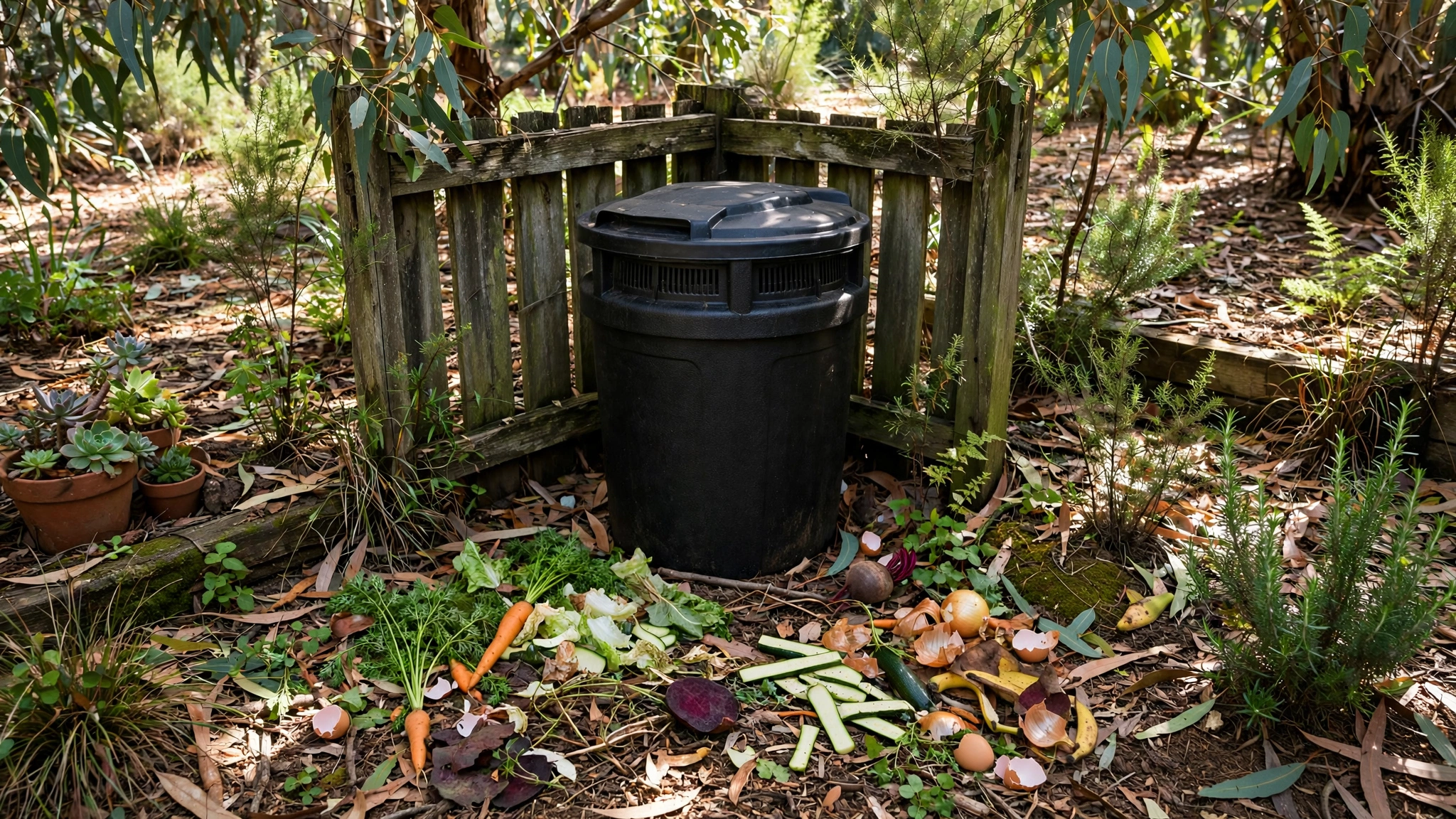
Nothing improves clay like organic matter, added generously and repeatedly. Compost, aged manure, leaf mould and green manure crops all feed the soil biology — earthworms, fungi and microbes — that physically rebuild soil structure from within. Worm tunnels and fungal threads create the drainage channels and air pockets that clay lacks.
In practice, this means working 5–10 cm of compost or well-rotted manure into the top 20–30 cm of your beds each year, ideally in autumn or early spring. Over three to five years, you will notice the soil becoming darker, looser and easier to dig — and plants will tell you the same story with their growth.
Green manure crops are an underused secret weapon. Sowing a fast-growing crop like oats, field peas or lupins over bare beds in autumn, then digging it in or slashing it before spring planting, pumps enormous amounts of organic matter and root channels into the soil for the cost of a packet of seed.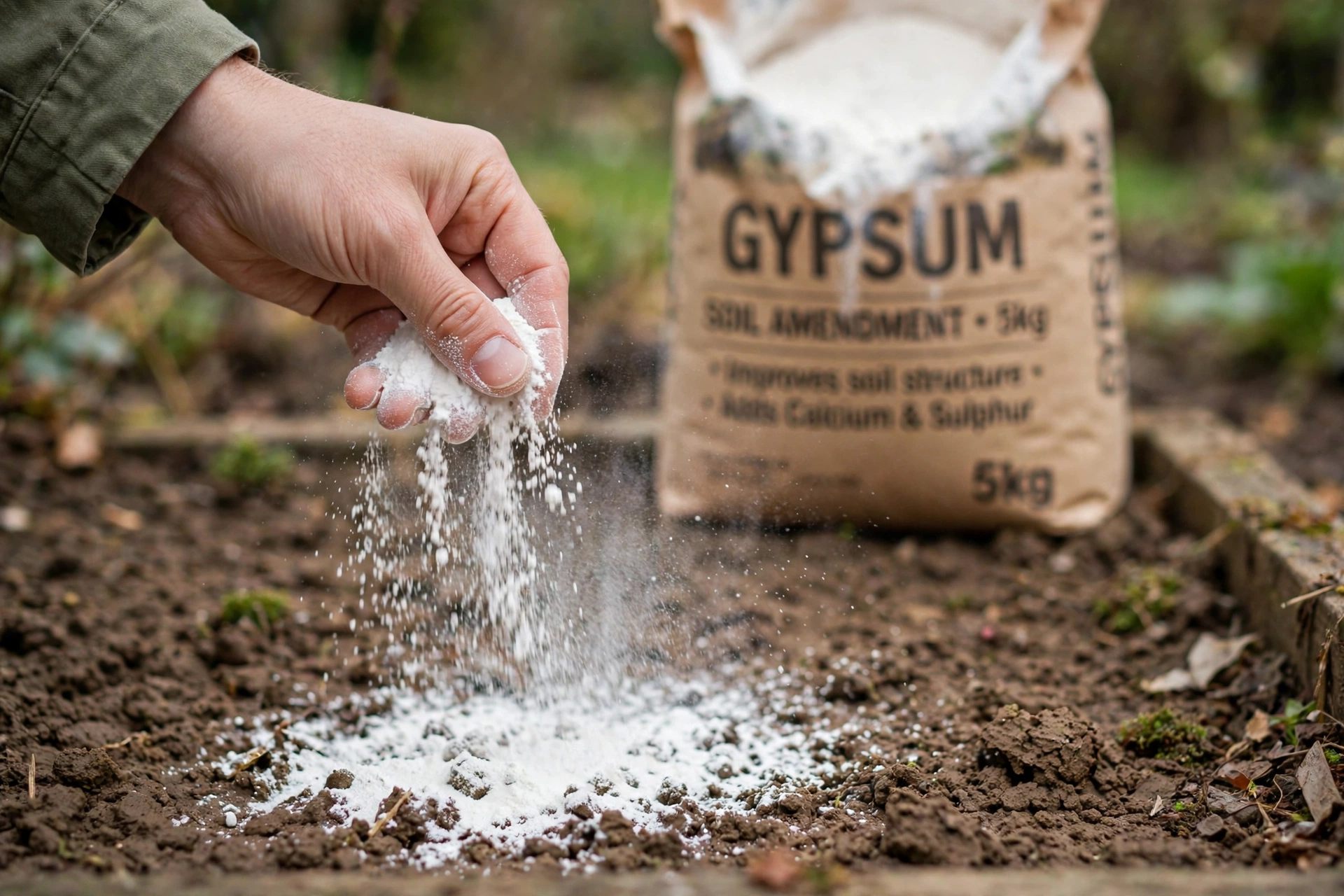
Your Step-by-Step Clay Improvement Plan
- Test first. Do the ribbon test, note where water pools after rain, and consider a basic soil pH test kit from the nursery. Most Australian clays are slightly acidic to neutral.
- Plan your timing. Start work when the soil is moist but not wet — typically autumn or spring. Never work waterlogged clay.
- Apply gypsum. Spread at about 1 kg per square metre over the bed and water in well.
- Add organic matter. Spread 5–10 cm of compost, aged cow or horse manure, or mushroom compost over the surface.
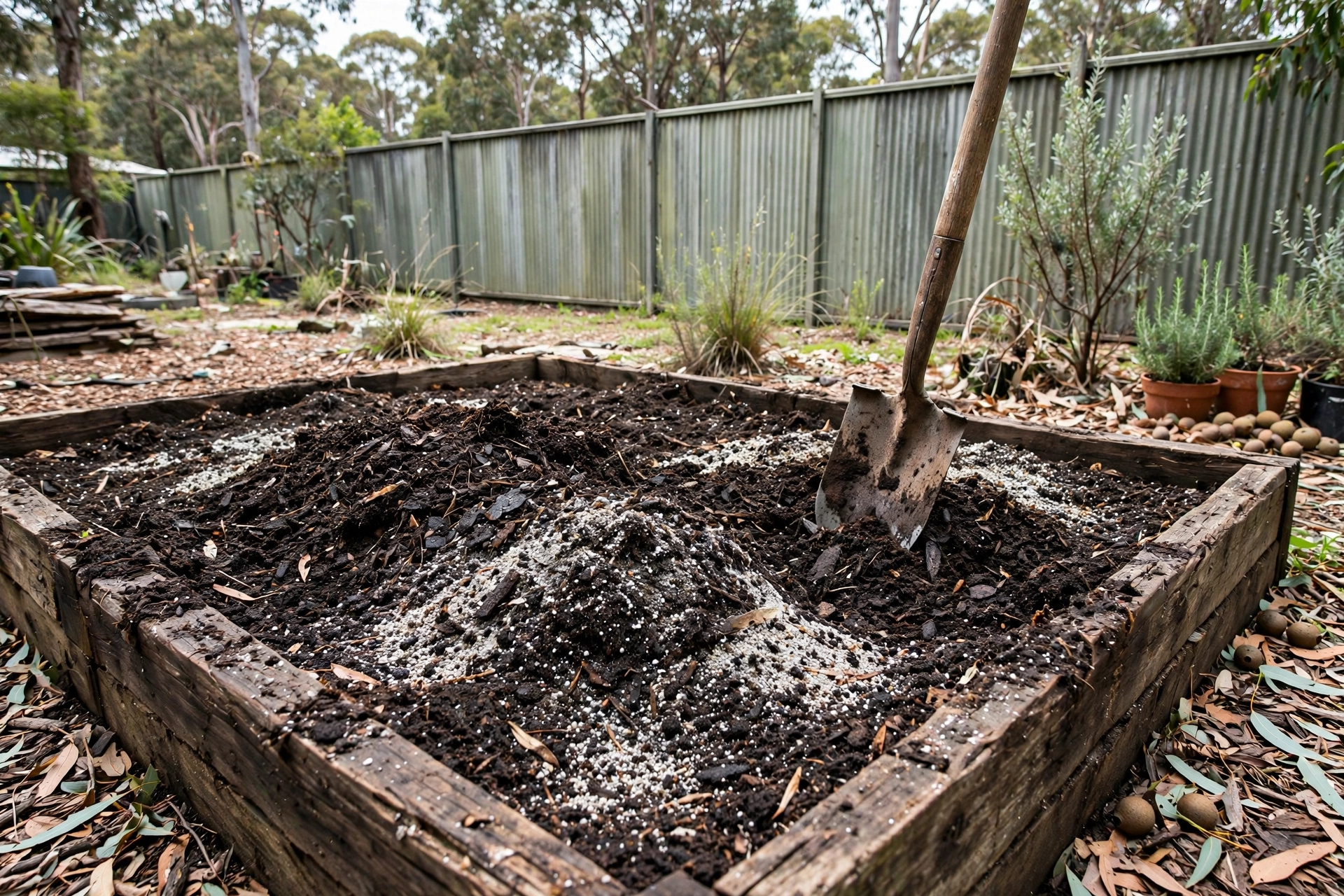
- Dig it in — once. Turn the amendments into the top 20–30 cm with a fork (forks damage structure less than spades). Then resolve to disturb the soil as little as possible from now on.
- Mulch heavily. Cover with 75–100 mm of sugar cane mulch or bark to protect the surface, feed worms and prevent crusting.
- Plant green manures in the off-season. Keep living roots in the soil whenever beds are empty.
- Repeat yearly. Top-dress with compost each autumn. Improvement compounds — year three looks nothing like year one.
Fixing Drainage in Boggy Spots
Some clay areas do not just drain slowly — they hold standing water for days. For these spots, amendments alone may not be enough. Consider shaping beds into gentle mounds or installing simple agricultural drainage: a slotted pipe in a gravel-filled trench leading to a lower point or stormwater connection. Even a shallow spoon drain — a subtle swale directing water away — can transform a boggy corner. If drainage works affect stormwater or neighbouring properties, check with your local council first, as rules vary between areas.
The Raised Bed Shortcut
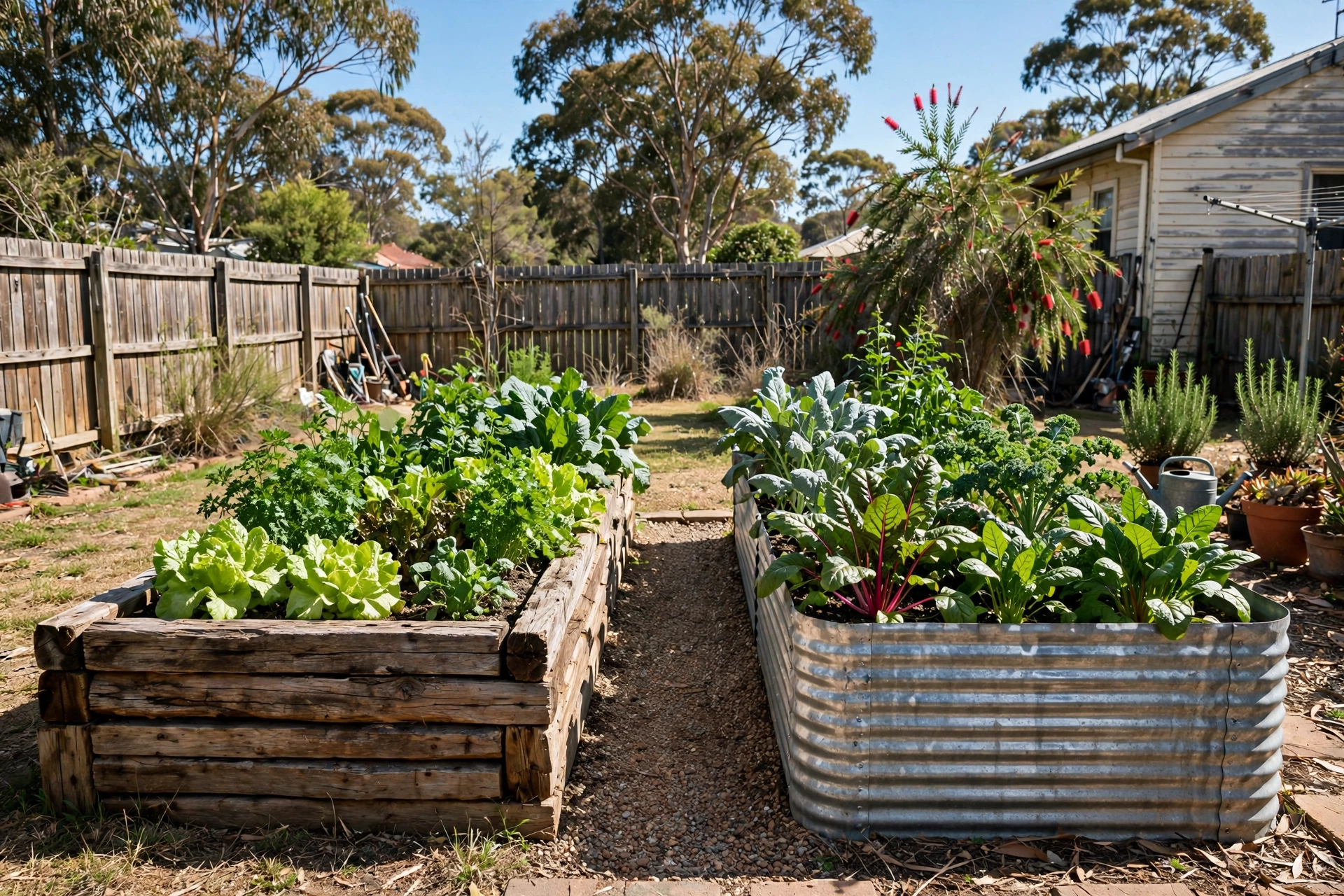
Here is an honest admission: sometimes the fastest path to a productive garden is to build above the clay rather than fight it. Raised beds filled with quality garden soil mix give you perfect growing conditions immediately, while you improve the native soil underneath at leisure. They also solve the wet-feet problem for vegetables, which hate waterlogged roots. A bed 30–40 cm deep is plenty for most vegies; the clay below simply becomes a moisture reservoir.
Timeline: What to Expect
Set realistic expectations and you will not be disappointed. In the first season, drainage improves noticeably after gypsum and a single compost incorporation, but the soil will still feel heavy. By year two, digging is easier and worms are visibly more numerous. By years three to five, with annual compost top-dressing and minimal digging, the top 20 cm can become genuinely beautiful soil — dark, crumbly and sweet-smelling. The deeper clay remains clay, but your plants will not care, because their roots live in the improved zone.
Clay soil is a long game, but it is a game you can win. Every barrowload of compost is a deposit in a soil bank that pays interest for decades.
Frequently Asked Questions
How much gypsum should I use on clay soil?
Around 1 kg per square metre is the standard rate for garden beds, watered in well. For severely sodic clay, this can be repeated annually. Gypsum will not burn plants or alter pH, so it is very forgiving, but it works slowly — allow a full season to judge results.
Can I add sand to clay soil?
Not on its own. Sand mixed into clay without large amounts of organic matter can set like concrete. If you want to use sand, add it together with generous compost — or better yet, skip the sand and use compost alone, which is safer and more effective.
How long does it take to fix clay soil?
Expect noticeable improvement within one season of gypsum plus compost, good workable soil in the top layer within two to three years, and genuinely excellent soil in three to five years with consistent annual compost applications and minimal digging.
Should I just build raised beds instead?
Raised beds are a legitimate and popular shortcut, especially for vegetables. They give instant results while the soil beneath improves over time. Many gardeners do both: raised beds for vegies, and gradual clay improvement for ornamental beds.
Is clay soil good for anything as it is?
Yes. Clay holds nutrients and moisture far better than sand, and many plants — including roses, most fruit trees, and a wide range of ornamentals — grow superbly in improved clay. The mineral richness of clay is an asset once the structure is fixed.