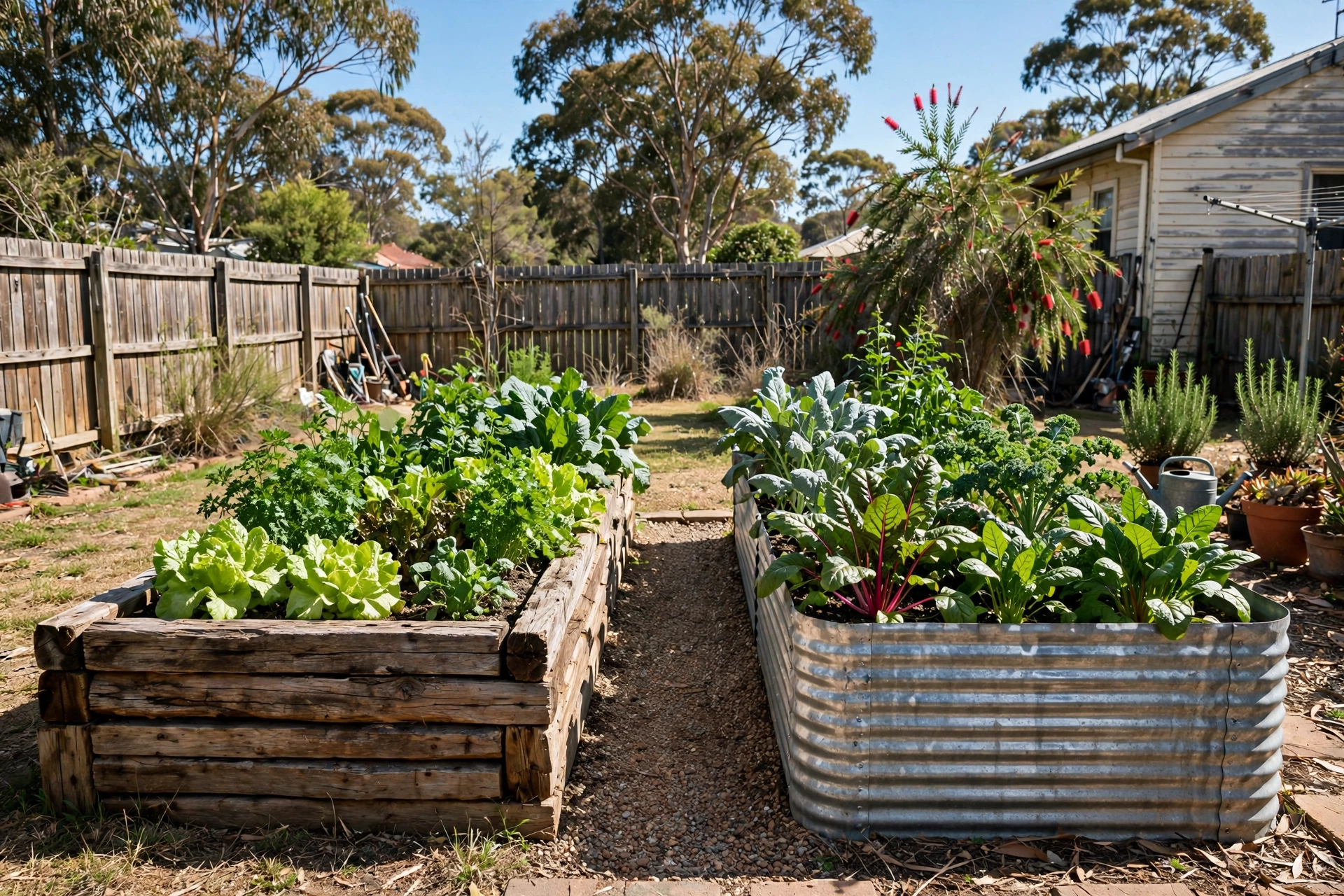
Raised garden beds have become a fixture of Australian backyards, and it is easy to see why. They warm up faster in spring, drain beautifully in winter, save your back, and let you garden productively on concrete, compacted clay or contaminated soil. But stand in front of the options — treated pine sleepers, hardwood, corrugated steel in heritage colours — and the choice gets tricky fast.
Timber and metal each have passionate defenders, and both can serve you well for years. The right pick depends on your budget, your climate, how long you want the bed to last, and what you are growing. This guide compares the real contenders available in Australia — treated pine, hardwood, and Colorbond-style steel — on the factors that actually matter: lifespan, cost, heat, safety and soil.
Treated Pine: The Affordable Classic
Treated pine is the default raised bed material across Australia, sold as sleepers or planks at every hardware store. It is cheap, easy to cut and screw together with basic tools, and looks naturally at home in the garden.
A treated pine bed typically lasts 5–10 years in ground contact, depending on drainage and climate — longer in dry inland areas, shorter in humid coastal zones or where beds sit permanently damp. Cost-wise it is the clear winner: a standard 2.4 m x 1.2 m bed can be built for well under what hardwood or steel would cost.
The question everyone asks is whether treated pine is safe for vegetable gardens. Modern Australian treated pine uses preservatives that are far less concerning than the old arsenic-based treatments of decades past, and the chemicals bind tightly within the timber rather than leaching freely. Most horticultural advice considers it acceptable for vegie beds, though if you want zero doubt, line the inside of the bed with heavy-duty builders' plastic or pond liner (with drainage holes at the base) to separate soil from timber.
Hardwood: The Long-Life Natural Option
Hardwood sleepers — typically ironbark, spotted gum or tallowwood — are the premium timber choice. They are dense, naturally resistant to rot and termites, and can last 15–25 years or more with minimal maintenance. They also look magnificent, weathering to an attractive silver-grey.
The catch is cost and weight. Hardwood is two to three times the price of treated pine, and the sleepers are seriously heavy — a two-person job at minimum, and pre-drilling is essential because the timber is so dense. For a bed you want to build once and forget for decades, though, hardwood is hard to beat. It also avoids any questions about chemical treatments entirely, which matters to some organic growers.
Colorbond-Style Steel: The Modern Contender
Corrugated steel beds — sold under various brand names in the familiar Colorbond colour range — have surged in popularity, and they bring genuine advantages. They last 15–20 years or more without rotting, they assemble quickly from kits with no power tools, they look sharp and contemporary, and the colour range lets you match your fence or house.
They cost more than treated pine but are often comparable to hardwood for a similar-sized bed, especially once you factor in the zero-maintenance lifespan. Thin steel panels can flex on very long beds, so look for designs with bracing or corner posts on beds longer than about two metres.
The Heat Question: Will Metal Beds Cook Your Plants?
This is the number one worry about steel beds in Australia, and it deserves an honest answer. Yes, steel sides get hot in direct summer sun — you can feel it with your hand on a 40-degree day in western Sydney or Adelaide. But does that heat damage plants?
In practice, the effect is smaller than feared. Soil is an excellent insulator, so only the outer few centimetres near the wall heat up significantly; the root zone in the centre of the bed stays remarkably stable. Problems arise mainly in very narrow beds (under 40 cm wide) or with shallow-rooted seedlings planted right against the wall. Mitigations are simple: choose a light colour like Surfmist or Paperbark rather than dark Monument, position beds where they get afternoon shade in hot climates, mulch heavily, and keep soil moisture consistent. Thousands of Australian gardeners grow bumper crops in steel beds through brutal summers — the heat issue is real but manageable.
Timber has a slight edge here: it insulates better and never gets hot to the touch. If your beds will sit in full western sun in a very hot district and you are growing heat-sensitive crops like lettuce, timber may be the kinder choice.
Cost Comparison: 2026 Estimates
Prices vary by region and supplier, but as a rough guide for a standard 2.4 m x 1.2 m x 0.4 m bed in 2026:
- Treated pine (DIY): roughly $80–$150 in materials. The budget champion.
- Hardwood sleepers (DIY): roughly $250–$450. Expensive up front, cheapest per year over its life.
- Steel kit: roughly $150–$350 depending on brand, colour and height. Good middle ground.
- Pre-made assembled beds: add $100–$300 for labour or the convenience premium.
Remember the soil fill is a significant cost whatever the frame: a bed this size holds about 1.15 cubic metres of mix, which can run $100–$250 delivered depending on quality. Factor it in before you commit to building six beds.
How Deep Should a Raised Bed Be?
Depth matters more than most people think. For leafy greens, herbs and strawberries, 20–30 cm of soil is adequate. For most vegetables — tomatoes, capsicums, beans, zucchini — aim for 30–40 cm. For root vegetables like carrots and parsnips, 40–50 cm gives straighter, happier roots.
A useful trick: if your bed sits on soil (not concrete), roots will push down into the ground below, so a 30 cm bed on open soil performs like a deeper one. On concrete or pavers, go deeper and ensure drainage holes or a gravel layer at the base so the bed never becomes a bathtub.
The Perfect Soil Fill Recipe
Do not fill beds with pure compost — it slumps, holds too much water and is needlessly expensive. Do not use plain garden soil either. A proven mix for Australian raised beds:
- Base drainage (optional, on concrete): a 5 cm layer of coarse gravel or scoria.
- Bulk fill (60%): a quality raised-bed or garden soil mix — look for one meeting the Australian Standard for potting mixes and garden soils.
- Compost (30%): well-rotted compost or composted manure for biology and nutrients.
- Aeration (10%): coarse perlite, pumice or extra composted bark to keep the mix open.
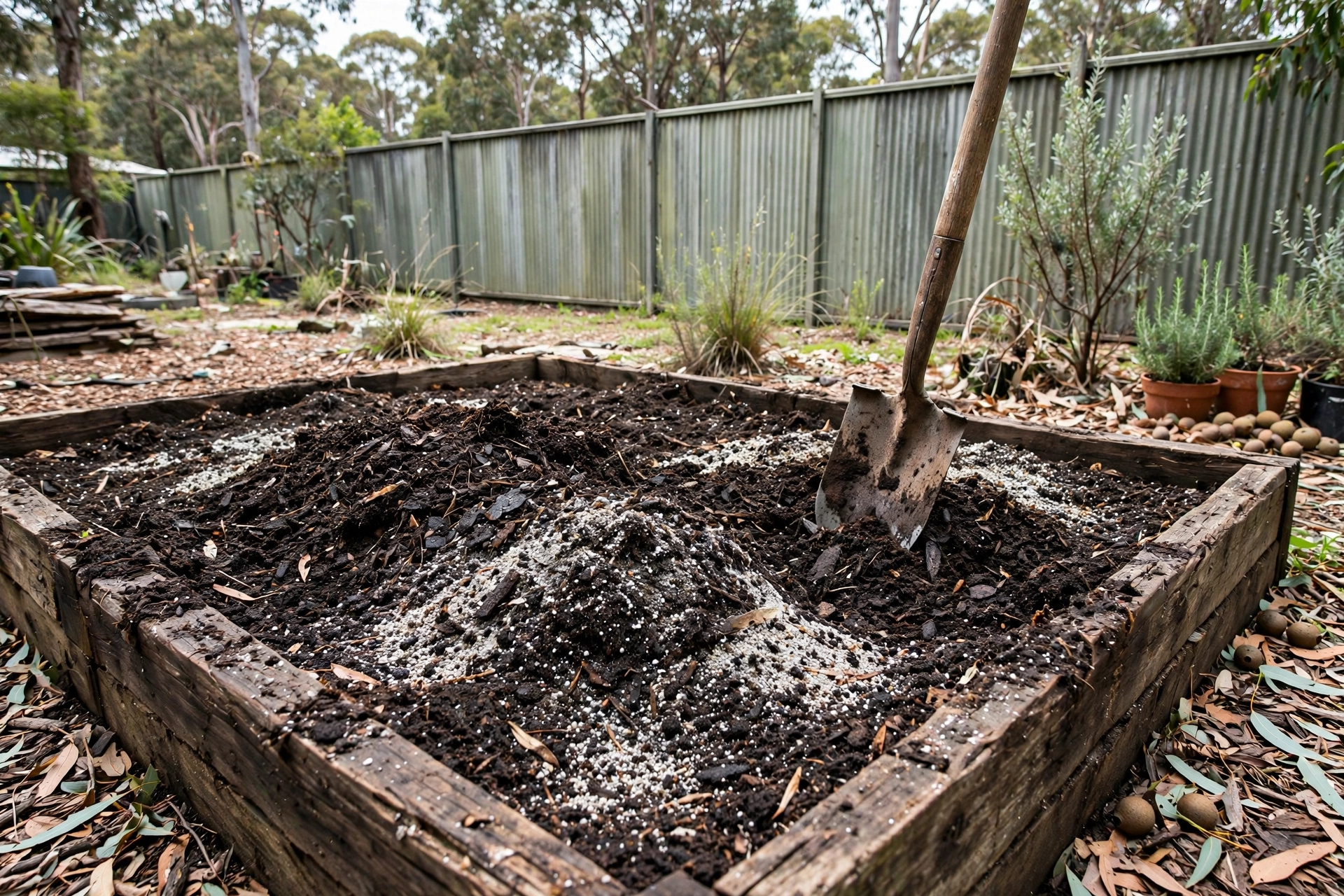
- Minerals: a few handfuls of rock dust or crusher dust per bed for trace elements, plus a sprinkle of blood and bone.
- Mulch the top: finish with 5–7 cm of sugar cane mulch or pea straw to hold moisture.
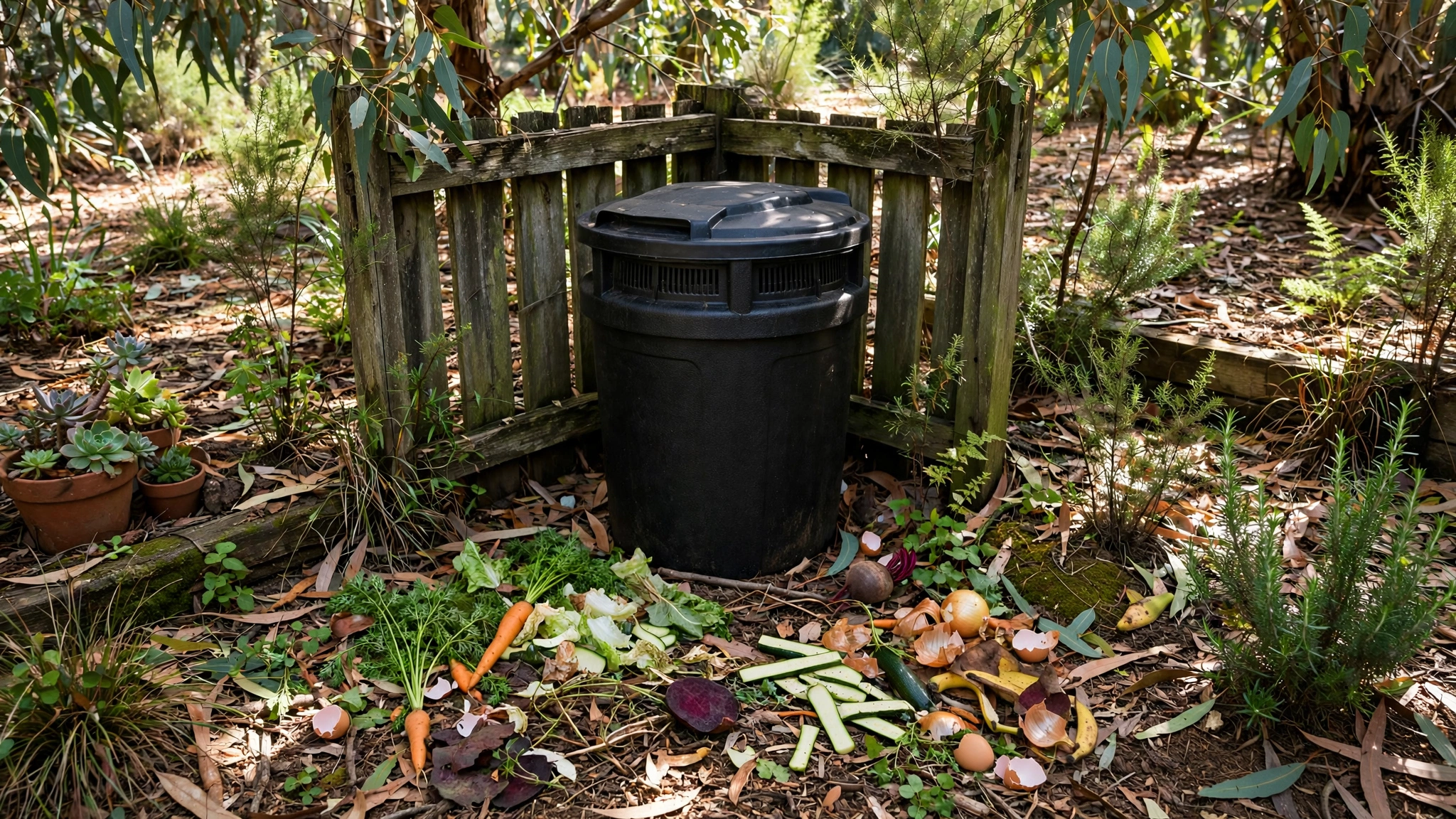
A money-saving variation: fill the bottom half of deep beds with coarse organic matter — logs, branches, straw and leaves, hugelkultur-style — then put your quality mix in the top 25–30 cm where the roots actually live. The lower layer decomposes slowly, feeding the bed for years.
Which Should You Choose?
- Choose treated pine if budget is the priority, you are handy with tools, and you are happy to rebuild in 7–10 years. Line it for vegies if you want extra peace of mind.
- Choose hardwood if you want a build-once bed with natural beauty, have help for the heavy lifting, and the budget stretches.
- Choose steel if you want fast assembly, long life with zero maintenance, and a modern look — and pick a light colour for hot climates.
The best raised bed is the one you actually build. Do not let the perfect material be the enemy of a productive garden — even the humblest pine bed grows magnificent tomatoes.
Frequently Asked Questions
Is treated pine safe for vegetable gardens?
Modern Australian treated pine uses preservatives that bind tightly in the timber and are considered safe for garden use by horticultural authorities. If you remain cautious, line the inside of the bed with heavy-duty plastic sheeting to separate the soil from the timber.
Do metal raised beds get too hot in Australian summers?
The walls get hot to touch, but soil insulates well so the central root zone stays stable. Choose light colours, mulch heavily, water consistently, and avoid very narrow beds. In practice, steel beds grow excellent crops even through hot summers.
How long do raised beds last?
Treated pine lasts roughly 5–10 years, hardwood 15–25 years, and quality steel beds 15–20+ years. Good drainage underneath — never let timber sit in permanent damp — is the biggest factor in timber longevity.
What is the cheapest way to fill a raised bed?
Use the lasagne method: coarse organic matter (branches, straw, leaves) in the bottom half, then quality soil mix blended with compost in the top 25–30 cm. This can halve your soil bill on deep beds.
Do I need to put anything under a raised bed on grass?
Lay cardboard or several layers of newspaper directly on the grass before filling — it smothers the grass and decomposes. Skip weed mat; it blocks worms and roots from reaching the soil below, which defeats much of the purpose.