Every July, a familiar anxiety ripples through Australian gardening groups: is it time to prune the roses yet? Prune too early and frosts can damage the tender new growth; prune too late and you delay the spring flush and sacrifice early flowers. Get the timing right, though, and a well-pruned rose will reward you with a vigorous, disease-resistant plant smothered in blooms from spring through autumn.
Rose pruning in Australia is not one-size-fits-all. A gardener in Hobart and a gardener in Brisbane are working with completely different winters, so the calendar date that works in one state can be weeks off in another. This guide gives you state-by-state timing, the tools you need, a clear step-by-step technique and how to handle the diseases that plague Australian roses.
Why Winter Pruning Matters
Roses are pruned in winter while dormant for three reasons. First, removing a third to half of the previous season's growth stimulates strong new flowering wood in spring. Second, opening up the centre of the bush lets in light and air, which dramatically reduces fungal diseases like black spot. Third, it is simply practical — without leaves, you can see the structure of the plant and make confident cuts.
An unpruned rose still flowers, but blooms get smaller, stems get tangled, disease pressure builds and the plant gradually exhausts itself. A hard annual prune effectively resets the plant each year.
Pruning Times by State
The golden rule: prune when the worst of winter is over but before spring growth begins — when buds are swelling but have not yet burst into leaf.
Victoria, New South Wales, ACT, Tasmania and South Australia
For most of south-eastern Australia, the window is mid-July to mid-August. Melbourne, Sydney, Canberra, Adelaide and Hobart gardeners should aim for late July to early August. In colder inland and elevated areas — the Southern Highlands, the Dandenongs, Ballarat — wait until mid to late August, after the last severe frosts have passed.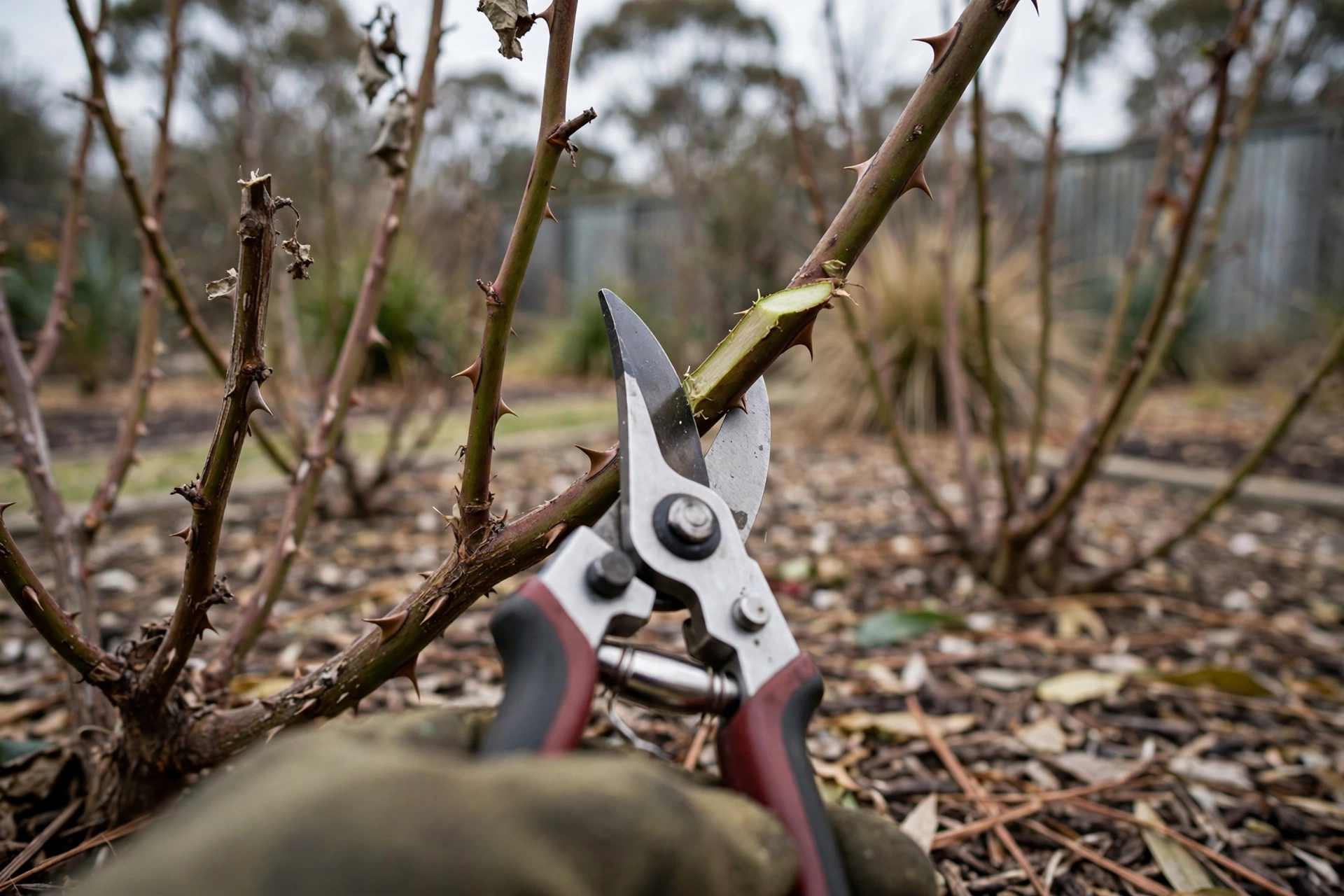
Queensland and Northern New South Wales
Subtropical gardeners prune earlier: late June to mid-July. In Brisbane and coastal northern NSW, roses barely go fully dormant, so pruning too late means cutting off growth that has already started. In frost-free coastal areas, some gardeners do a lighter second prune in late summer to encourage an autumn flush.
Western Australia
Perth and the south-west prune in July. The Mediterranean climate gives a clean dormancy, and the main enemy is not frost but the dry summer ahead — a well-pruned bush with an open centre copes far better with heat stress.
Tropical North (Darwin, Cairns, Far North Queensland)
Roses struggle in the true tropics and rarely go dormant. Prune lightly in the cooler, drier months (June to July), focus on shaping and disease removal rather than hard pruning, and choose heat-tolerant varieties bred for warm climates.
Tools You Will Need
- Sharp bypass secateurs for stems up to about 15 millimetres — bypass, not anvil, for clean cuts
- Loppers for thicker, older wood
- A small pruning saw for very old, thick canes
- Thick leather gauntlet gloves — non-negotiable with roses
- Methylated spirits or a diluted bleach solution to disinfect blades between plants
Sharp tools matter enormously. Blunt secateurs crush stems, leaving ragged wounds that invite dieback and disease. Disinfecting between bushes stops you spreading black spot and other infections around the garden.
How to Prune Roses: Step by Step
- Strip remaining leaves. Remove any leaves still clinging to the bush — they harbour fungal spores over winter.
- Remove dead, damaged and diseased wood. Cut back to healthy tissue; the centre of a healthy cane is white or green, not brown.
- Take out crossing and inward-growing canes. The goal is an open, vase-shaped bush with 3 to 5 strong main canes.
- Cut back the remaining canes by one-third to one-half. Make each cut about 5 millimetres above an outward-facing bud, angled at roughly 45 degrees so water runs off.
- Remove suckers. Any vigorous shoots emerging from below the graft union (the knobbly joint near the base) are rootstock — tear or cut them off at the source.
- Clean up thoroughly. Rake up every leaf, pruned cane and fallen petal from around the bush and bin them — do not compost diseased material.
- Seal large cuts if borers are a problem in your area, though in most of Australia this is optional.
For climbing roses, the approach differs: do not cut them back hard. Instead, remove old unproductive canes at the base, shorten side shoots to two or three buds, and tie the long canes as horizontally as possible — horizontal canes produce far more flowers than vertical ones.
Dealing with Black Spot and Disease
Black spot — those ugly black blotches with yellow halos that defoliate bushes by midsummer — is the number one rose disease in Australia's humid east coast. Winter pruning is your best weapon: removing infected leaves and opening the centre for airflow does more than any spray.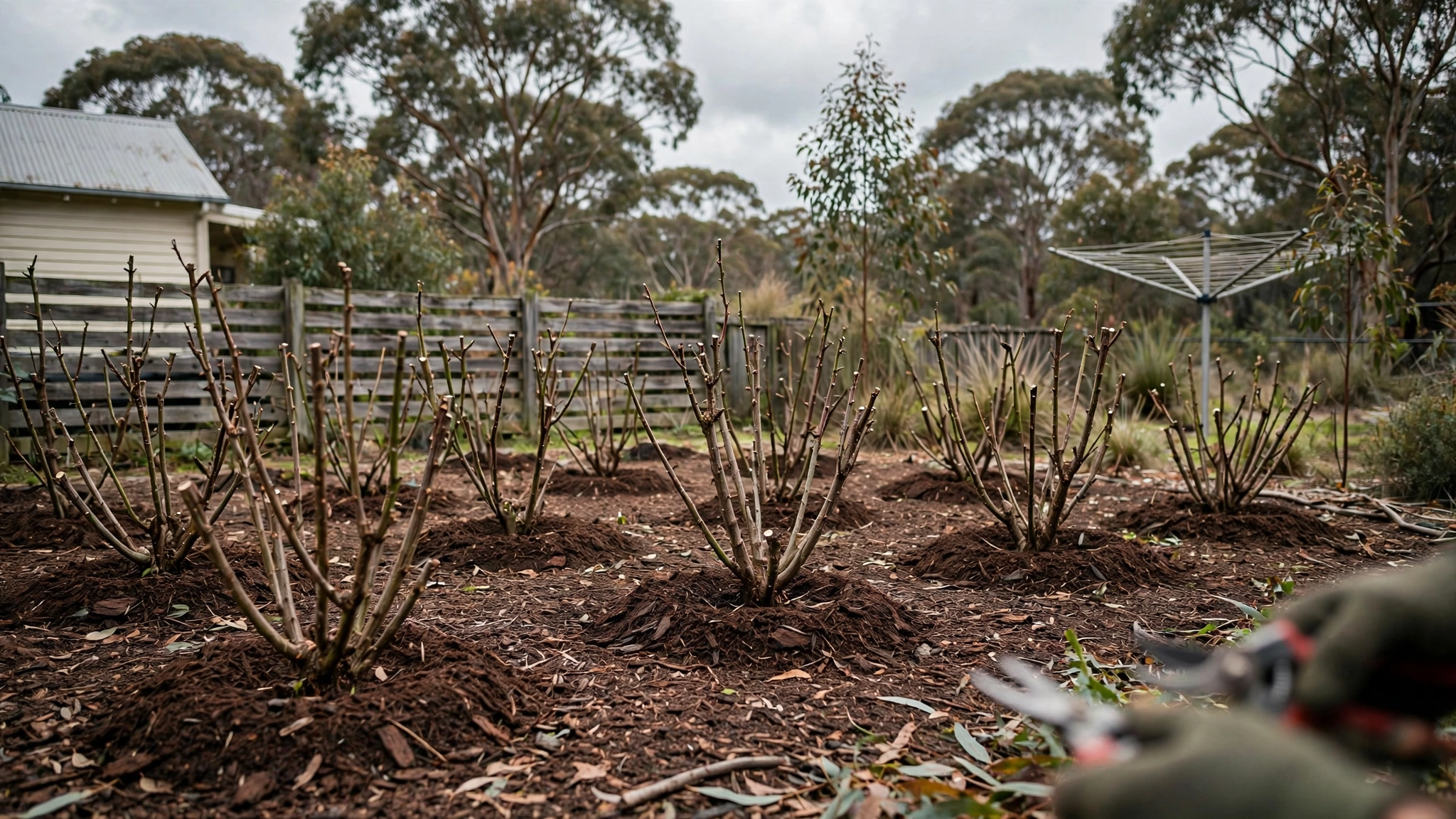
After pruning, apply a lime sulphur spray to the bare canes while dormant — this traditional treatment knocks down overwintering fungal spores. Once leaves emerge in spring, a regular preventative program of an organic copper or potassium bicarbonate spray every two to three weeks keeps black spot and powdery mildew at bay. Water at the base of the plant, never overhead, and mulch well to stop soil splashing onto foliage.
Feeding After Pruning
Pruning and feeding go together. In early spring, as new growth emerges (September in the south, August in the north), apply a complete rose fertiliser around the drip line and water in well. Repeat in early summer (December) and again in late summer (February) for repeat-flowering varieties.
Roses are hungry plants — a well-fed bush produces bigger, more fragrant blooms and resists disease far better than a starved one. Top up mulch to 7 to 10 centimetres after feeding, keeping it clear of the stems. Stop fertilising by early autumn (March) so new growth hardens off before winter.
Frequently Asked Questions
What happens if I prune my roses too early?
Early pruning stimulates new growth that can be damaged by late frosts, setting the plant back. If you have pruned early and frost threatens, cover bushes with frost cloth overnight. In most southern states, waiting until late July avoids this risk entirely.
Can I prune roses in spring instead of winter?
You can, but you will delay flowering and remove energy the plant has already invested in new growth. Winter pruning while dormant is always preferable. If you missed winter, prune as early in spring as possible and accept a later first flush.
How hard should I prune my roses?
For modern bush roses, cut back by one-third to one-half of the previous season's growth. Weak growers get a lighter prune; vigorous varieties can take a harder cut. Old garden and heritage roses generally need only light shaping — check the specific type before cutting hard.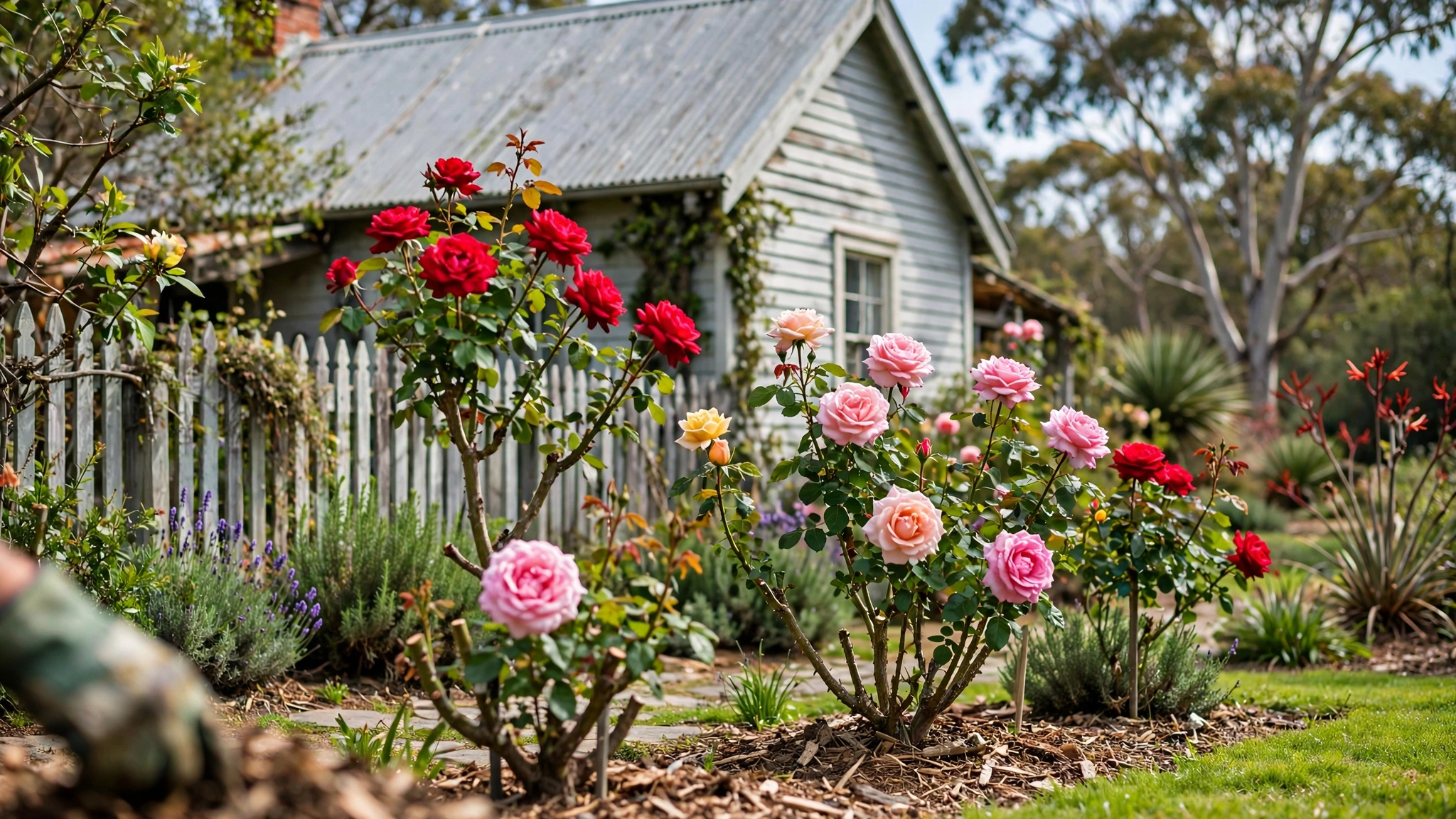
Should I prune climbing roses the same way?
No. Climbers are pruned lightly: remove spent and unproductive canes, shorten side shoots to a few buds, and train long canes horizontally. Hard pruning a climber destroys the framework that produces next season's flowers.
Why do my roses get black spot every year?
Black spot thrives in warm, humid conditions with poor air circulation — classic east-coast Australia. The cycle breaks with winter clean-up (remove all leaves and debris), open pruning for airflow, watering at soil level, and a preventative spray program from spring onward.