There is a particular heartbreak known only to Melbourne gardeners: a row of tomato seedlings, lovingly raised on a sunny windowsill for weeks, blackened overnight by a November cold snap nobody saw coming. Ask around any community garden from Brunswick to Box Hill and you will hear the same story. Tomatoes are the most rewarding crop you can grow in this city, but in Melbourne, timing is everything.
The good news is that once you understand how Melbourne's seasons actually work — not how the calendar says they should work — tomatoes grow brilliantly here. The flavour of a sun-ripened tomato picked from your own backyard will ruin supermarket tomatoes for you forever. This guide walks you through exactly when to start seeds, when to plant out, which varieties suit Melbourne's cool-temperate climate, and how to keep plants thriving through summer.
Understanding Melbourne's Climate for Tomatoes
Melbourne sits in a cool-temperate zone with a famously changeable spring. Summers (December to February) are warm, with daytime temperatures typically between 25 and 30 degrees, which tomatoes love. Winters (June to August) are cold and wet, and frosts are common in the outer suburbs. Spring (September to November) is the tricky season: a glorious 24-degree day can be followed by a frosty 3-degree night.
Tomatoes are subtropical plants. They need soil temperatures consistently above about 15 degrees to grow well, and they sulk — or die — in frost. The practical consequence is that Melbourne's tomato season is shorter than that of Brisbane or Perth. You cannot plant as early, so you must choose varieties that ripen quickly and make every warm week count.
Melbourne's Last Frost Date — and Why It Matters
In metropolitan Melbourne, the last frost typically falls between late October and early November. Inner-city suburbs benefit from the urban heat island effect and usually escape frost earlier, while colder pockets — the Dandenong Ranges, the Macedon Ranges, the Mornington Peninsula hinterland and the outer east — can cop frosts well into November.
One light frost will not always kill an established tomato plant, but it will severely set back young seedlings and can stunt them for the rest of the season. Just as important as air temperature is soil temperature. Even when the days feel warm, cold soil in October slows root growth dramatically. Patience in October is repaid with vigorous growth in December.
Starting Seeds Indoors: August to September
Because the outdoor season is short, Melbourne gardeners get a head start by sowing seed indoors six to eight weeks before the intended transplant date. That means sowing from late August through to mid-September for most of the city.
What You Will Need
- Seed-raising mix (fine and free-draining, not ordinary potting mix)
- Punnets, small pots or a seedling tray
- A warm spot that holds 20 to 25 degrees — the top of the fridge or a heat mat works well
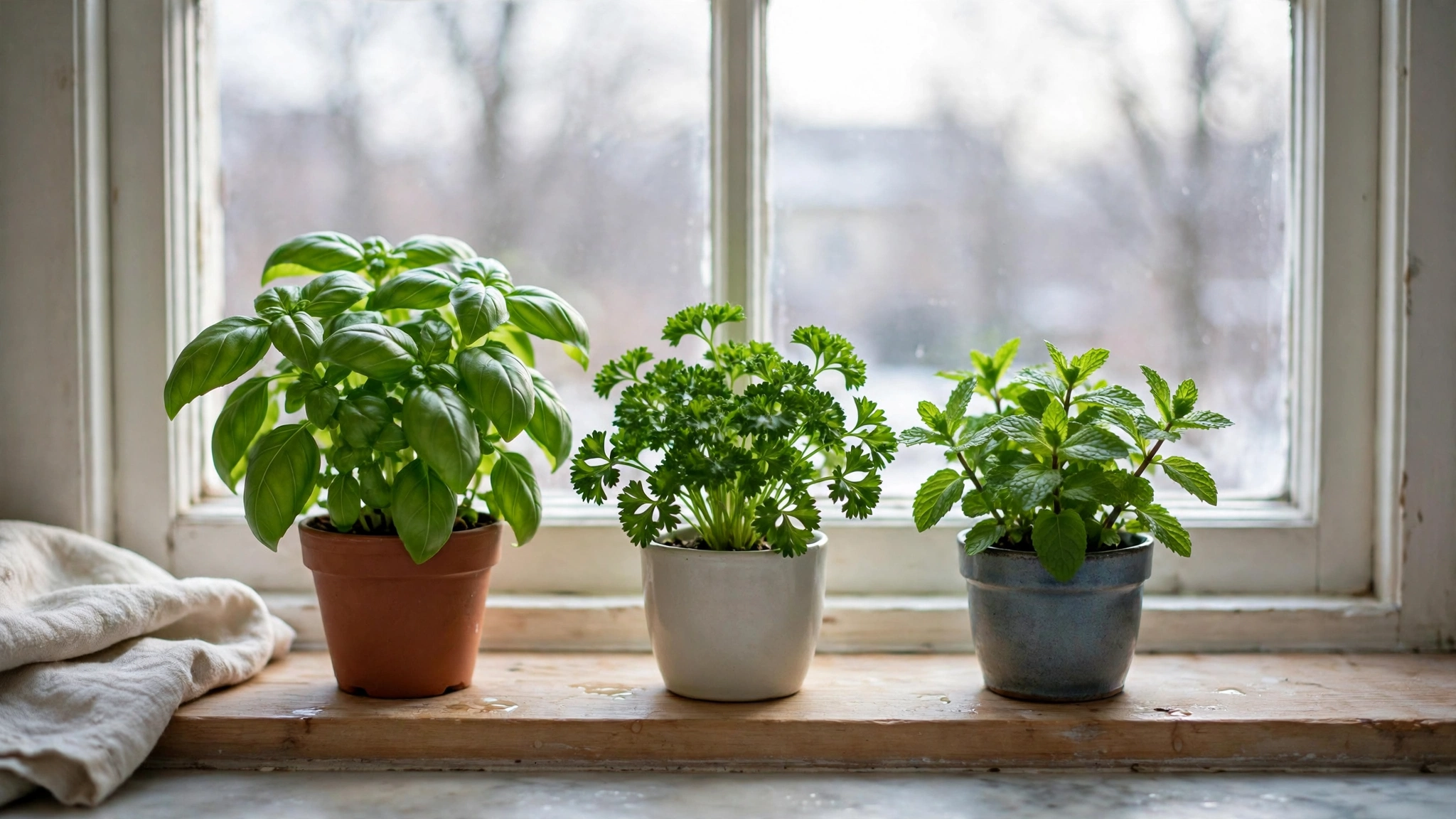
- A bright windowsill or grow light once seeds germinate
- A spray bottle for gentle watering
Step-by-Step Seed Starting
- Fill your punnets with seed-raising mix, firm it gently and water it so it is evenly moist.
- Sow seeds about 5 millimetres deep — roughly twice the seed's own width — and cover lightly with mix.
- Place in your warm spot. Most varieties germinate in 5 to 10 days at 20 to 25 degrees.
- The moment seedlings emerge, move them to the brightest spot you have. Weak light makes leggy, floppy seedlings.
- When seedlings have two sets of true leaves, pot them on into individual 10-centimetre pots.
- Feed once a week with half-strength liquid seaweed or seedling fertiliser.
Hardening Off and Transplanting: October to November
Seedlings raised indoors need to be hardened off — gradually introduced to outdoor conditions over seven to ten days. Start with a couple of hours in a sheltered spot and build up to full days and nights outside. Skipping this step is one of the most common reasons transplants fail.
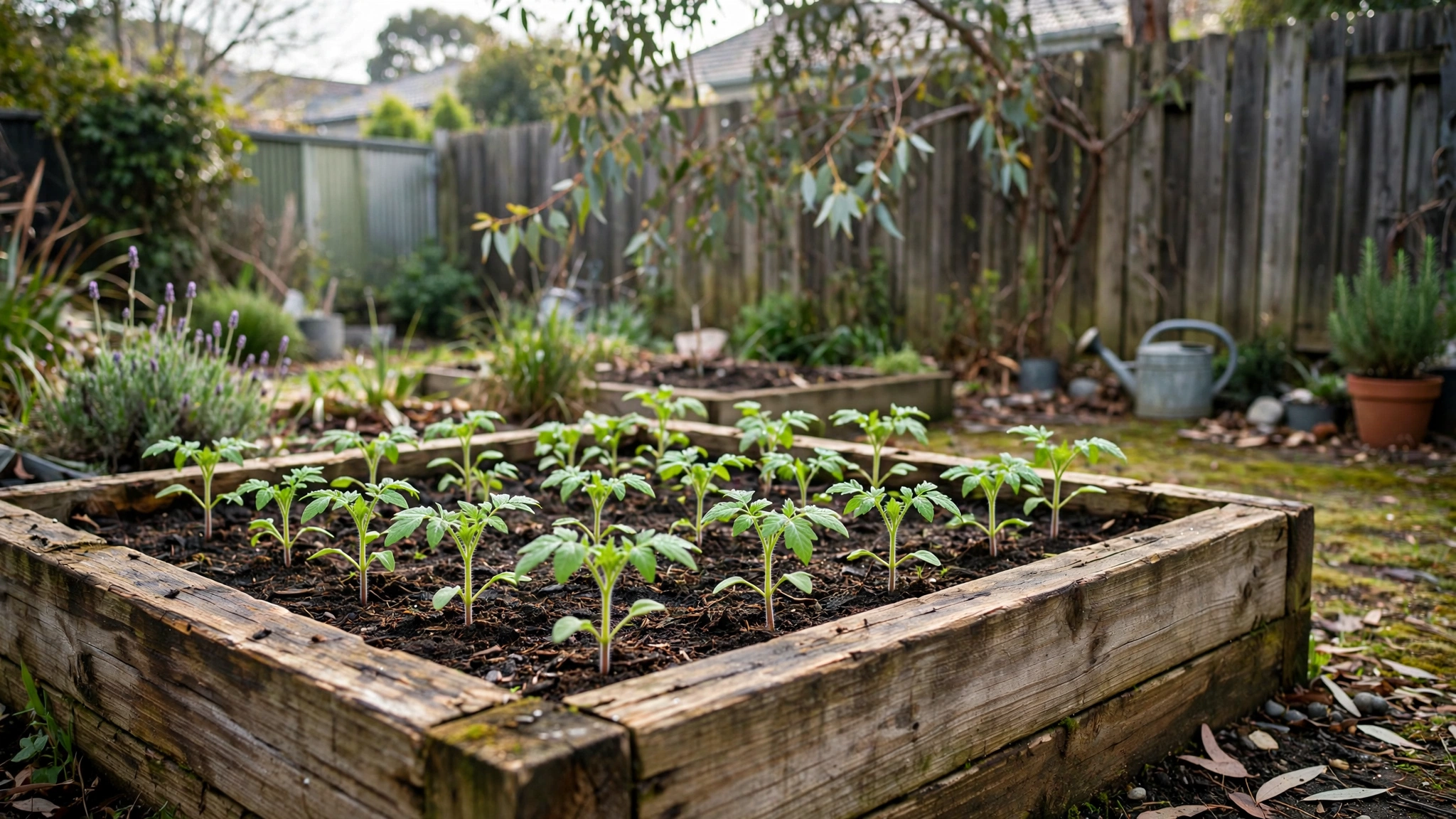
Plant out when night temperatures are reliably above 10 degrees and the soil feels warm to the touch. Many Melbourne gardeners swear by Melbourne Cup Day — the first Tuesday in November — as the traditional safe planting-out date, and honestly it is not a bad rule of thumb. Bury two-thirds of each seedling's stem; tomatoes grow roots along the buried stem, which gives you a far stronger plant. Space plants 45 to 60 centimetres apart and water in well with diluted seaweed solution to reduce transplant shock.
Best Tomato Varieties for Melbourne
Melbourne's shorter season rewards early-maturing and cool-tolerant varieties. Long-season giant beefsteaks bred for Mediterranean summers often run out of warm weather before they ripen properly here.
Cherry and Small-Fruited Types
Small-fruited tomatoes ripen fastest and are the most forgiving choice. Tommy Toe, an Australian heritage variety, is arguably the perfect Melbourne tomato — vigorous, disease-tolerant and pumping out sweet red cherries from January. Sweet Bite and Tiny Tim (excellent for pots) are also reliable.
Full-Size Slicers
For full-size fruit, Grosse Lisse remains the Australian backyard favourite for good reason: it sets fruit in cooler conditions and produces heavy crops of classic round tomatoes. Rouge de Marmande, a French heirloom, also performs well in cool-temperate climates. If you want something different, try Black Russian for rich, smoky flavour — it was bred for short cool summers.
Staking, Feeding and Watering
Drive your stake or install your trellis at planting time, not later — hammering a stake in beside an established plant damages roots. Single hardwood stakes work for most varieties; use soft ties and loop them in a figure eight so the stem is never strangled.
Once flowers appear, feed fortnightly with a liquid tomato fertiliser or a balanced organic fertiliser. Tomatoes are hungry plants, and Melbourne's often sandy or clay soils need the boost. Mulch with 7 to 10 centimetres of straw or sugar cane mulch to keep soil moisture even and stop soil splashing onto leaves, which spreads disease.
Water deeply at the base of the plant in the morning, aiming for the soil rather than the foliage. Inconsistent watering — dry spells followed by heavy watering — is the main cause of blossom end rot and split fruit. During Melbourne's hot dry spells in January and February, large plants can need watering every day.
Month-by-Month Melbourne Tomato Calendar
- August: Start sowing seed indoors late in the month. Prepare garden beds with compost and aged manure.
- September: Continue sowing and potting on seedlings. Keep them in maximum light.
- October: Harden seedlings off. Plant out only in the warmest microclimates late in the month, with frost cloth on standby.
- November: Main transplanting month. Mulch, stake and water in well.
- December: Tie up growth, begin fortnightly feeding, watch for pests.
- January: First cherry tomatoes ripen. Water consistently through hot spells.
- February to March: Peak harvest. Pick every couple of days.
- April: Final harvests. Pick remaining green fruit before cold nights — they make superb chutney.
Frequently Asked Questions
Can I plant tomatoes in Melbourne in September?
Not in the open ground — the soil is still too cold and frosts are likely. You can sow seed indoors in September, and you can plant out early only if you use a greenhouse, cloche or a very sheltered, warm courtyard with frost protection on standby.
What is the Melbourne Cup Day rule for tomatoes?
Melbourne Cup Day, the first Tuesday in November, is the traditional safe date for planting out frost-tender seedlings in Melbourne. By then the risk of frost is very low in most suburbs. It is a handy rule of thumb, though in warm inner-city courtyards you can often plant a week or two earlier.
Do tomatoes need full sun in Melbourne?
Yes — aim for at least six to eight hours of direct sun a day. Melbourne's summer sun is less intense than Queensland's, so full sun positions are ideal. In very hot inland suburbs, some afternoon shade during extreme heatwaves can help, but shade is rarely needed.
Why did my seedlings grow tall and floppy?
Leggy seedlings are almost always caused by insufficient light after germination. Move them to your brightest windowsill immediately, or use a grow light positioned just above the plants. You can rescue leggy seedlings at transplant time by burying most of the stem.
Can I grow tomatoes in pots on a Melbourne balcony?
Absolutely. Choose a pot of at least 30 to 40 litres, use premium potting mix, and pick compact or cherry varieties like Tiny Tim, Patio or Tommy Toe. Potted plants dry out faster than garden beds, so check water daily in summer and feed fortnightly.