There is something deeply satisfying about stepping onto your balcony or courtyard and picking a fresh lemon for tonight's dinner. For many Australians, that dream feels out of reach — perhaps you rent, perhaps your soil is terrible, or perhaps you live in Canberra or Hobart where frosts make in-ground citrus a gamble. Growing citrus in pots solves all of these problems at once.
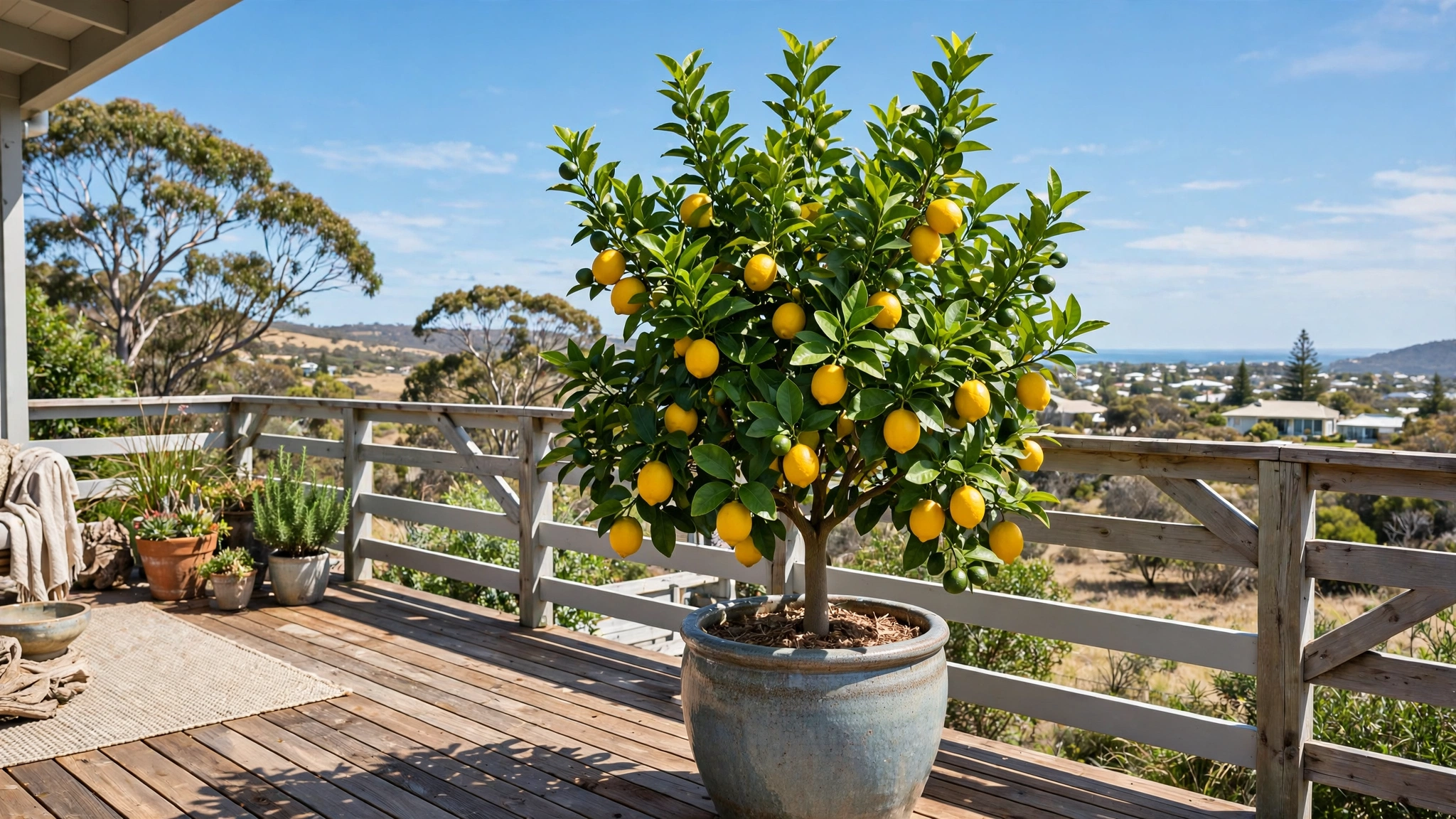
Potted citrus is one of the most forgiving and productive container crops you can grow in Australia. Dwarf varieties are bred specifically for pots, fruiting heavily in containers for decades with the right care. Whether you have a sprawling backyard in Brisbane or a tiny apartment balcony in Melbourne, there is a citrus tree that will thrive in a pot for you.
Why Grow Citrus in Pots?
Pots give you control that the open ground never can. You choose the soil, so poor clay or sandy ground stops mattering. You control the water, so drainage is never an issue. Best of all, you can move the tree — into full sun in winter, into shelter when a frost threatens, or with you when you move house. For renters, a potted lemon tree is a garden you can take with you.
Potted citrus also fruits earlier than in-ground trees. A dwarf lemon in a large pot can start producing within its first couple of years, and a well-cared-for tree will reward you for twenty years or more.
Best Dwarf Varieties for Pots
Look for trees grafted onto dwarfing rootstock, such as Flying Dragon. These stay compact — usually one to two metres in a pot — while fruiting at full size. Always buy grafted trees from a reputable nursery rather than growing from seed, which produces unpredictable, often fruitless trees.
Meyer Lemon
The undisputed king of potted citrus. Meyer lemons are slightly sweeter and less acidic than Eureka or Lisbon types, fruit almost year-round in warm climates, and tolerate pots beautifully. If you only grow one potted citrus, make it this one.
Tahitian Lime
Compact, nearly thornless and heavy-bearing, the Tahitian lime is perfect for pots and for cocktails. It is a touch more cold-sensitive than lemon, so southern growers should keep it in the warmest, most sheltered spot available.
Nagami Kumquat
Kumquats are the hardiest of the common citrus and the most ornamental, with bright orange fruit you eat whole — skin and all. They tolerate cooler conditions better than most citrus, making them a great choice for Melbourne, Adelaide and even Hobart courtyards.
Emperor or Satsuma Mandarin
Dwarf mandarins fruit generously in pots and the fruit is easy to peel — a winner if you have kids. Satsuma types are among the most cold-tolerant mandarins, coping with light frosts that would damage a lime.
Calamondin
A cross between a kumquat and a mandarin, calamondins produce masses of small, tangy fruit ideal for marmalade, sauces and drinks. They are naturally dwarf, highly ornamental and very forgiving of beginner mistakes.
Choosing the Right Pot
Go big from the start — a pot 45 to 60 centimetres wide and deep gives roots room to establish and buffers against rapid drying. Citrus hates being pot-bound, but it also hates sitting in a huge pot of soggy mix as a tiny plant, so match the pot to the tree: start in a 30-centimetre pot and step up every couple of years until you reach your final size.
Drainage holes are non-negotiable. Citrus roots rot quickly in waterlogged mix. Terracotta pots breathe well and look wonderful, but they dry out faster and are heavy to move; lightweight plastic or glazed ceramic pots retain moisture better and are easier to shift when frost threatens. Whatever you choose, raise the pot slightly off the ground on pot feet so water drains freely.
The Right Potting Mix
Never use garden soil in pots — it compacts, drains poorly and harbours disease. Use a premium potting mix formulated for pots, ideally one labelled for citrus or fruit trees. A good mix is coarse and free-draining; you can improve a standard premium mix by adding about one part coarse perlite or pine bark to four parts mix.
Repot or top-dress every two to three years. Citrus are hungry feeders and exhaust potting mix faster than most plants. When repotting, move up only one pot size and tease out any circling roots.
Sun, Water and Feeding
Citrus need at least six hours of direct sun a day — more is better. A north-facing position (in the southern hemisphere, north is the sunny side) is ideal. Fruit simply will not sweeten properly in shade.
Water deeply whenever the top 3 to 5 centimetres of mix feels dry. In summer, large pots in full sun may need watering daily; in winter, ease right off, as cold wet roots are a recipe for root rot. Always water the mix, not the foliage, and water in the morning.
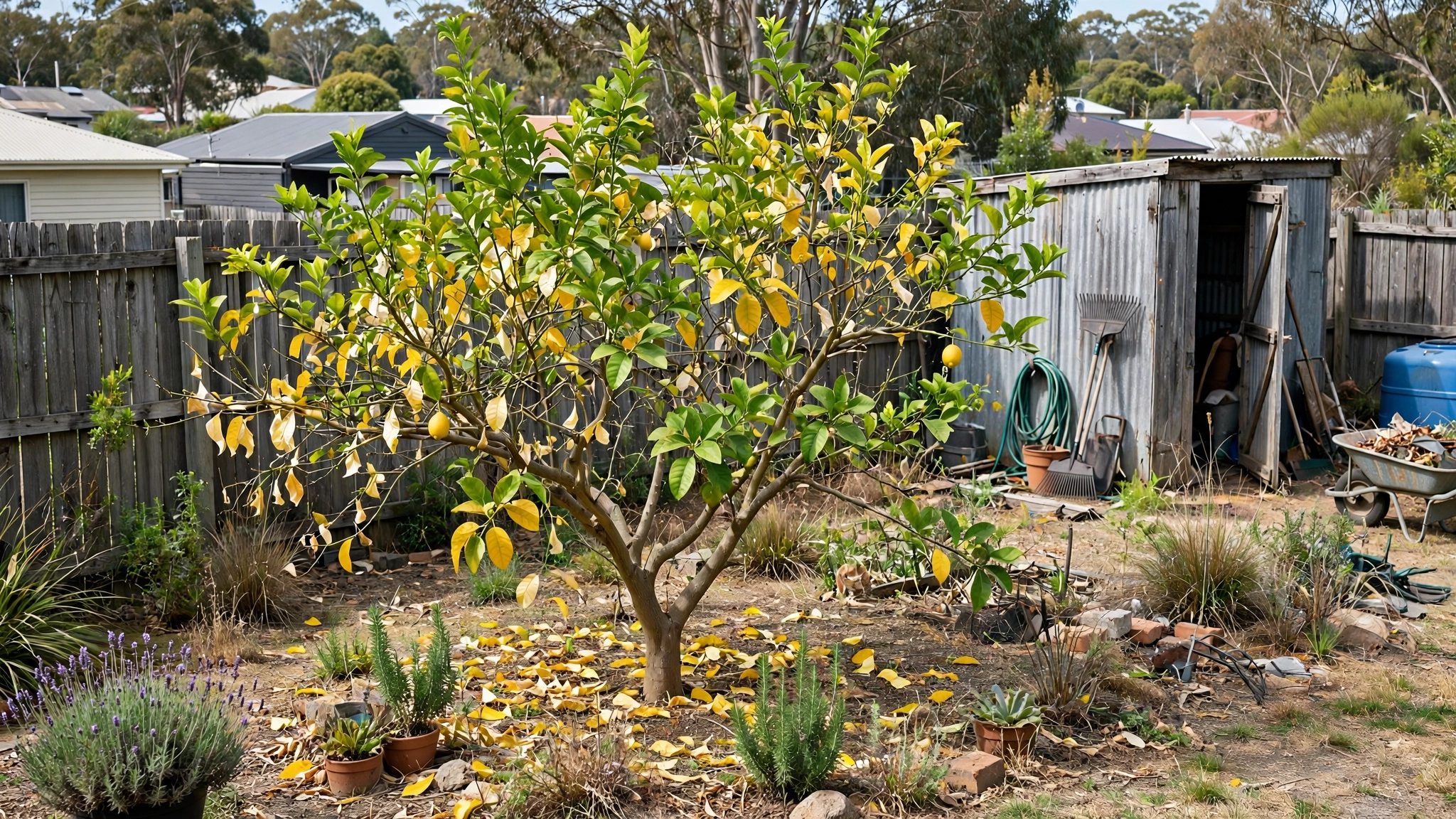
Feed potted citrus far more generously than in-ground trees, because nutrients wash out of pots with every watering. From early spring (September) through to autumn (April), apply a complete citrus fertiliser every six to eight weeks, plus a monthly liquid feed of seaweed solution during the growing season. Yellowing leaves with green veins usually signal magnesium or iron deficiency — common in pots and easily fixed with a dose of Epsom salts or chelated iron.
Protecting Potted Citrus from Frost
The great advantage of pots is mobility. In frost-prone areas — inland New South Wales, Victoria, South Australia, Tasmania and the ACT — move pots against a north-facing brick wall in winter, where radiated warmth offers several degrees of protection. On nights when frost is forecast, drape frost cloth over the tree, making sure the cloth does not rest directly on the foliage.
Kumquats and Satsuma mandarins handle light frosts best; Tahitian limes and lemons are the most vulnerable. If a severe cold snap is coming and your tree is small enough, moving it into a garage or under a patio roof overnight is perfectly fine — just return it to the sun each morning.
Frequently Asked Questions
How big a pot does a dwarf lemon tree need?
A mature dwarf lemon is happiest in a pot 50 to 60 centimetres wide and deep — roughly 60 to 75 litres of mix. Start smaller and pot up gradually; a young tree in an oversized pot is prone to overwatering problems.
Why are my potted citrus leaves turning yellow?
The most common causes are overwatering, nutrient deficiency or cold. Check that the pot drains freely and the mix is not constantly soggy. If drainage is fine, feed with a complete citrus fertiliser — yellowing between green veins points to magnesium or iron deficiency, which is very common in pots.
Can I grow citrus in pots in Melbourne or Hobart?
Yes, with the right variety and winter protection. Choose cold-tolerant types like kumquat, Satsuma mandarin or Meyer lemon, position pots in the warmest north-facing microclimate, and move or cover them on frosty nights.
How often should I water potted citrus in summer?
In hot weather, check daily and water when the top few centimetres of mix are dry — often every day for large pots in full sun. Deep, thorough watering is far better than frequent shallow sips. Mulch the surface with coarse bark to slow evaporation.
Do potted citrus trees need pruning?
Only light pruning. Remove dead wood, crossing branches and any vigorous shoots growing from below the graft union (these are rootstock suckers and must go). A light shape-up after the main harvest keeps the tree compact and lets light into the centre.