Few things frustrate a gardener more than a healthy-looking lemon tree that refuses to produce a single lemon. The tree is green, it grows, it might even flower — and then nothing. Before you reach for the chainsaw (or the old gardener's joke about threatening it), take heart: a non-fruiting lemon tree is almost always fixable, and the cause is usually one of a handful of common issues.
This guide walks you through every major reason lemon trees fail to fruit in Australian conditions, from the patience-testing reality of tree age to watering mistakes, nutrient deficiencies and pruning errors. Work through the step-by-step diagnosis at the end and you will know exactly what your tree needs.
Reason 1: Your Tree Is Simply Too Young
The most common "problem" is no problem at all. A lemon tree grown from seed can take five to seven years — sometimes longer — to produce its first fruit, and some seedling trees never fruit well at all. Grafted trees from a nursery are much faster, typically fruiting within two to three years of planting, but even they need time to establish roots before they commit energy to fruit.
If your tree is under three years old, the best fix is patience, plus good care: consistent water, regular feeding and no heavy pruning. A young tree dropping its first flowers is completely normal — it is conserving energy for growth.
Reason 2: Pollination Problems
Lemons are self-fertile, meaning a single tree can pollinate itself without a partner. But self-fertile does not mean pollinator-free: bees and other insects still do the vital work of moving pollen within the flowers. A tree in flower during a long stretch of cold, wet, windy weather — common in southern springs — may simply not get visited.
Heavy use of insecticides during flowering kills the very pollinators your tree needs, so never spray while blossoms are open. If your tree flowers but sets no fruit, watch it on a warm day: if you see few or no bees, poor pollination is a likely culprit. Planting bee-friendly flowers nearby helps enormously.
Reason 3: Water Stress
Lemons are thirsty trees with a low tolerance for drought at the wrong moment. If a tree experiences water stress while flowering or while tiny fruitlets are forming, it will shed them without hesitation — the tree sacrifices fruit to survive. Inconsistent watering is worse than slight underwatering: a dry spell followed by a deluge triggers fruit drop every time.
Young trees need deep watering two to three times a week in warm weather; established in-ground trees need a deep soak weekly through spring and summer, more in heatwaves. Mulch with 7 to 10 centimetres of coarse mulch (kept clear of the trunk) to even out soil moisture. Potted lemons dry out fastest of all — check them daily in summer.
Reason 4: Nutrient Deficiencies
A hungry tree will not fruit. Lemons are heavy feeders, and Australian soils — particularly sandy soils in Western Australia and parts of Queensland — are often naturally low in the nutrients citrus crave.
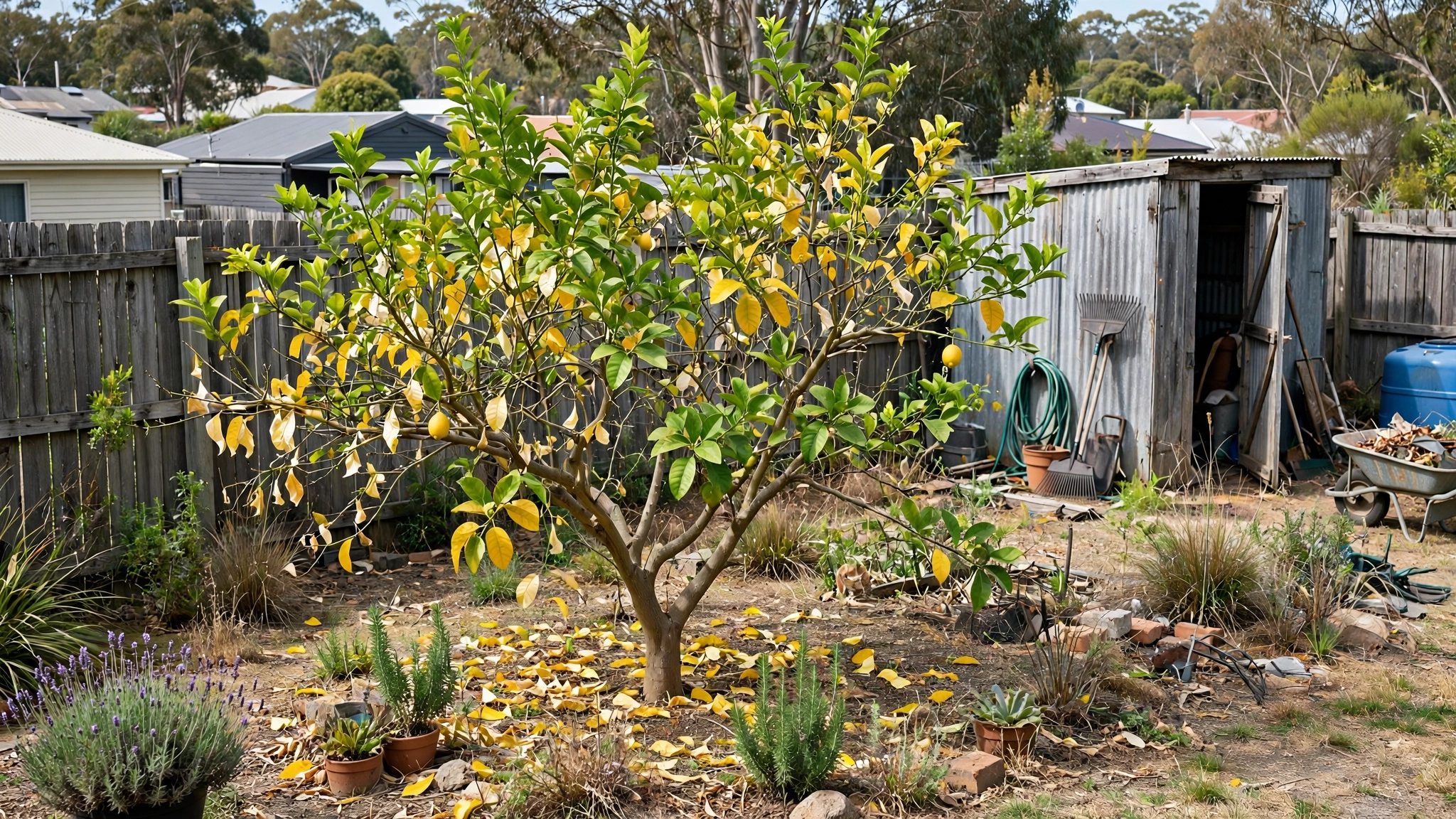
Feed established trees three to four times a year: early spring (September), early summer (December) and late summer (February), with a lighter feed in autumn. Use a complete citrus fertiliser and spread it under the canopy, not against the trunk, watering in well. Yellowing leaves with dark green veins point to iron or manganese deficiency, very common in alkaline soils; pale overall yellowing suggests nitrogen shortage. A dose of Epsom salts (magnesium) dissolved in water corrects the classic yellow-leaf-green-vein pattern within weeks.
Reason 5: Pruning Mistakes
Lemons fruit on the current season's growth, but heavy or badly timed pruning removes the wood that would have carried flowers. The worst mistake is a hard prune in late winter or spring just as flower buds are forming — you are literally cutting off the coming crop.
Lemons need only light maintenance pruning: remove dead wood, crossing branches and rootstock suckers (vigorous shoots from below the graft — always remove these). Do any shaping immediately after the main harvest, never just before flowering. And never "hat-rack" a lemon — severe topping triggers a flush of water shoots and no fruit for a year or more.
Reason 6: Frost and Cold Damage
In southern Australia — Victoria, Tasmania, inland New South Wales, South Australia and the ACT — frost is a major cause of crop failure. Flowers and tiny fruitlets are far more frost-sensitive than leaves; a single frosty night during flowering can wipe out the entire season's potential fruit while the tree itself looks untouched.
If your tree flowers enthusiastically each spring but never holds fruit, and you are in a frost-prone area, cold damage during bloom is a prime suspect. Planting against a north-facing brick wall, covering with frost cloth on cold nights and choosing cold-tolerant varieties like Meyer lemon all help.
Reason 7: Too Much Shade or a Bad Position
A lemon in shade will grow leaves but not fruit. Citrus need a minimum of six hours of direct sun daily to ripen fruit properly — eight is better. Trees planted on the southern side of a house or fence, or gradually shaded out as neighbouring trees grow, often stop fruiting years after planting. If the canopy has become shaded, consider whether nearby trees can be thinned — or whether the lemon needs relocating while it is still manageable.
Step-by-Step Diagnosis Checklist
Work through these questions in order. The first "yes" is very likely your answer.
- Is the tree under three years old (or grown from seed)? Give it time and excellent care.
- Does it flower but set no fruit? Suspect pollination (cold/wet spring, no bees) or frost damage during bloom.
- Does it set tiny fruit that then drops? Suspect water stress or a sudden change in watering.
- Are the leaves yellow, pale or showing veined patterns? Feed with complete citrus fertiliser; address specific deficiencies.
- Did you prune hard in late winter or spring? You removed the flowering wood — wait for regrowth and prune after harvest next time.
- Is the tree in shade for much of the day? Fruit needs sun; address the shading or move the tree.
- Are there vigorous shoots from below the graft? Remove rootstock suckers — they steal energy and never produce good fruit.
Frequently Asked Questions
How long before a lemon tree fruits in Australia?
A grafted tree from a nursery typically fruits within two to three years of planting. A tree grown from a pip can take five to seven years or more, and fruit quality is unpredictable — this is why grafted trees are always recommended.
Why does my lemon tree flower but not produce fruit?
The most common reasons are poor pollination during cold or wet springs, frost damage to flowers, or water stress causing the tree to drop fruitlets. Check for bee activity during flowering and keep watering consistent from bud formation onward.
Should I fertilise a lemon tree that is not fruiting?
Yes — hunger is a leading cause of poor fruiting. Feed with a complete citrus fertiliser three to four times a year from spring to late summer. Avoid fertilising in winter when the tree is dormant, as this can push soft growth vulnerable to frost.
Can a non-fruiting lemon tree be saved?
Almost always. Unless the tree is a seedling of inherently poor fruiting quality, correcting water, nutrients, sun exposure and pruning will bring it into bearing, usually within one to two seasons. Even neglected trees respond remarkably well to consistent care.
Do I need two lemon trees for pollination?
No. Lemons are self-fertile and a single tree will fruit on its own. Bees still help move pollen between flowers, so avoid spraying insecticides during bloom and plant bee-attracting flowers nearby.