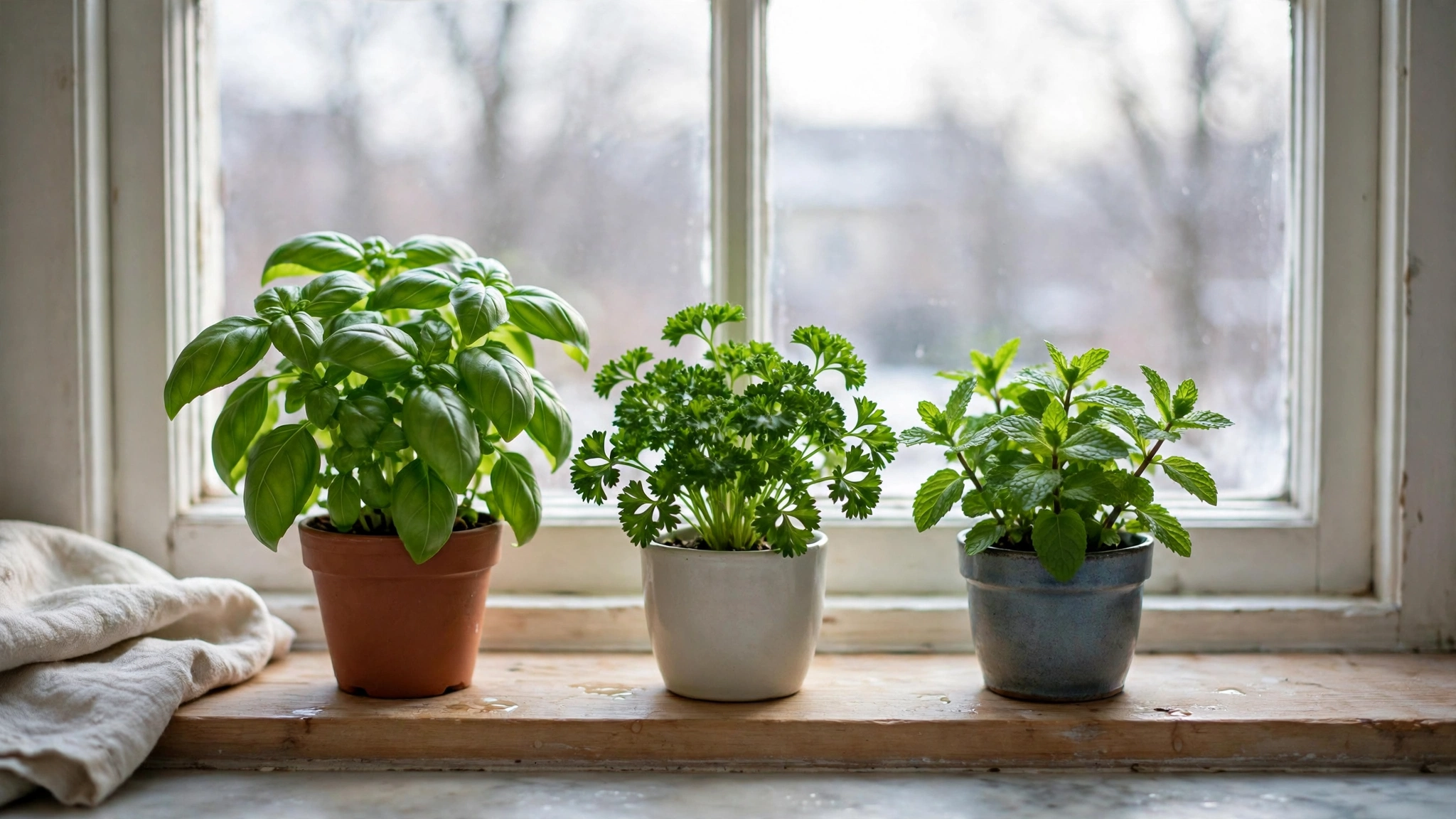
Winter is when you miss fresh herbs the most. The basil in the garden has long since collapsed, the supermarket bunches wilt within days, and that winter stew is crying out for something green. The solution is simpler than most gardeners realise: grow your herbs indoors. A sunny windowsill can keep you in fresh parsley, chives, mint and thyme all through the coldest months.
Indoor herb growing in Australia has one big advantage over colder countries — our winters are mild, so a bright windowsill is usually enough without elaborate equipment. Whether you are in frosty Ballarat or subtropical Brisbane, these techniques will keep herbs productive from June through August and give you a head start on spring.
Why Grow Herbs Indoors in Winter?
Most of the herbs we love are frost-tender or simply stop growing in cold weather. Basil blackens at the first hint of frost; even hardy herbs like parsley and chives slow to a crawl in a Melbourne or Hobart winter. Indoors, temperatures stay in the comfortable 15 to 22 degree range that herbs prefer, and growth continues steadily.
There are practical benefits too. Herbs on the kitchen windowsill are always within arm's reach when you are cooking, they add greenery and fragrance to the house during the grey months, and a pot of herbs costs a fraction of weekly supermarket bunches over a winter.
The Best Herbs for Indoor Growing
Not every herb suits life on a windowsill. The winners are compact, tolerant of lower light than full outdoor sun, and productive when picked regularly.
Parsley
The ultimate indoor winter herb. Parsley tolerates lower light better than most herbs, grows steadily in cool indoor temperatures and you can harvest from the same plant for months. Flat-leaf types have the best flavour.
Chives
Chives are nearly indestructible indoors. They cope with modest light, bounce back quickly after cutting and their mild onion flavour lifts winter soups, eggs and baked potatoes. Garlic chives are equally easy.
Mint
Mint actually prefers the slightly shadier, moister conditions of indoor growing to a scorching summer garden. Keep it in its own pot — mint is famously invasive and will strangle neighbouring herbs. Perfect for winter teas.
Basil
Basil is the diva of indoor herbs: it demands the most light and warmth, but the reward is fresh pesto in July. Give it your sunniest windowsill, keep it away from cold draughts, and pinch flower buds the moment they appear.
Thyme and Oregano
These Mediterranean perennials adapt well to pots indoors. They need excellent drainage and the brightest spot you have, but their concentrated flavour means a little goes a long way in winter cooking.
Light: The Make-or-Break Factor
Light is the single biggest determinant of indoor herb success. In the southern hemisphere, a north-facing windowsill receives the most direct sun — this is your prime herb real estate. East-facing is the next best; south-facing windowsills are usually too dim in winter for anything but mint and parsley.
Aim for at least four to six hours of direct sun daily. If your windows are shaded or face the wrong way, a simple LED grow light makes an enormous difference. Modern full-spectrum LED panels are inexpensive to run — position one 15 to 30 centimetres above the plants and run it for 12 to 14 hours a day on a timer. Rotate pots a quarter turn every few days so plants grow evenly instead of leaning.
Pots, Soil and Watering
Use pots with drainage holes — no exceptions. A 15 to 20 centimetre pot suits most herbs; mint deserves its own larger pot. A premium potting mix works well; for thyme, oregano and other Mediterranean herbs, mix in extra coarse sand or perlite for sharp drainage.
Indoor herbs need far less water than outdoor plants. Water thoroughly, then let the top 2 to 3 centimetres of mix dry out before watering again. Overwatering kills more indoor herbs than any other mistake — soggy mix leads to root rot and fungus gnats. Water in the morning, tip out any water sitting in saucers after half an hour, and reduce watering further during the coldest weeks when growth slows.
Feed lightly. A half-strength liquid seaweed or indoor-plant fertiliser once a month through winter is plenty. Overfed herbs grow lush but bland — and nobody wants tasteless basil.
How to Harvest Without Killing the Plant
The golden rule: never take more than one-third of the plant at once. For leafy herbs like basil and parsley, harvest from the top down — pinching out the growing tips encourages bushy side growth instead of a single lanky stem. Always leave enough leaves for the plant to photosynthesise.
With chives, cut whole blades down to about 3 centimetres above the soil; they regrow from the base within a week or two. For mint, pinch stems just above a leaf node and two new stems will sprout. Strip thyme and oregano leaves by running your fingers down the stem, but never strip a stem bare — leave the growing tip intact.
Harvest in the morning when essential oils are most concentrated, and use sharp scissors rather than tearing, which damages stems and invites disease.
Dealing with Common Indoor Problems
Leggy, pale growth means insufficient light — move the plant closer to the window or add a grow light. Yellowing lower leaves usually indicate overwatering; let the mix dry out more between waterings. Tiny flies hovering around pots are fungus gnats, a sign of constantly damp mix — allow the surface to dry and they will disappear.
Aphids and whitefly occasionally find indoor herbs. A strong jet of water in the sink dislodges most pests, and because these are edible plants, avoid synthetic sprays — insecticidal soap or neem oil are the safe options. Good air circulation (not a cold draught, just gentle air movement) prevents most fungal problems.
Frequently Asked Questions
Which herbs grow best indoors in an Australian winter?
Parsley, chives, mint, thyme and oregano are the most reliable. Basil also works but needs your sunniest north-facing windowsill and protection from cold draughts. Coriander is trickier indoors as it bolts quickly — sow small amounts successionally if you want it.
Do indoor herbs need direct sunlight?
Most need at least four to six hours of direct sun, ideally on a north-facing windowsill. Mint and parsley tolerate partial shade. If you cannot provide enough natural light in winter, a full-spectrum LED grow light run 12 to 14 hours daily will keep herbs productive.
How often should I water indoor herbs in winter?
Less than you think — typically once or twice a week. Water thoroughly, then wait until the top few centimetres of mix are dry before watering again. Growth slows in the coldest weeks, so reduce watering in June and July especially.
Can I move outdoor potted herbs inside for winter?
Yes, and it is a great strategy for basil and other frost-tender herbs. Move them inside before the first frost, cut them back by about one-third, check for pests, and place them in maximum light. They may sulk for a week while adjusting, then settle in.
Why do my indoor herbs taste bland?
Bland flavour usually comes from too little light, too much fertiliser or too much water. Maximise light, feed only lightly once a month, and let the mix dry between waterings. Herbs grown slightly "tough" develop far more concentrated essential oils — and flavour.