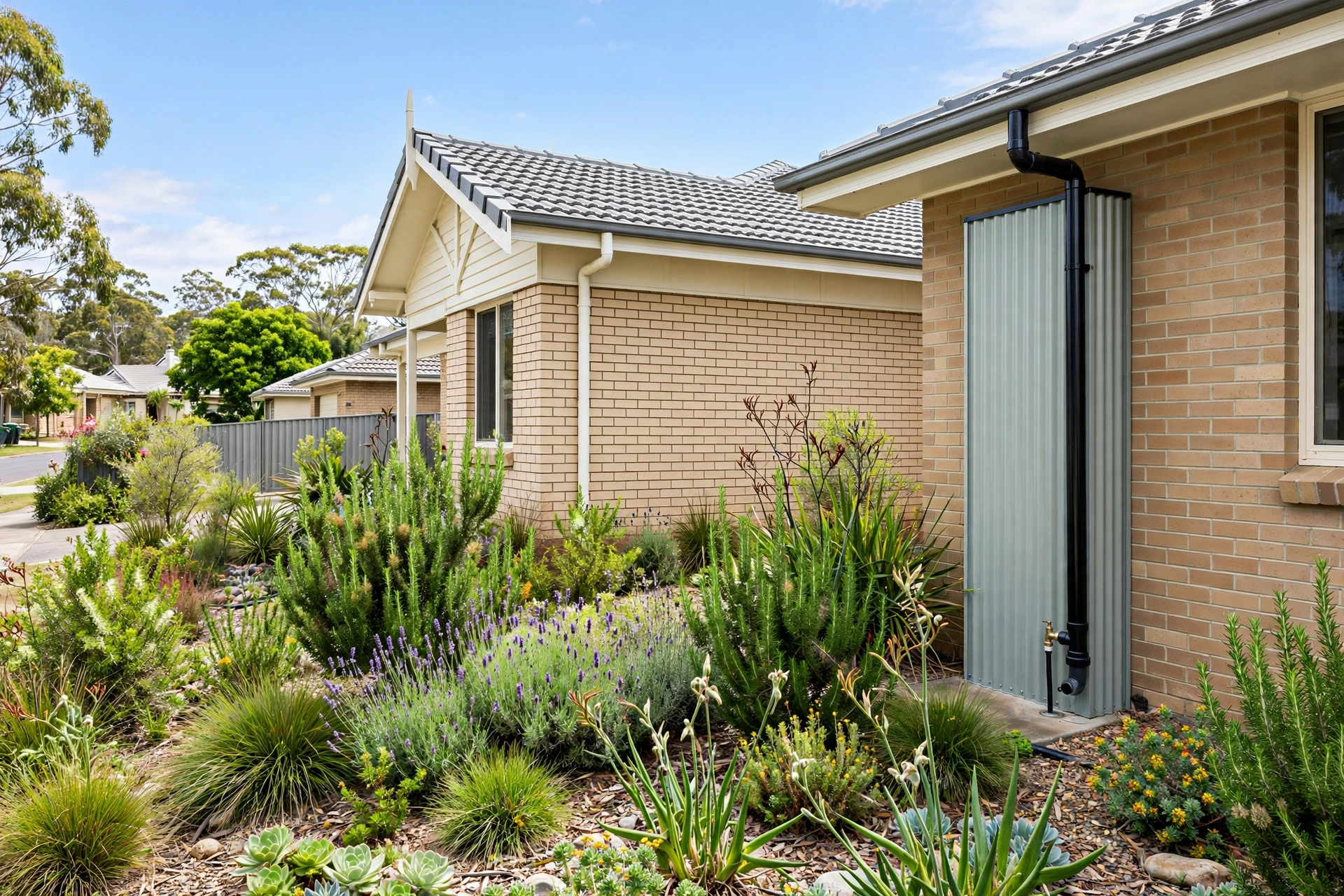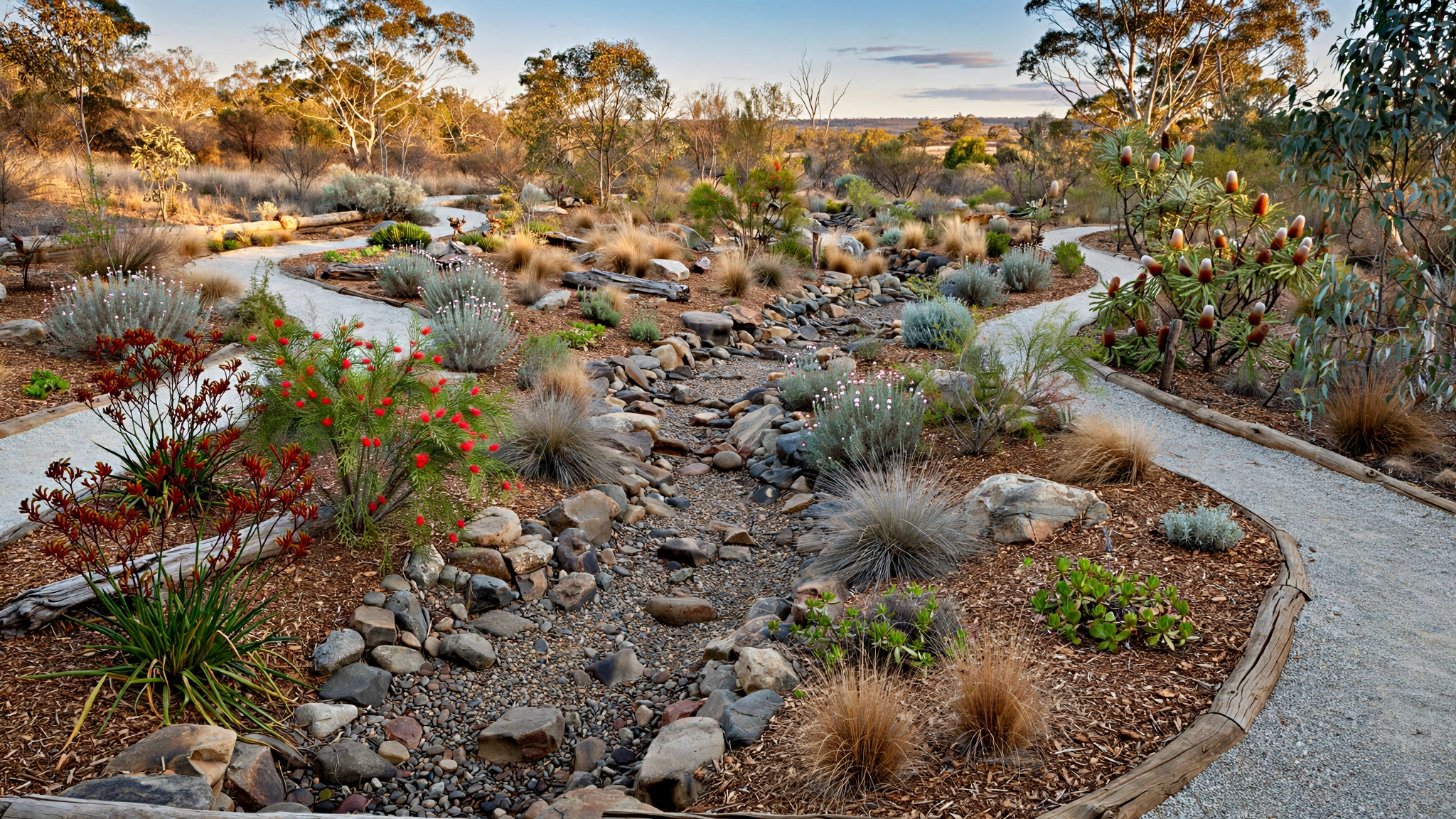
Australia is the driest inhabited continent on earth, and our gardens have to live with that reality. Every few years a drought reminds us — from the Millennium Drought that emptied Melbourne's dams to the dry springs that trigger restrictions in Perth and regional New South Wales. Yet most Australian backyards are still designed as if water were unlimited: thirsty exotic lawns, plants from wetter climates, and bare soil that bakes every summer.
Water-wise garden design is not about gravel and cacti. Done well, it produces gardens that are lusher, more interesting and more alive with birds and insects than a conventional lawn-and-roses yard — while using a fraction of the water. This guide covers the core principles Australian landscape designers actually use: hydrozoning, smart plant selection, mulch, permeable surfaces, smaller lawns and efficient irrigation, plus how to stay on the right side of your state's water restrictions.
Start with Hydrozoning
Hydrozoning is the single most important water-wise design principle, and it simply means grouping plants with similar water needs together. The classic mistake is planting a thirsty hydrangea next to a drought-hardy banksia on the same irrigation line: one of them will always be wrongly watered.
Sketch your block and divide it into three zones:
- High-water zone: close to the house — the veggie patch, herbs in pots, and any feature plants you are willing to hand-water. Keep this zone small, because it is where most of your water goes.
- Moderate zone: the middle ring — most ornamental garden beds with a mix of natives and exotics that cope with occasional deep watering in dry spells.
- Low-water zone: the outer areas and nature strip — established native plantings, groundcovers and trees that survive on rainfall alone once established.
Design your irrigation (or your watering routine) around these zones so you never waste water on plants that do not need it. Even without any irrigation system, hydrozoning saves water because you stop dragging the hose to the far corners for plants that would be fine without it.
Choose Drought-Tolerant Plants — Especially Natives
Australian native plants evolved for exactly this climate, and modern cultivars give you colour, structure and flowers with minimal water. Some outstanding water-wise choices for different regions:
- South-east (Sydney, Melbourne): kangaroo paw, grevillea, banksia, westringia (coastal rosemary), lomandra and dianella grasses. All handle dry spells once established.
- South-west (Perth): the local flora is world-class for water-wise gardening — kangaroo paw, bottlebrush (callistemon), eucalyptus cultivars, and Geraldton wax flower thrive on Perth's sandy soils with little summer water.
- Subtropical (Brisbane): lilly pilly, native frangipani (hymenosporum), grevillea and lomandra cope with humidity plus dry winters.
- Arid and inland: eremophila (emu bush), saltbush and native grasses are built for extreme dry.
The key phrase is "once established." Even drought-tolerant plants need regular watering for their first one to two summers while roots develop. Water new plantings deeply twice a week in their first summer, then taper off. After that, most established natives in suitable climates need nothing beyond rainfall — which is the whole point.
Mulch: The Cheapest Water Saver
A 75 to 100 millimetre layer of coarse mulch is the highest-return investment in any Australian garden. It cuts evaporation from the soil surface dramatically, keeps roots cool in summer, suppresses weeds that would steal water, and slowly feeds the soil as it breaks down. Beds that are mulched properly can go twice as long between waterings as bare beds.
Use coarse, chunky mulches — eucalyptus chips, pine bark or sugar-cane mulch — rather than fine mulches that compact and shed water. Keep mulch a few centimetres away from plant stems and tree trunks to prevent collar rot. Top it up annually, because it breaks down faster than most people expect in warm climates.
Rethink Surfaces: Permeable Paths and Patios
Every square metre of concrete or pavers is a square metre where rain runs straight into the stormwater drain instead of into your soil. Permeable surfaces let water soak in where it falls:
- Gravel and crushed rock paths with a geotextile base drain freely and suit cottage and native garden styles.
- Stepping stones with groundcover joints — plant creeping thyme, native violet or dichondra between pavers for a soft, living path.
- Permeable pavers with wide gaps for driveways and entertaining areas, which handle car weight while letting rain through.
Grade paths and patios so runoff flows toward garden beds rather than the street. A subtle swale — a shallow planted dip — along a boundary can capture roof and path runoff and direct it to thirsty plants instead of the drain.
Shrink the Lawn
The traditional full-block lawn is the thirstiest feature in most Australian yards. You do not have to remove it entirely, but reducing lawn to the areas you actually use — the play space, the entertaining area — and converting the rest to planted beds, paths or groundcovers can cut a garden's water use dramatically.
For remaining lawn areas, choose water-efficient varieties suited to your climate, mow high (longer leaf shades the soil), and water deeply once a week rather than sprinkling daily. Alternatives like native groundcovers — myoporum, grevillea groundcover varieties or kidney weed (dichondra) in suitable climates — give you green coverage with a fraction of the water once established.
Drip Irrigation: Water the Roots, Not the Air
If you irrigate, drip systems beat sprinklers on every measure that matters. Drip lines deliver water slowly to the root zone with minimal evaporation, and because foliage stays dry, fungal diseases drop too. A basic drip system for garden beds costs little, uses standard tap fittings, and can cut garden water use by a third or more compared with hand-watering or sprinklers.
Run drip lines under your mulch layer, group beds into zones by water need (hydrozoning again), and put the system on a timer so watering happens in the cool of early morning. Check and flush lines once a season — Australian water, especially bore water in Perth and Adelaide, can carry sediment that blocks drippers.
Know Your State's Water Restrictions
Water-wise design also means designing for the rules. Restrictions vary by state and water authority, and they change with dam levels:
- New South Wales: Sydney Water moves through restriction levels in drought; permanent water-wise rules already limit hose use to before 10am and after 4pm.
- Victoria: Melbourne's permanent water use rules restrict hose watering times, while regional towns can face severe stage restrictions in dry years.
- Queensland: Seqwater sets restrictions for Brisbane and the south-east; many regional councils impose their own.
- Western Australia: Perth has permanent sprinkler rosters (two days a week by house number) plus total winter sprinkler bans.
- South Australia: SA Water restrictions tighten in dry years, with hand-watering rules even at lower levels.
Always check your local water authority's current rules before planning irrigation — and design the garden so it survives the restrictions, not just the good years. A garden that only looks good when you can water daily is a garden designed for disappointment.
The goal is not a garden that uses no water — it is a garden that uses water brilliantly. Every litre should land on roots, in soil protected by mulch, feeding a plant chosen for your climate. Waste is a design flaw, not a weather problem.
Frequently Asked Questions
Can a water-wise garden still look lush?
Absolutely — some of Australia's most beautiful gardens are water-wise. Layered native plantings with contrasting foliage, grasses and seasonal flowers look rich and full; the trick is density of planting and good mulch, which together create the lush effect without the water bill. What looks sparse is usually under-planting, not under-watering.
How much water can I actually save?
A conventional lawn-and-exotic garden can use most of a household's outdoor water. Switching to hydrozoned native plantings with mulch and drip irrigation typically cuts garden water use by 30 to 60 per cent, with the biggest savings coming from lawn reduction. Your water bill will confirm it within a billing cycle or two.
Do I need to remove my existing lawn?
No — start by shrinking it. Convert the strips and corners you never use into planted beds first; they are the hardest to water efficiently anyway. Keep lawn where you sit, play and entertain, and make what remains as efficient as possible with high mowing and deep, infrequent watering.
What is the best mulch for Australian gardens?
Coarse eucalyptus or pine bark chips for ornamental beds, sugar-cane mulch for veggie patches (it breaks down faster and feeds the soil), and gravel mulch for succulents and arid-style plantings where organic mulch would hold too much moisture. Avoid fine "forest mulch" blends that compact into a water-shedding crust.
Are rainwater tanks worth it for the garden?
For garden use, often yes — even a modest tank plumbed to a drip system or used with a hose can cover a water-wise garden's needs through dry spells and keeps you gardening happily through restrictions. Size the tank to your roof area and local rainfall (see our tank sizing guide), and check your council for rebates that can offset the cost.