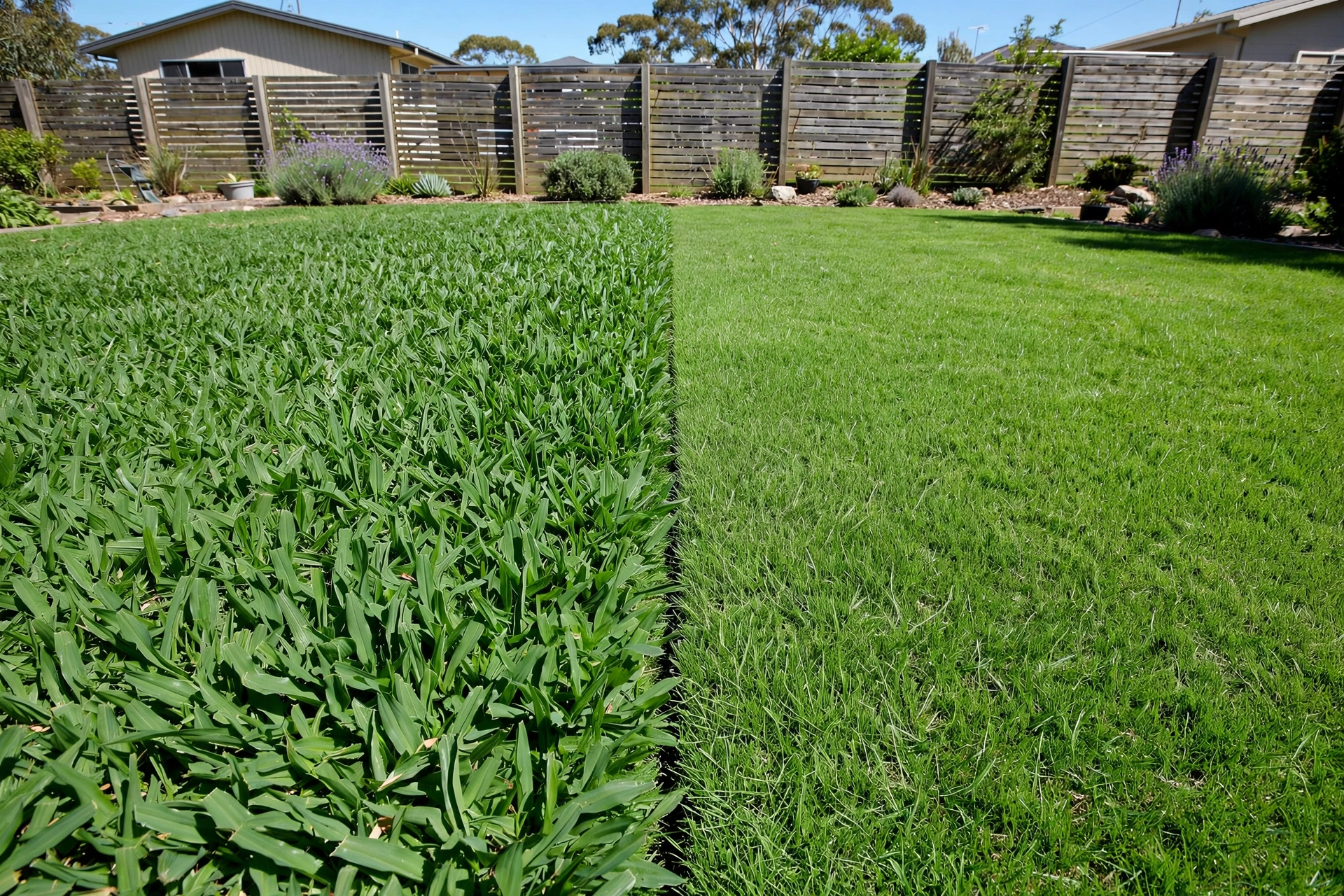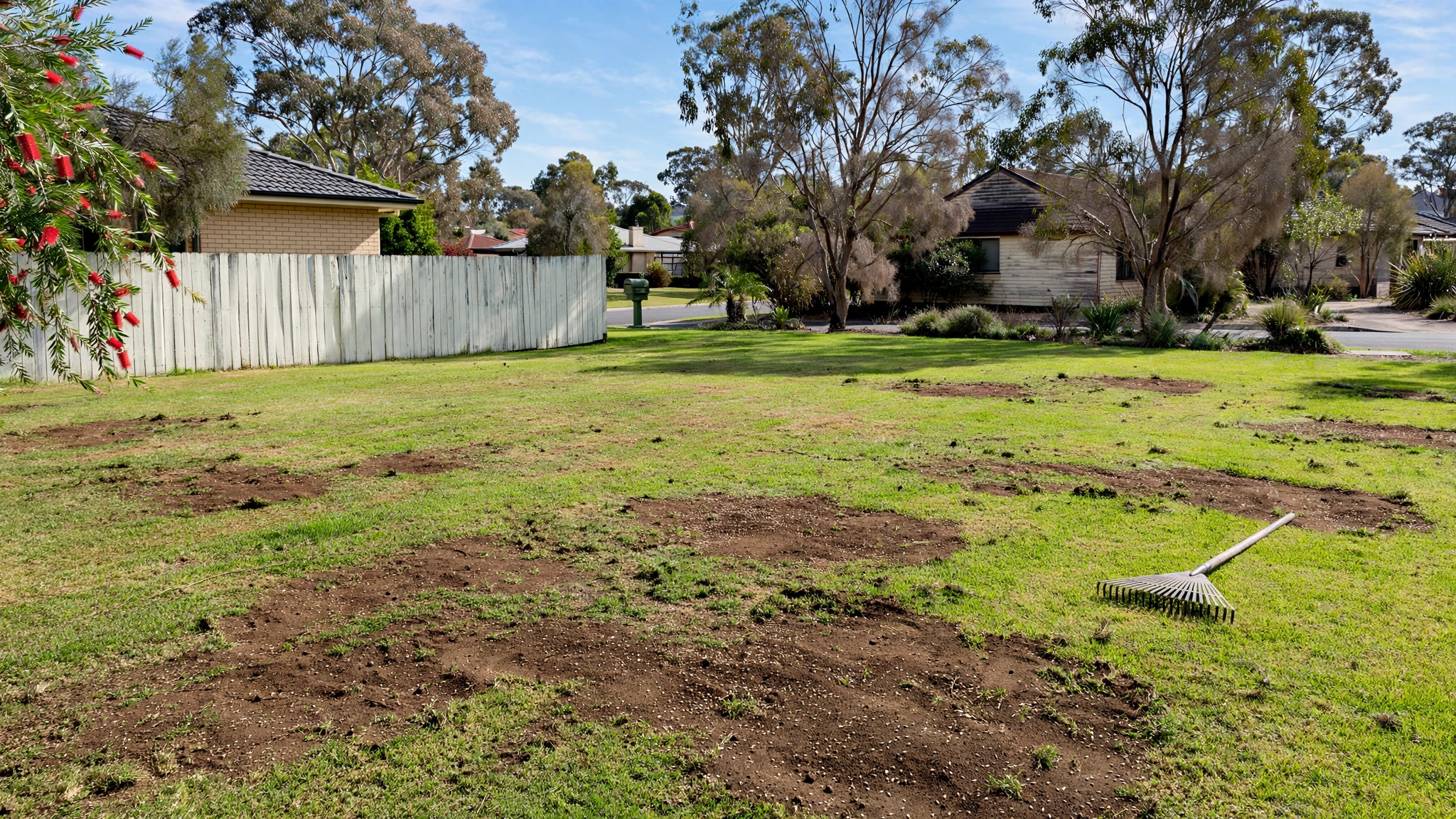
There is nothing more frustrating than a lawn that looks like a patchwork quilt: lush green here, brown and bare there, with weeds gleefully colonising every gap. Patchy lawns are one of the most common complaints among Australian homeowners, and the good news is that most of them are entirely fixable. The trick is diagnosing the cause before you reach for the seed or turf, because patching over a grub infestation or compacted soil just buys you a few weeks before the patches return.
This guide walks you through the whole process the way a professional turf contractor would approach it: figure out what is actually wrong, fix the underlying problem, repair the bare areas, and set up a maintenance routine that stops the patches coming back. Whether you are dealing with a few worn spots or a lawn that is more patch than grass, the steps below will get you there.
Step 1: Diagnose the Cause
Different causes need different fixes, so start with detective work. Walk the lawn and note where the patches are: random spots, edges near paths, under trees, or along the fence where the dog patrols? Then check the list below.
Lawn grubs
Grubs — the larvae of scarab beetles — are a prime suspect for irregular brown patches in late summer and autumn, especially in Sydney, Brisbane and Perth. The grass in affected areas pulls up easily because the roots have been chewed through, and you will often see birds digging at the lawn. To confirm, cut a spade-sized square of turf and peel it back: more than a handful of fat white curl grubs per square means treatment is needed. An application of a suitable grub-control product in late summer, watered in well, breaks the cycle.
Soil compaction
Compacted soil is the silent killer of Australian lawns, common on new estates where heavy machinery has pressed the clay, and on high-traffic areas like the shortcut across the corner of the yard. Symptoms include water pooling after rain, grass that stays thin despite fertilising, and soil you can barely push a screwdriver into. The fix is mechanical: aerate with a garden fork or hire a core aerator, then top-dress with a sandy loam mix to improve structure over time.
Shade
If the patches sit under trees or on the southern side of the house or fence, lack of light is the likely culprit. Most lawn grasses need a minimum number of direct sun hours (see our variety guides), and no amount of seed or fertiliser will make grass grow in deep shade. The honest fix is either switching to a shade-tolerant variety like soft-leaf buffalo, or shrinking the lawn and planting shade-loving garden beds instead.
Pet urine
Dog urine burns grass in distinctive round spots with a dark green ring around a dead centre — the nitrogen overload scorches the leaf. Female dogs tend to cause worse spots because they empty a full bladder in one place. Train dogs to use a designated mulched area if possible, flush fresh spots with a bucket of water to dilute the urine, and repair dead patches by raking out the dead grass and oversowing. There are also lawn repair products designed to neutralise the salts, with mixed but sometimes helpful results.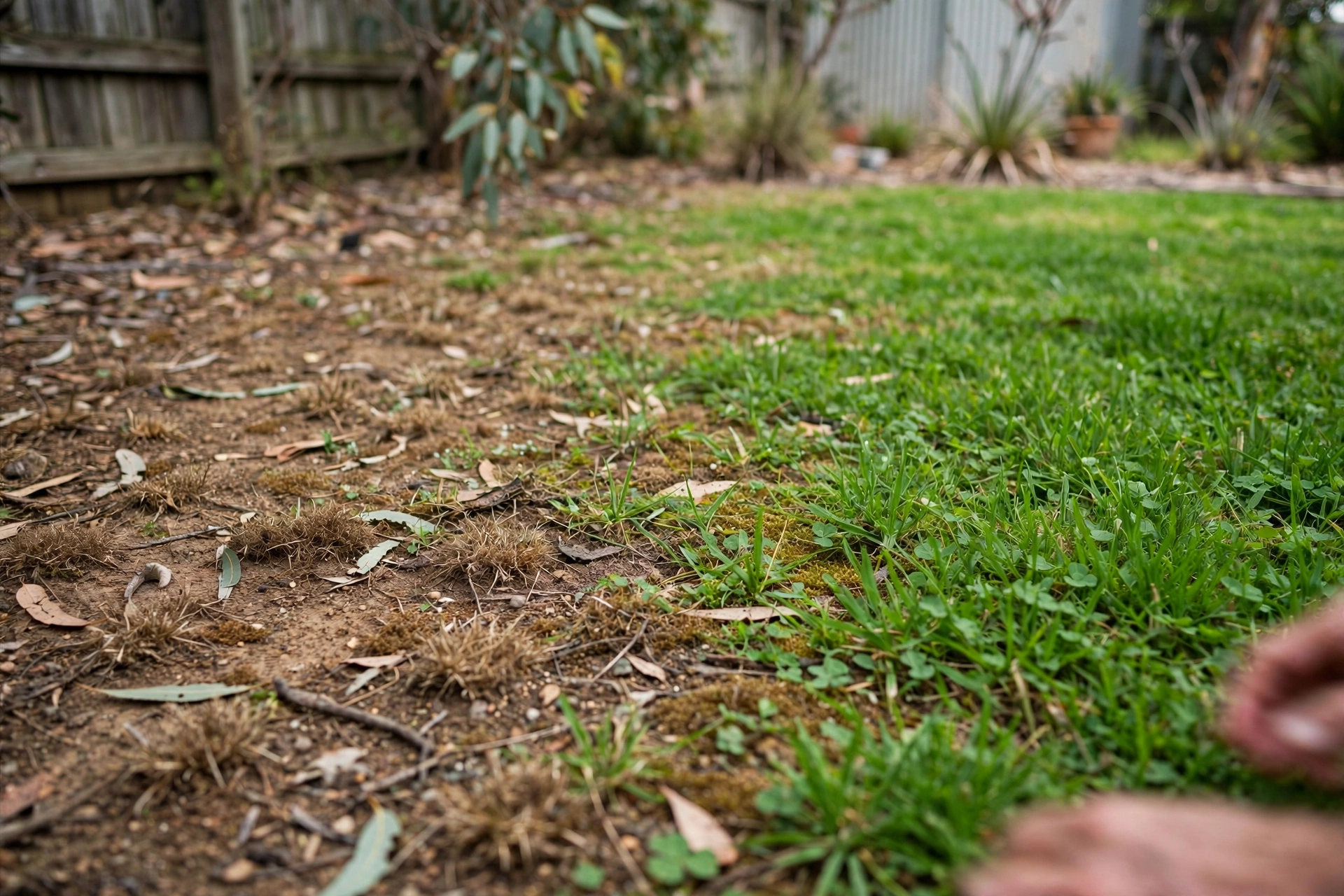
Fungal disease
Humid summers in Brisbane, Sydney and Darwin encourage fungal problems like brown patch and dollar spot, which show as circular patches with a darker margin. Disease thrives on lawns that are watered in the evening, mowed too short, or over-fertilised with nitrogen. Improve air circulation by pruning overhanging shrubs, switch watering to early morning, and avoid feeding the lawn in the peak of humid weather.
Weeds crowding out grass
Sometimes the "patches" are actually weeds — bindii, clover, winter grass or oxalis — that have outcompeted thin turf. Weeds are usually a symptom rather than the root cause: they move into lawns that are mowed too short, underfed or patchy for one of the reasons above. Fix the underlying weakness first, then deal with the weeds, or they will simply return.
Step 2: Prepare the Bare Areas
Once you have addressed the cause, prepare each patch for repair:
- Clear the area. Rake out all dead grass, thatch and debris from the patch, going slightly beyond the visible edge into healthy turf. For weedy patches, remove the weeds roots and all.
- Loosen the soil. Use a garden fork to loosen the top 5 to 10 centimetres. If the soil is compacted clay, work in a little gypsum and coarse sand to improve drainage.
- Level it. Add or remove soil so the patch sits level with the surrounding lawn — slightly below is better than a mound, which the mower will scalp.
- Fertilise lightly. Scratch a small amount of slow-release lawn starter fertiliser into the loosened soil. Do not overdo it: too much nitrogen burns young seedlings.
Step 3: Choose Your Repair Method
Option A: Oversow with seed
Oversowing is the cheapest option and works well for thin, worn areas where some grass remains. Choose a seed blend suited to your existing lawn and climate — in warm regions, couch and kikuyu seed establish fast in spring and summer; in cooler regions, a ryegrass or fescue blend suits autumn sowing. Spread seed evenly at the rate on the packet, rake it lightly into the surface, and keep it consistently moist until germination (usually 7 to 21 days depending on variety and temperature). The critical rule: do not let the seed bed dry out, even for a day, or germination fails.
Option B: Re-turf the patches
For larger dead areas — anything bigger than a dinner plate — re-turfing with rolls or slabs of turf matched to your existing lawn gives an instant result and is more reliable than seed in hot weather. Cut the patch to a neat rectangle, lay the turf with edges butted tightly (no gaps, no overlaps), and water immediately. New turf needs daily watering for the first two weeks, then gradually less as roots knit into the soil below. You can usually tell it has taken when you cannot easily lift a corner.
Option C: Let runners fill in
If you have a spreading grass like kikuyu, couch or buffalo and the patches are small, fertilise the lawn, water deeply, and let the runners do the work over spring and summer. This costs nothing and works well for minor wear — but it will not fix patches caused by grubs, shade or compaction.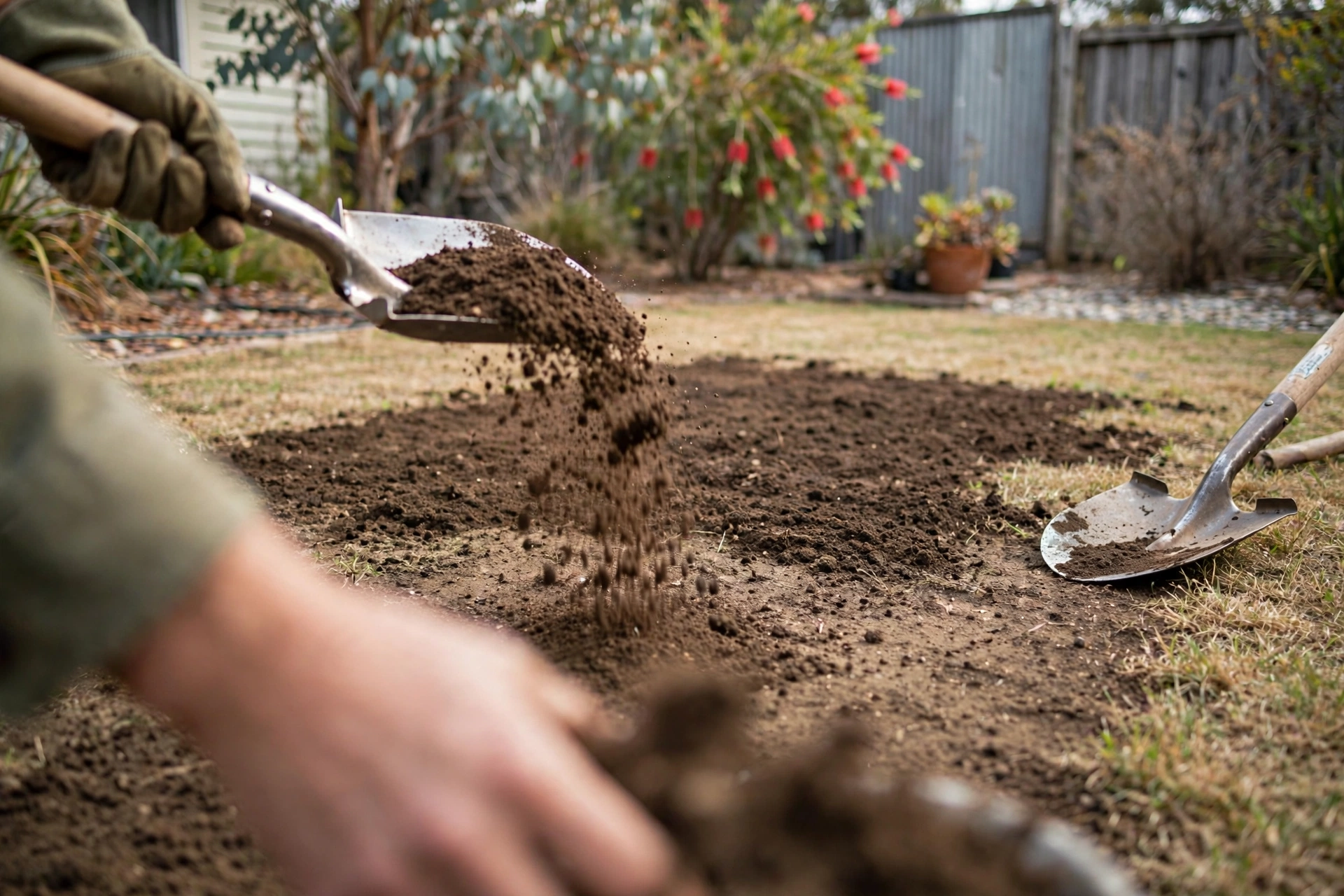
Step 4: Top-Dress the Whole Lawn
Top-dressing — spreading a thin layer of sandy loam over the lawn — is the single best renovation practice for tired Australian lawns. It levels minor bumps, buries thatch and gives seed-to-soil contact for oversowing. Spread 5 to 10 millimetres evenly with the back of a rake, working it down so grass blades poke through, in spring when growth is active.
When to Repair: Timing Matters
Lawn repair follows the growing season, and in Australia that means:
- Spring (September to November): the prime window nationwide. Warm soil, reliable rain and months of growth ahead make this the best time for oversowing, re-turfing, top-dressing and grub treatment follow-up.
- Early autumn (March to April): the second-best window, especially in southern states. Soil is still warm, competition from summer weeds drops, and there is time to establish before winter. Ideal for oversowing cool-season grasses in Melbourne, Adelaide and Perth.
- Summer: workable for warm-season grasses in the north, but heat stress and water restrictions make it risky. If you must repair in summer, re-turf rather than seed, and commit to the watering schedule.
- Winter: avoid major repair. Growth is too slow for seed or turf to establish, and you will waste money.
Step 5: Aftercare That Prevents a Relapse
A repaired lawn will revert to patchiness within a season if the maintenance does not change. Lock in the gains with these habits:
- Mow high. Raise the mower a notch. Longer leaf means deeper roots, better drought tolerance and fewer weeds — most Australian lawns are mowed far too short.
- Water deeply, not daily. One or two deep soakings a week beats a daily sprinkle. Check any local water restrictions first and water in the early morning.
- Feed seasonally. Fertilise warm-season grasses in early spring and again in mid-summer; feed cool-season lawns in autumn. A slow-release fertiliser is more forgiving than a quick granular blast.
- Aerate annually. High-traffic areas benefit from a yearly aeration in spring to keep compaction from rebuilding.
- Stay on top of weeds. Hand-pull weeds when small, and spot-treat rather than blanket-spraying.
Patchy lawns are almost never a seed problem — they are a soil, water, light or pest problem wearing a seed costume. Fix the cause first and the repair becomes easy; skip the diagnosis and you will be repairing the same patches again next year.
Frequently Asked Questions
How long does it take to fix a patchy lawn?
With re-turfing, the lawn looks complete immediately and knits together in two to four weeks in warm weather. Oversown patches take six to twelve weeks to fill in properly. A full lawn renovation with top-dressing and oversowing done in spring will look transformed by early summer.
Can I just throw seed on bare patches without preparing the soil?
You can, but most of it will fail. Seed needs firm contact with loosened, level soil and consistent moisture to germinate. Fifteen minutes of raking and levelling per patch multiplies your success rate enormously — it is the highest-value step in the whole process.
What is the best grass seed for patching lawns in Australia?
Match your existing lawn: couch or kikuyu seed for warm-season lawns in Queensland, New South Wales and Western Australia (sow in spring to summer); perennial ryegrass or tall fescue blends for cool-season lawns in Victoria, Tasmania and elevated areas (sow in autumn). Mismatched seed leaves visible texture and colour differences.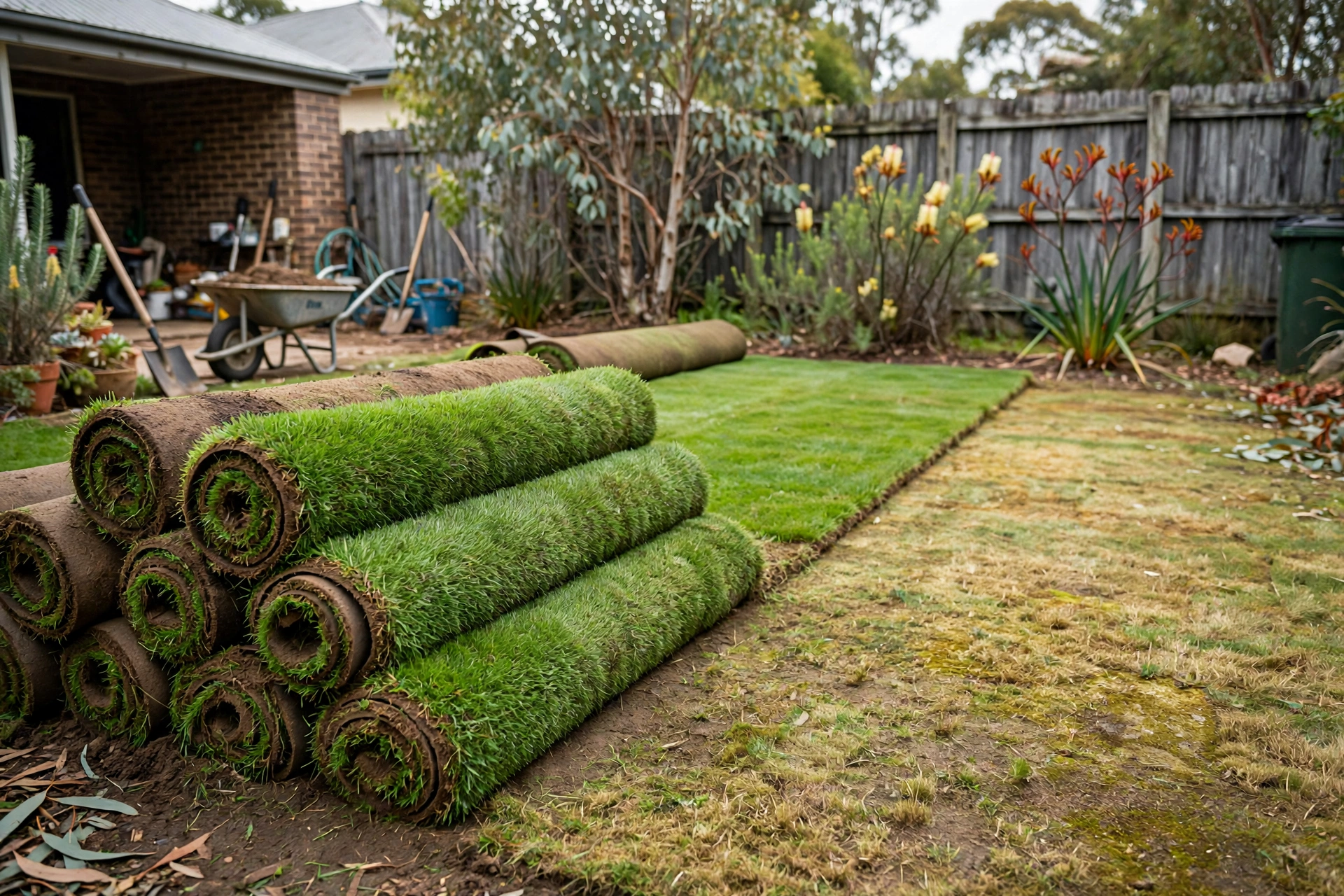
Why do patches keep coming back in the same spot?
Recurring patches in the same location point to an unresolved underlying issue: buried rubble limiting soil depth, a leaking irrigation line, persistent shade, or grubs that were never properly treated. Dig down 20 centimetres in the problem spot — the answer is usually visible.
Should I re-turf the whole lawn or just patch the bad areas?
Patch the bad areas if more than about 70 per cent of the lawn is healthy — spot repair is cheaper and the existing grass helps new sections blend in. If the lawn is mostly weeds, patchy everywhere, or a variety unsuited to the site (like couch in deep shade), a full re-turf with the right grass is the better long-term investment.