Walk into any turf farm in Australia and you will find the two biggest sellers sitting side by side: soft-leaf buffalo and kikuyu. Together they account for the majority of new lawns laid across the country, yet they could hardly be more different. One is the shade-tolerant, soft-underfoot favourite of suburban backyards; the other is the aggressive, fast-repairing workhorse of sports fields and high-traffic family lawns. Choosing wrong means years of frustration — kikuyu in a shady yard, or buffalo where the kids play cricket every afternoon.
This is an honest, no-favourites comparison written for Australian conditions. We score both grasses across the factors that actually matter — appearance, shade tolerance, invasiveness, mowing workload, water use and cost — and then give you a clear verdict for the most common situations, from shady Brisbane blocks to sunny Perth yards to the humble nature strip.
Round 1: Look and Feel
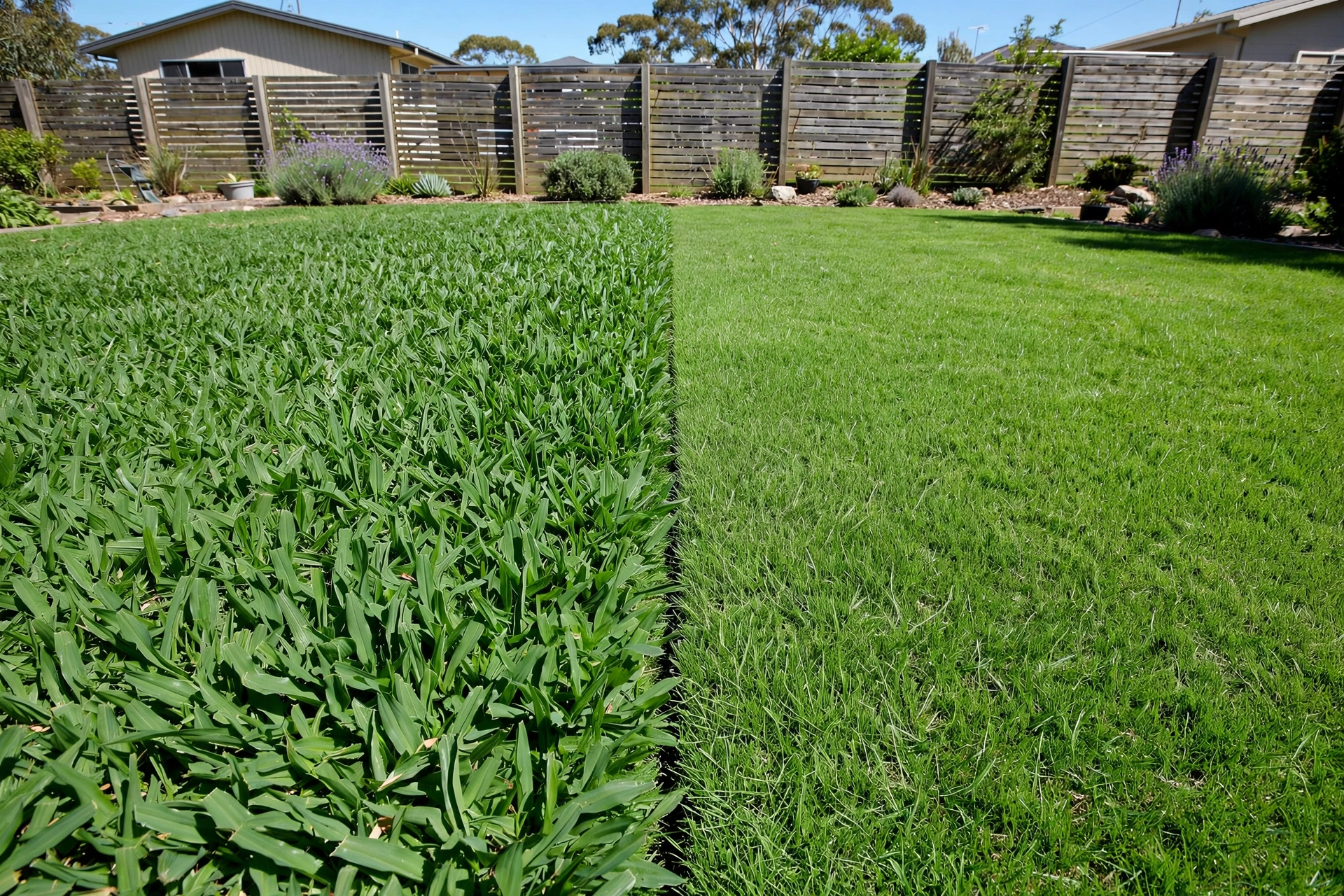
Soft-leaf buffalo has a broad, soft blade that feels pleasant under bare feet and gives the lawn a lush, slightly coarse texture. Modern soft-leaf varieties hold a rich green colour through most of the year and look good even when mowed a little higher, which suits a relaxed maintenance style. Up close it will never match the fine, manicured look of couch, but from the patio or the street it reads as a classic healthy lawn.
Kikuyu has a medium-width, bright green blade with a slightly rougher feel. When mowed regularly it forms a dense, even sward that looks terrific — many of Australia's best suburban lawns are kikuyu. Let it grow too long between mows, though, and it quickly turns coarse, stalky and thatchy, with pale dead material visible at the base. Kikuyu rewards the diligent mower and punishes the fortnightly one.
Winner: buffalo for softness and forgiveness; kikuyu for a dense, vibrant look if you mow often. Call it a draw, decided by your mowing habits.
Round 2: Shade Tolerance
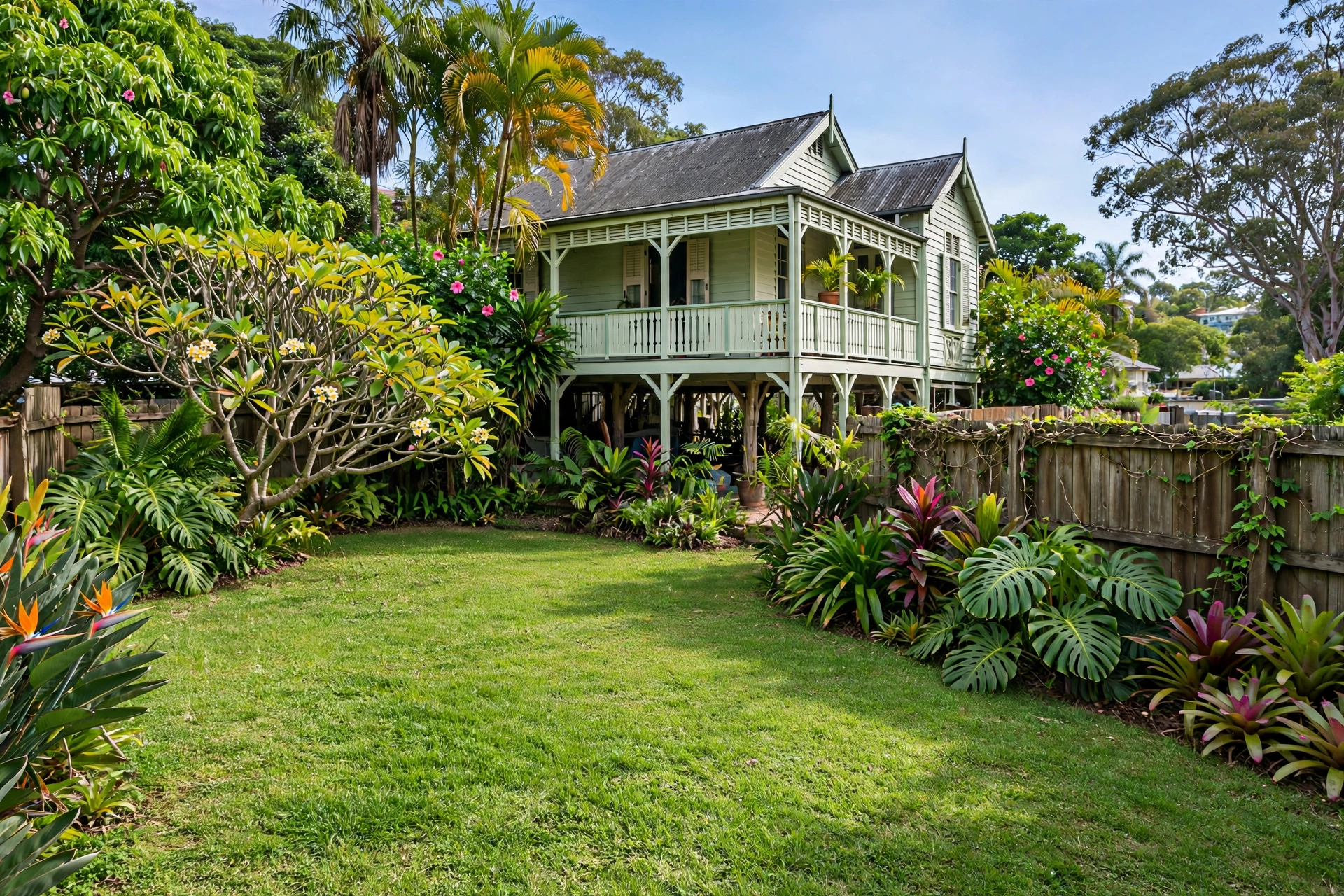
This is the most one-sided round in the contest. Soft-leaf buffalo was effectively bred for Australian shade: it stays dense with as little as three to four hours of direct sun a day, handling the dappled light under gum trees and the southern side of the house better than any other common warm-season grass. For established suburbs in Sydney, Melbourne and Brisbane where mature trees dominate, this single trait decides thousands of lawn choices every year.
Kikuyu, by contrast, is a sun worshipper. Drop below about six hours of direct sun and it thins out, leaving bare soil that weeds colonise. A kikuyu lawn planted under a big tree is a slow-motion failure — it will look acceptable for a season or two, then deteriorate no matter how much you feed and water it.
Winner: buffalo, by a knockout. If shade is a factor at all, kikuyu should not be on your shortlist.
Round 3: Invasiveness and Garden Manners
Here the tables turn completely. Kikuyu is one of the most aggressive lawn grasses grown in Australia. Its runners travel rapidly above and below ground, leaping into garden beds, vegetable patches and neighbours' yards with enthusiasm. Containing it requires solid edging — concrete, steel or deep plastic barriers — and regular edging maintenance. It is also a declared environmental weed in parts of the country, escaping into bushland where it smothers native groundcovers.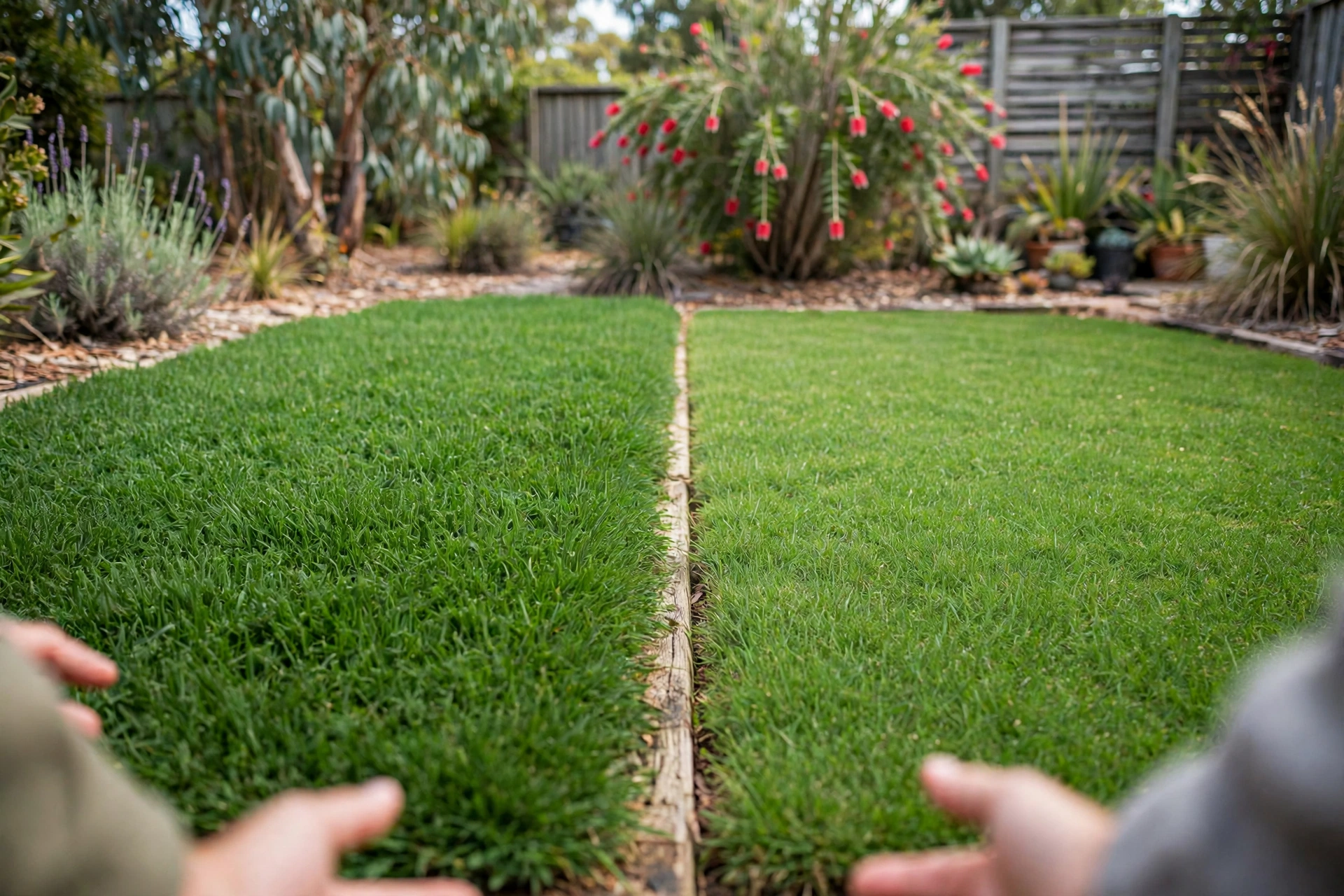
Buffalo is far better behaved. It spreads slowly via surface runners (stolons) that are easy to edge and pull back, and it rarely invades beds with the determination of kikuyu. For gardeners who value their garden beds as much as their lawn, this matters enormously.
Winner: buffalo, comfortably. Kikuyu demands constant boundary vigilance.
Round 4: Wear Tolerance and Recovery
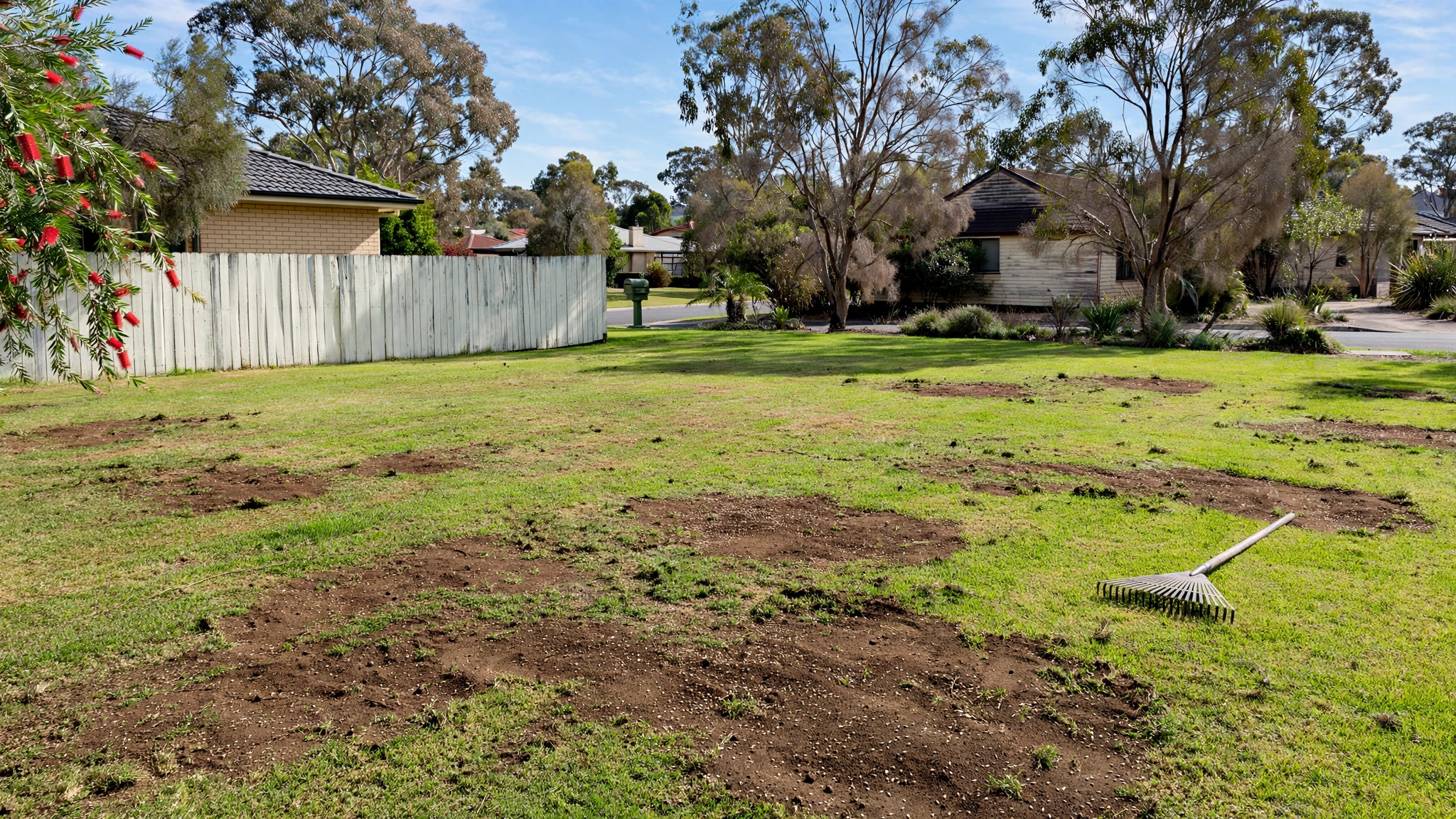
If your lawn doubles as a sports field — kids, dogs, backyard cricket, the works — kikuyu is in its element. It grows so vigorously in warm weather that worn patches knit over in weeks, and it tolerates heavy traffic that would destroy slower grasses. This is why kikuyu dominates school ovals and public parks across the warmer states.
Buffalo handles moderate family traffic fine, but it recovers slowly from serious wear. A worn goalmouth or a path beaten across the corner will stay bare for a long time, because buffalo simply does not have kikuyu's explosive regrowth. In high-traffic zones, buffalo needs help: rotate play areas, rest worn sections, or accept some patchiness.
Winner: kikuyu, decisively. For heavy wear, nothing commonly available beats it.
Round 5: Mowing and Maintenance Workload
Buffalo is the lower-maintenance grass. It grows at a moderate pace, so fortnightly mowing in summer and monthly mowing in winter keeps it tidy. It prefers a higher cut of 30 to 50 millimetres, which is forgiving — miss a mow and it still looks acceptable. Fertilise in early spring and mid-summer, watch for thatch build-up every few years, and that is largely it.
Kikuyu is hungry and fast. In summer it needs weekly mowing at 25 to 40 millimetres to stay dense and avoid thatch; skip two weeks and you are scalping it back, which stresses the lawn and invites weeds. It also wants more nitrogen to sustain that growth rate, and the edges need trimming constantly to stop runners escaping. Kikuyu suits people who enjoy lawn care as a routine; it frustrates everyone else.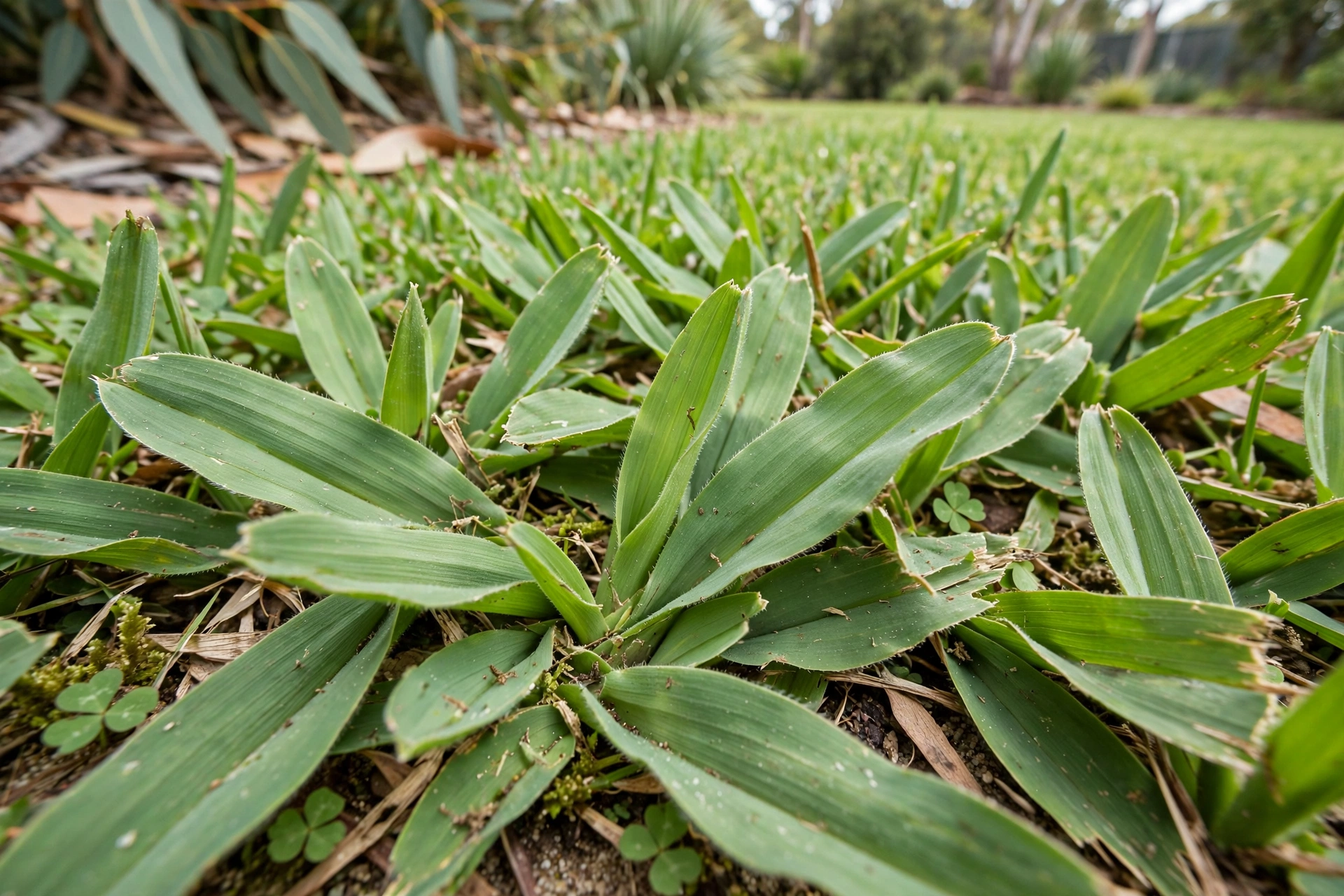
Winner: buffalo for anyone who would rather spend weekends doing anything other than mowing.
Round 6: Water Use
Once established, buffalo copes well with deep, infrequent watering and tolerates dry spells better than its soft appearance suggests — its broad leaves shade the soil and reduce evaporation. It responds quickly when water returns after a dry period.
Kikuyu looks its best with consistent moisture and is the first of the two to brown off in a dry spring, particularly on sandy soils in Perth or Adelaide. It bounces back fast with rain or irrigation, but during water restrictions it can look shabby for months.
Winner: buffalo, narrowly. Neither is a true drought grass, but buffalo handles neglect better.
Round 7: Cost of Turf and Establishment
Kikuyu is consistently one of the cheapest turfs on the market, and it also establishes readily from seed in warm weather — a budget-friendly option for large areas. It knits together fast, so you see results quickly.
Soft-leaf buffalo turf costs noticeably more per square metre, reflecting the breeding work behind modern varieties, and it is generally only available as turf (quality seed is rare). Establishment is slower than kikuyu but still reliable in spring and summer.
Winner: kikuyu on price, especially for big areas. For an average suburban backyard the total difference is usually a few hundred dollars — worth weighing against years of maintenance differences.
The Verdict by Situation
- Shady suburban block (Sydney, Brisbane, Melbourne): buffalo, no contest.
- Sunny backyard with kids and a dog: kikuyu — it will take the punishment and repair itself.
- Low-maintenance lawn for busy people: buffalo — fortnightly mowing and better manners.
- Large area on a tight budget: kikuyu — cheaper turf and fast coverage.
- Front lawn where looks matter, light traffic: buffalo for softness; either works in full sun.
- Sloping block or erosion-prone area: kikuyu — its aggressive roots hold soil brilliantly.
- Near native bushland or waterways: buffalo — kikuyu's weed potential is a genuine environmental concern.
There is no universally "better" grass — only the better grass for your specific yard. Sun hours, traffic, maintenance appetite and budget decide this contest, not marketing. Be honest about all four and the choice makes itself.
Frequently Asked Questions
Can I mix buffalo and kikuyu in the same lawn?
It is not recommended. Kikuyu grows far more aggressively and will eventually dominate, leaving you with a patchy-looking blend of two textures and colours. Pick one and commit — a uniform lawn always looks better than a mixture.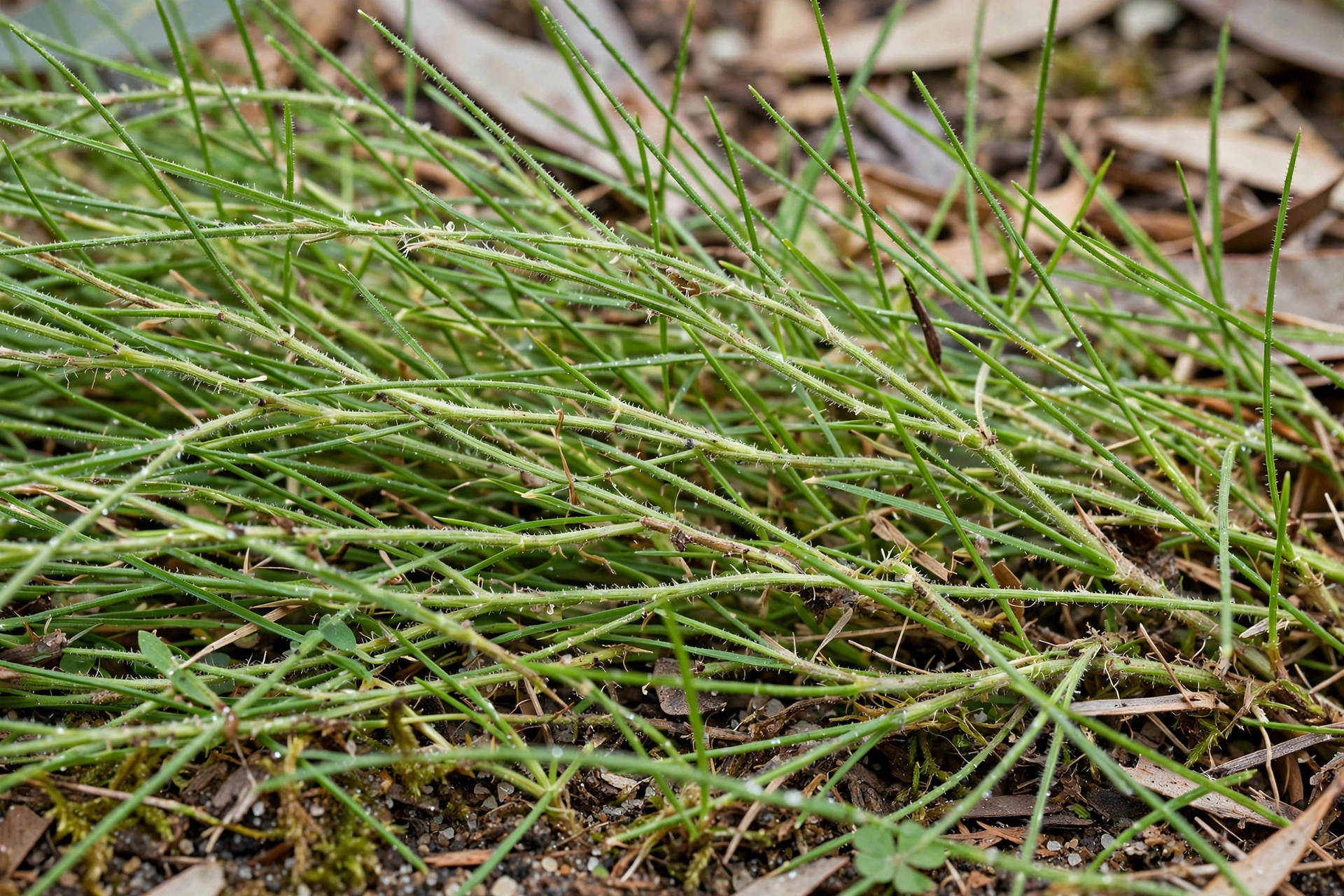
Which is better for a nature strip?
Kikuyu is the classic nature strip grass because it is cheap, tough and self-repairing under foot traffic and parked cars. Buffalo also works and looks softer, but it recovers more slowly from damage. Check your local council rules first — some councils have preferred species lists for nature strips.
Does buffalo grass go brown in winter?
In Brisbane and northern New South Wales, buffalo usually stays green year-round. In Melbourne, Adelaide and cooler inland areas it will slow down and can develop a yellowish tinge in the coldest months, but it rarely goes fully dormant like couch does. A light autumn feed helps it hold colour.
How do I stop kikuyu invading my garden beds?
Install a physical root barrier at least 15 centimetres deep between lawn and beds — steel, concrete or heavy-duty plastic edging all work. Then edge the boundary every week or two in summer, because kikuyu runners will probe for any weakness. Never let it seed near beds you care about.
Is one better for the environment?
Buffalo has the edge: it needs less mowing (lower fuel use), is less invasive in bushland, and its slower growth means less fertiliser runoff. Kikuyu's weed risk near natural areas is a real downside. Either way, mowing high, watering deeply but infrequently, and avoiding over-fertilising shrink the footprint of both.