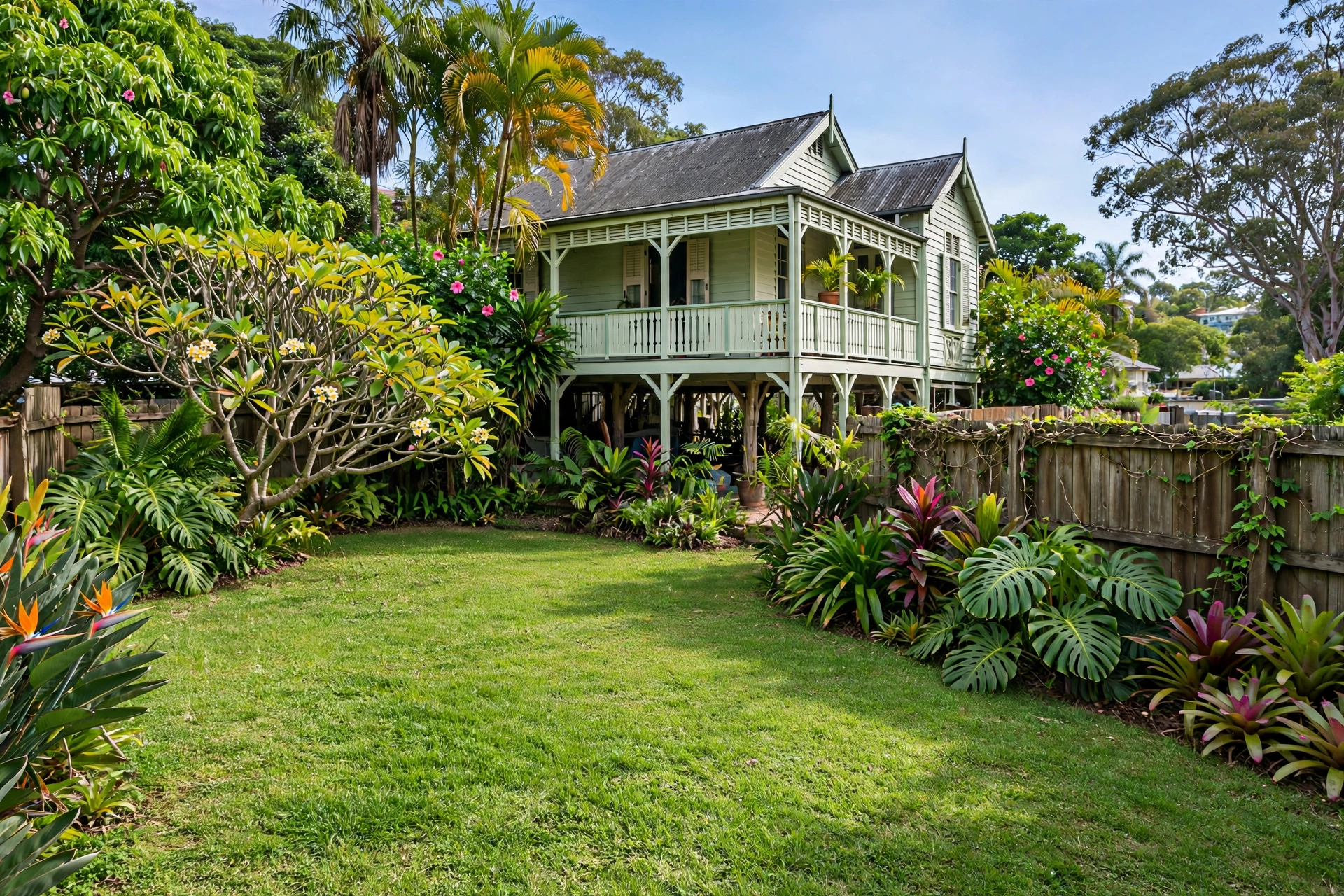
Brisbane lawns live a tougher life than lawns almost anywhere else in Australia. Summer brings weeks of stifling humidity, drenching storms and temperatures that sit stubbornly in the mid-thirties, while winter is mild enough that warm-season grasses never fully switch off. Add in water restrictions that bite during dry spells, shady blocks under big mango and poinciana trees, and sandy or heavy clay soils depending on which side of the river you are on, and choosing the wrong grass variety is an expensive mistake.
The good news is that Brisbane's climate suits a small handful of excellent warm-season grasses, and picking between them mostly comes down to your yard's conditions rather than guesswork. Here are the four varieties that genuinely work in south-east Queensland, and how to choose between them.
Brisbane's Subtropical Climate: What Your Lawn Is Up Against
Brisbane sits in a humid subtropical climate zone. Summers (December to February) average around 30 to 32 degrees with high humidity, while winters (June to August) are dry and mild, with daytime temperatures usually between 20 and 22 degrees and only the occasional light frost in low-lying western suburbs. Annual rainfall is roughly 1,000 to 1,200 millimetres, but it arrives unevenly: summer storms dump huge volumes quickly, and late winter into spring can be surprisingly dry.
For lawns, this creates a specific set of challenges. Warm-season grasses thrive in the heat but can struggle with fungal diseases in humid summers. Shade is a bigger issue in Brisbane than in most capitals because established suburbs are full of mature trees, and many blocks face south with limited direct sun. Water matters too: while Brisbane is wetter than Sydney or Melbourne on paper, Seqwater restrictions kick in during drought years, and a lawn that cannot handle a dry spring will brown off fast.
The other factor is soil. Inner-city Brisbane often has heavy clay that drains poorly and bakes hard in summer, while bayside suburbs like Wynnum and Sandgate sit on sand that drains almost too well. Before choosing a grass, dig a quick test hole about 20 centimetres deep after rain: if water sits in it for hours, you have drainage issues to fix regardless of variety.
The Main Contenders for Brisbane Lawns
Four warm-season grasses dominate Brisbane lawns, and each has a distinct personality. Here is how they compare in real-world Queensland backyards.
Soft-leaf buffalo
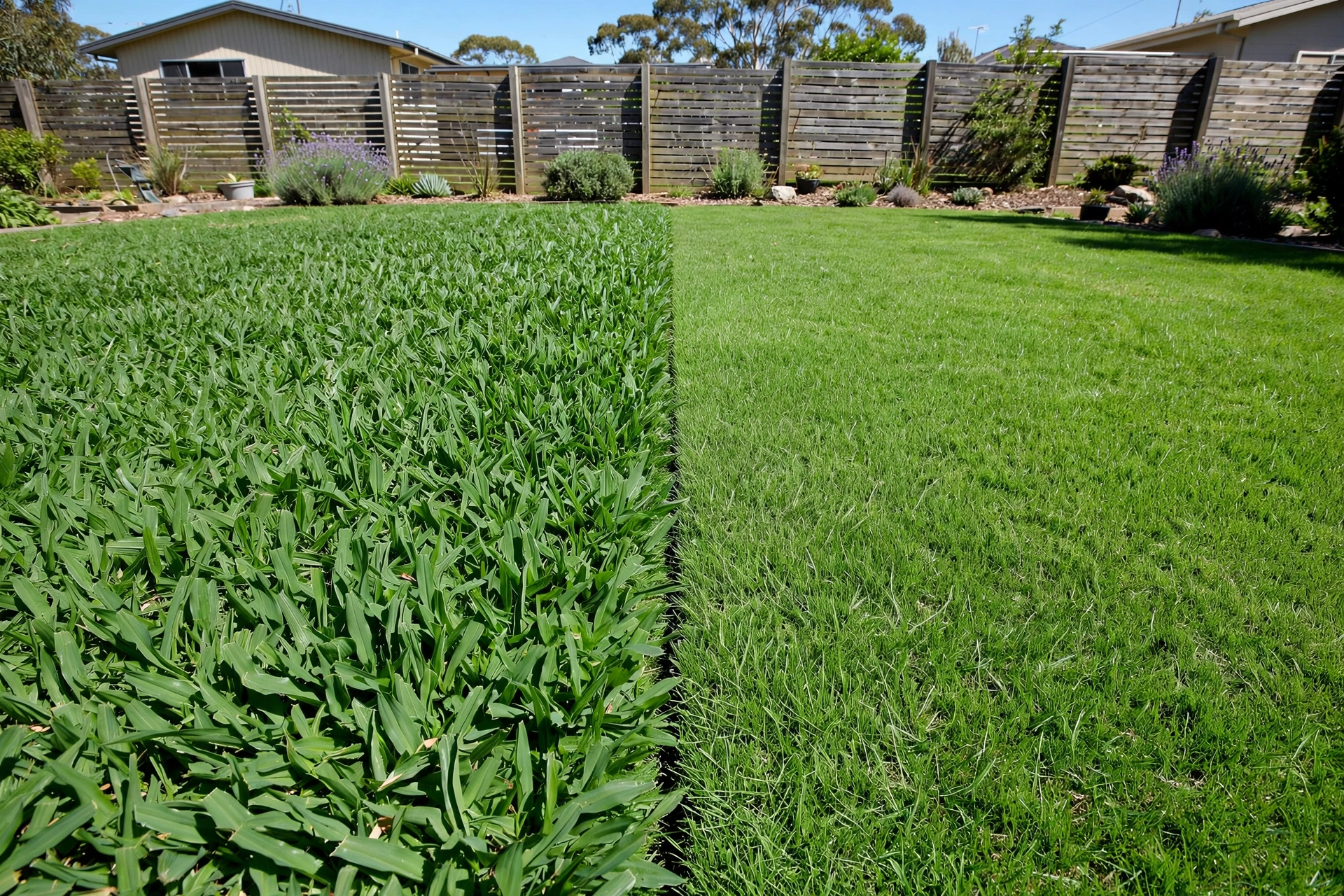
Soft-leaf buffalo is the most popular lawn grass in Brisbane, and for good reason. It was bred specifically for Australian conditions, with a broad, soft leaf that feels pleasant under bare feet — a real consideration when the kids are running around in January. Its standout trait is shade tolerance: it handles as little as three to four hours of direct sun a day, which makes it the default choice for yards under established trees or on the shaded side of the house.
Buffalo is moderately thirsty but responds well to deep, infrequent watering, which trains roots to chase moisture downward. It grows more slowly than kikuyu, so mowing is a fortnightly job in summer rather than a weekly chore. The trade-offs are a coarser appearance than couch, slower recovery from heavy wear (so it is not ideal for a backyard cricket pitch), and a tendency to thatch if mowed too high or fertilised too aggressively. Keep it at 30 to 50 millimetres and it stays dense and healthy.
Kikuyu
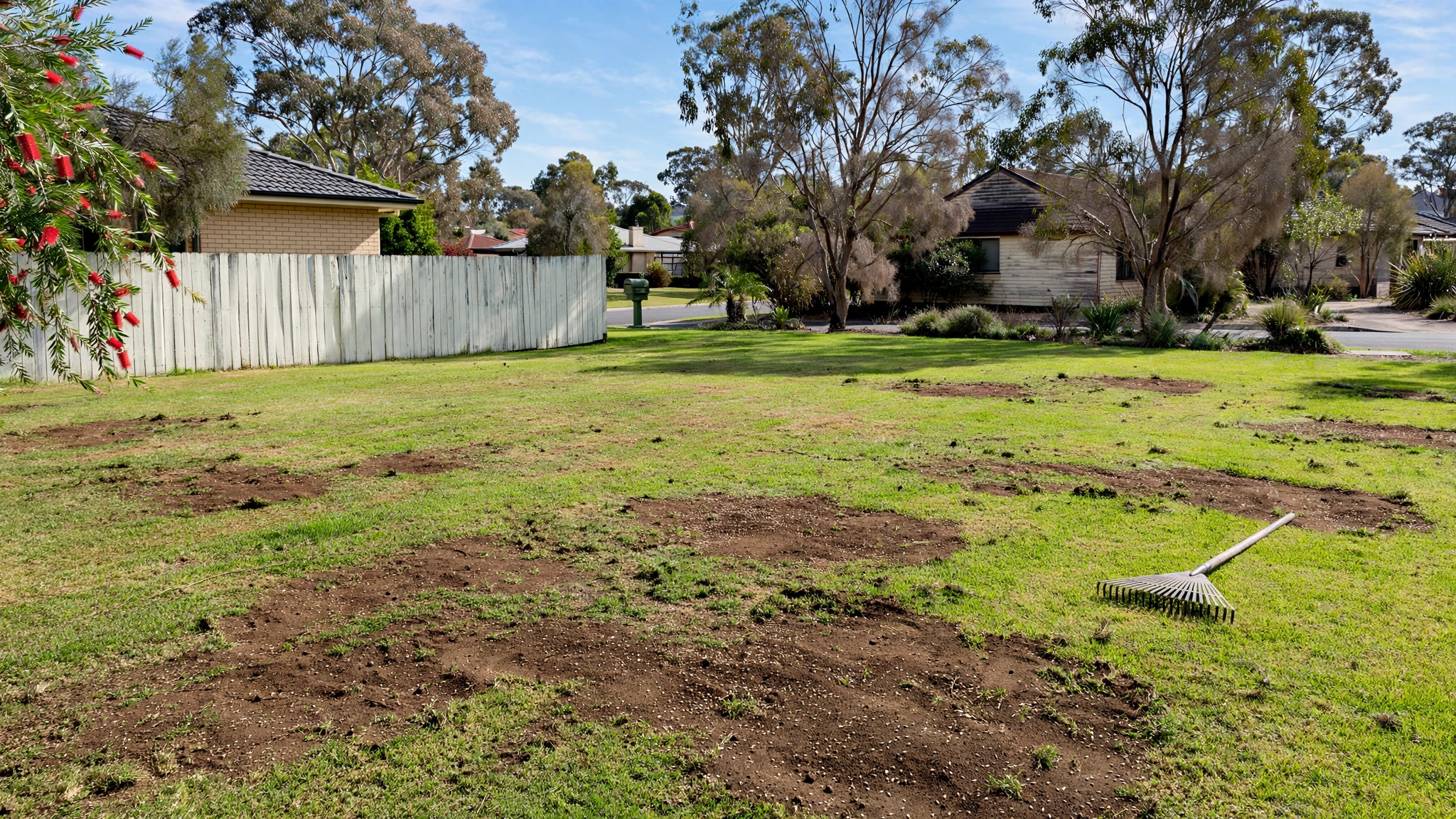
Kikuyu is the tough workhorse of Queensland lawns. It spreads aggressively via runners, knits together fast, and recovers from damage — dog traffic, kids, backyard sport — quicker than anything else on this list. If your priority is a lawn that survives abuse and fills bare patches by itself, kikuyu is hard to beat. It is also one of the cheapest turfs to buy and establishes quickly from seed in warm weather.
The catch is that kikuyu's vigour is also its biggest drawback. It invades garden beds, creeps under fences into neighbours' yards, and needs weekly mowing in summer to stop it getting coarse and thatchy. It dislikes shade — anything under about six hours of direct sun and it thins out — and it can look yellow and patchy in winter in Brisbane's cooler western suburbs, though it rarely goes fully dormant this far north. Mow it at 25 to 40 millimetres and edge aggressively.
Zoysia
Zoysia is the premium, slow-and-steady option. It forms an exceptionally dense, fine-bladed carpet that crowds out weeds naturally and feels beautiful underfoot. It tolerates moderate shade, handles Brisbane's humidity well, and once established needs less water and fertiliser than buffalo or kikuyu.
The downsides are cost and patience. Zoysia turf is the most expensive of the four, and it establishes slowly — a new lawn can take a full growing season to knit together properly. It also recovers slowly from damage, so it is a poor choice for high-traffic family backyards. Mow at 20 to 40 millimetres, and be prepared to wait for it to reach its best.
Couch
Couch grass is the classic Australian lawn: fine-bladed, bright green, and capable of looking like a bowling green when maintained well. It loves Brisbane's heat and handles full sun beautifully, using less water than buffalo once established.
But couch has strict requirements. It needs full sun — six-plus hours daily — and struggles badly in shade. It goes brown and dormant in winter further south, though in Brisbane it usually just slows down and loses some colour. It also demands the most maintenance of the four: regular mowing at a low 15 to 25 millimetres, annual dethatching, and consistent fertilising to keep it dense. For a sunny, flat block where you enjoy lawn care as a hobby, couch is superb. For a shady, low-maintenance yard, it is the wrong choice.
Sun vs Shade: Matching Grass to Your Yard
Shade tolerance is the single biggest deciding factor for most Brisbane blocks. Walk your yard and honestly assess how many hours of direct sun the lawn area gets in mid-winter, when the sun is lowest — that is your limiting case.
- Less than 4 hours of sun: soft-leaf buffalo is your only realistic option, and even it will be thin in deep shade. Consider reducing the lawn area and planting shade-tolerant garden beds instead.
- 4 to 6 hours of sun: buffalo is the safe pick; zoysia can work if the shade is dappled rather than solid.
- 6+ hours of sun: all four varieties are on the table — choose based on traffic, maintenance appetite and budget.
Remember that Brisbane's tree canopy grows fast. A yard in full sun today under a young jacaranda may be mostly shaded in five years, so lean toward buffalo if you have fast-growing trees.
Water Needs Compared
All warm-season grasses need regular water to establish, but their ongoing thirst differs once roots are deep:
- Most water-efficient: couch and zoysia, once established, survive on rainfall plus occasional deep watering in dry spells.
- Middle ground: soft-leaf buffalo appreciates a deep soak every week or two in summer but copes with less.
- Thirstiest: kikuyu looks its best with consistent moisture and browns off fastest in a dry spring.
Water deeply and infrequently — a good soak once a week beats a daily sprinkle, which trains roots to sit near the surface where summer sun fries them. Water in the early morning to reduce evaporation and let leaves dry, which matters when humidity fuels fungal disease.
Mowing Heights and Maintenance at a Glance
- Soft-leaf buffalo: mow at 30–50 mm; fortnightly in summer, monthly in winter. Fertilise in early spring and mid-summer. Watch for thatch.
- Kikuyu: mow at 25–40 mm; weekly in summer. Edge regularly to contain runners. Fertilise spring and summer; it is a hungry grass.
- Zoysia: mow at 20–40 mm; fortnightly in summer. Light fertiliser needs — overfeeding causes thatch. Dethatch every couple of years.
- Couch: mow at 15–25 mm; weekly in the growing season. Needs the most fertiliser and an annual dethatch or scarify in spring.
A golden rule for all four: never remove more than one-third of the leaf in a single mow. Scalping a Brisbane lawn in January stresses it exactly when disease pressure is highest.
The most common mistake Brisbane homeowners make is choosing a grass for how it looks in the nursery rather than how much sun their yard actually gets. Shade kills more lawns in this city than drought does.
Frequently Asked Questions
What is the lowest-maintenance grass for Brisbane?
Soft-leaf buffalo, provided your yard gets at least three to four hours of sun. It needs less frequent mowing than kikuyu or couch, tolerates shade and clay soils, and recovers reasonably from neglect.
Can I grow couch grass in a shady Brisbane backyard?
Honestly, no. Couch needs at least six hours of direct sun daily and thins out badly in shade, leaving you with a patchy lawn full of weeds. If shade is the issue, buffalo is the variety bred for exactly that situation.
When is the best time to lay new turf in Brisbane?
Spring (September to November) is ideal: warm soil, increasing rain and a full growing season ahead for roots to establish before the next winter. Early autumn (March) is the second-best window. Avoid laying turf in the depths of winter when growth is slow, or in the peak of summer heat without a reliable watering plan.
Why does my Brisbane lawn get brown patches in summer?
The usual suspects are lawn grubs in late summer, fungal diseases fuelled by humidity and evening watering, and compacted soil that stops water reaching roots. Peel back a spade-sized square of turf: white curl grubs in the top few centimetres confirm pests, while rock-hard soil means aeration and top-dressing are the fix.
Is kikuyu really as invasive as people say?
In Brisbane's climate, yes — kikuyu runners can travel a metre or more underground and pop up in garden beds, and it will absolutely invade a neighbour's lawn if there is no root barrier. Install a solid edge (concrete, steel or deep plastic) between lawn and beds, and mow edges weekly in summer. If you share a fence line, have a chat with the neighbour before planting it.