
There is something primal about gathering around a fire as the evening cools — stories, marshmallows, and the kind of conversation that only happens when phones stay in pockets. Backyard fire pits have become one of Australia's most loved outdoor features, turning patios and back lawns into year-round living spaces.
But Australia is also the fire continent, and the rules around open flames in backyards are serious, layered, and different wherever you live. Before you buy a fire bowl or start stacking bricks, you need to understand total fire bans, your council's local laws, and the safety basics that keep a pleasant evening from becoming a disaster. This guide covers the rules, the safety essentials, and the design ideas — in that order, because compliance comes before aesthetics.
The Golden Rule: Total Fire Bans Override Everything
On days declared a Total Fire Ban, lighting a backyard fire pit is illegal — no exceptions, no "just a small one." Total Fire Bans are declared by state fire authorities on days of extreme fire danger, and they are increasingly common as summers intensify. Penalties are severe, including heavy fines and potential imprisonment, and for good reason: on catastrophic fire days, even a stray ember can start a disaster.
Make it a habit to check your state's fire authority app or website before every single use — the same fire pit that is perfectly legal on Saturday can be prohibited on Sunday. Australia now uses the Australian Fire Danger Rating System, with ratings from Moderate up to Catastrophic; familiarise yourself with what each level means for your area. When in doubt, do not light it.
Council Rules Vary: Check Before You Build
Beyond fire bans, each local council sets its own rules for backyard burning, and they differ enormously. Some councils allow small recreational fires in contained pits without a permit. Others ban open fires entirely in urban areas, permitting only enclosed appliances. Rules commonly cover:
- Whether open fires are allowed at all in your zone — many metropolitan councils prohibit them.
- Permitted days and hours — some areas restrict burning to certain days or daylight hours.
- Smoke nuisance rules — even where fires are allowed, smoke that unreasonably affects neighbours can draw complaints and fines under environmental protection laws.
- Size limits — recreational fires are typically limited to small dimensions, often under a metre across.
- Permanent vs portable installations — a built-in brick pit may need development approval where a portable bowl does not.
The only reliable source is your own council. Search your council's website for "backyard burning" or "open air fires," or call them directly. Do not rely on what a neighbour does or what a retailer tells you — enforcement lands on you, not them. Also check your home insurance policy: some insurers have conditions around open fires.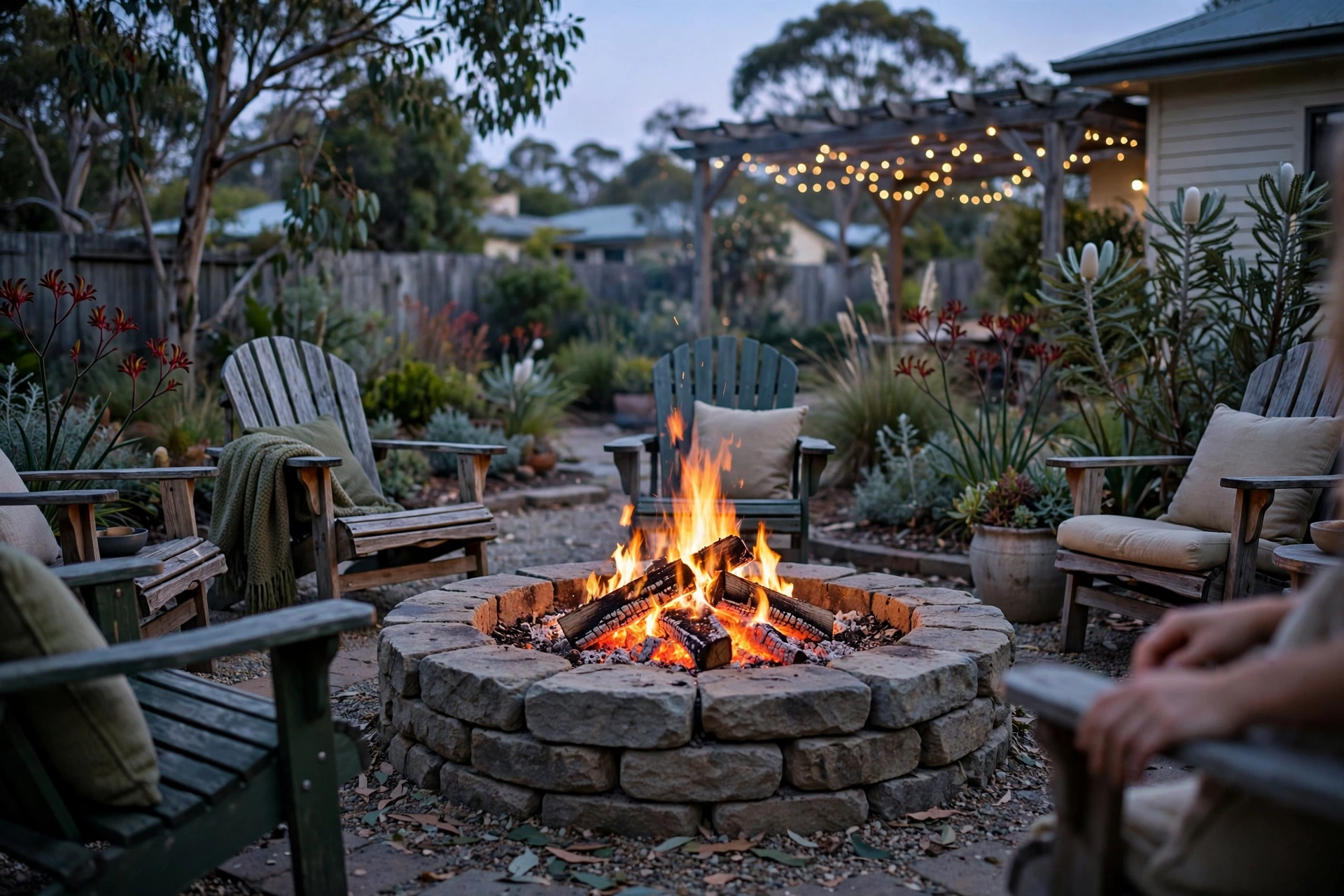
Safe Placement and Clearances
Where you put a fire pit matters as much as how you use it. Follow these clearances as minimums:
- 3 metres minimum from any structure — house walls, fences, sheds, pergolas and overhanging eaves.
- Clear overhead space — no tree branches, pergola roofs or shade sails above the fire. Heat and embers rise further than you think.
- A non-combustible base — sit the pit on gravel, pavers, concrete or bare mineral earth, never directly on a timber deck or dry grass. Use a heat shield mat under portable bowls on paved surfaces.
- Clear a fuel-free zone of at least 2–3 metres around the pit: rake up leaves, move cushions and outdoor furniture back, and keep the area free of mulch and garden debris.
- Consider wind. Position the pit where fences or plantings break the prevailing wind, and never light up in strong or gusty conditions.
Fuel: What to Burn and What Never To
Burn only clean, dry, untreated hardwood. Dense Australian hardwoods — ironbark, red gum, box — burn hot and long with minimal smoke once properly seasoned. Softwoods and green timber smoke excessively and spit.
Never burn:
- Treated or painted timber — releases toxic chemicals including arsenic from older treatments.
- Rubbish, plastics or household waste — illegal in most areas and toxic.
- Accelerants — petrol, kerosene and methylated spirits cause explosive flare-ups. Use firelighters or kindling to start the fire safely.
Season your firewood for at least six to twelve months under cover. Dry wood means less smoke, more heat, and happier neighbours — smoke complaints are the most common trigger for council action against backyard fires.
Fire Pit Styles and Design Ideas
Fire Bowls
Steel or cast-iron bowls on legs are the simplest entry point: affordable, portable, and easy to store. Look for a bowl with a spark screen — it dramatically reduces ember escape and is worth every cent. Their portability is a genuine advantage for renters.
Brick or Stone Pits
A circular pit built from bricks, pavers or natural stone is the classic permanent option. It anchors an outdoor entertaining zone beautifully and can double as informal seating with a wide cap. Use fire-rated bricks or line the interior with a steel ring — standard house bricks can crack or explode under intense heat. Check whether a permanent structure needs council approval in your area.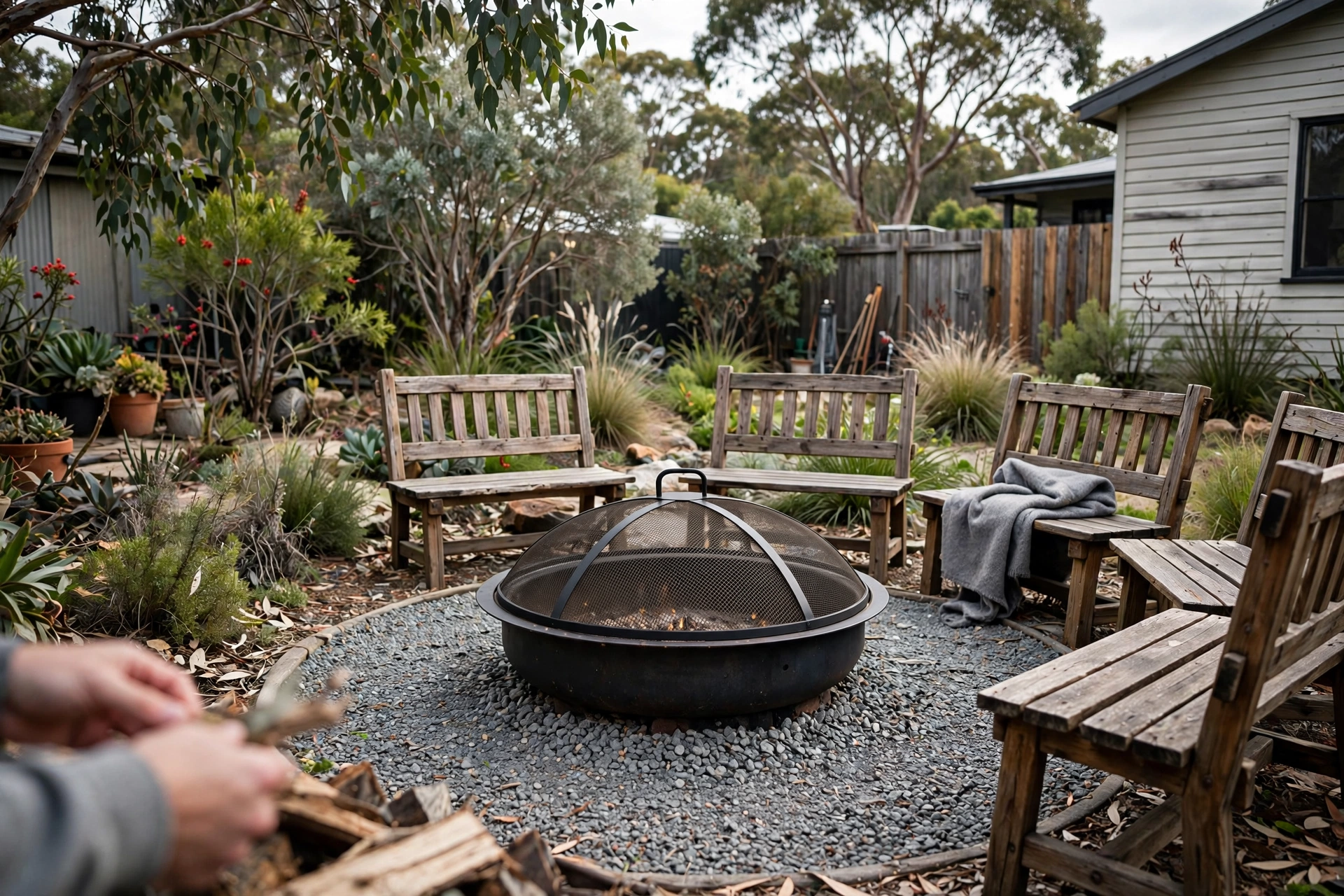
Chimineas
These enclosed clay or cast-iron fireplaces direct smoke upward through a chimney, making them the most neighbour-friendly option. They radiate heat well, contain sparks effectively, and suit smaller courtyards where a wide-open pit would feel overwhelming.
Fire Tables and Gas Fire Pits
Gas-fuelled fire tables offer instant ambience with a switch — no smoke, no embers, no firewood storage. They cost more to buy and run, but in areas with strict wood-fire rules they are sometimes the only practical option. Note that gas appliances still count as open flames on Total Fire Ban days in most states — the ban generally covers them too.
The Non-Negotiable Safety Checklist
- Check the fire danger rating and Total Fire Ban status before every use.
- Keep water or a hose within reach — a charged garden hose beside the pit, not coiled up across the yard.
- Keep a fire extinguisher or fire blanket handy for emergencies.
- Never leave the fire unattended — not for "just a minute." Most backyard fire incidents start during a brief absence.
- Supervise children and pets constantly. Establish a "no-go" circle at least a metre from the pit for small children.
- Burn small and controlled. A modest fire is more enjoyable and far safer than a bonfire.
- Extinguish completely. Drown the fire with water, stir the ashes, and feel for heat before leaving it. Embers can reignite hours later.
- Store ashes safely. Keep them in a metal container with a lid, away from anything combustible, for several days before disposal.
A fire pit should be the warm heart of your backyard, not a source of anxiety. Know the rules, respect the conditions, and every fire becomes pure enjoyment.
Frequently Asked Questions
Are backyard fire pits legal in Australia?
It depends on your council area. Many councils allow small recreational fires in contained pits, while some metropolitan councils ban open fires entirely. Always check your local council's rules, and never light a fire on a Total Fire Ban day — that is illegal everywhere.
Can I use a fire pit during a Total Fire Ban?
No. Total Fire Bans prohibit open fires including backyard fire pits, and in most states this extends to gas fire pits as well. Penalties are severe. Always check your state fire authority's app or website first.
How far should a fire pit be from the house?
A minimum of 3 metres from any structure, fence or overhang, with clear space overhead and a 2–3 metre fuel-free zone around it. Sit it on a non-combustible surface — never directly on a timber deck.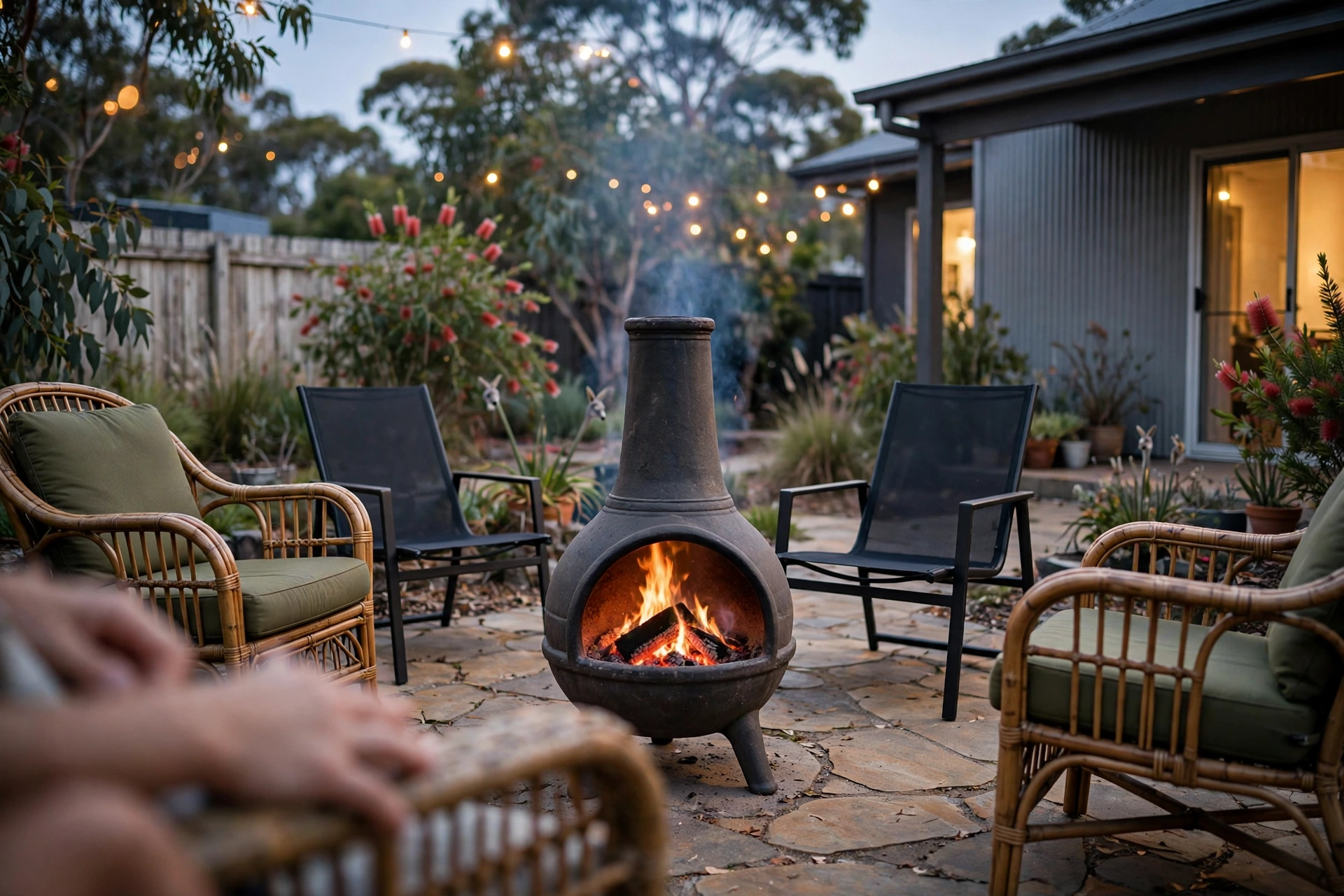
What is the best wood for a fire pit?
Seasoned Australian hardwood such as ironbark, red gum or box. It should be dried for six to twelve months. Never burn treated, painted or composite timber, rubbish, or use liquid accelerants.
Do I need council approval to build a fire pit?
Portable fire bowls generally do not need approval, but permanent brick or stone structures sometimes do, depending on your council and planning zone. Check with your council before building anything permanent.

